
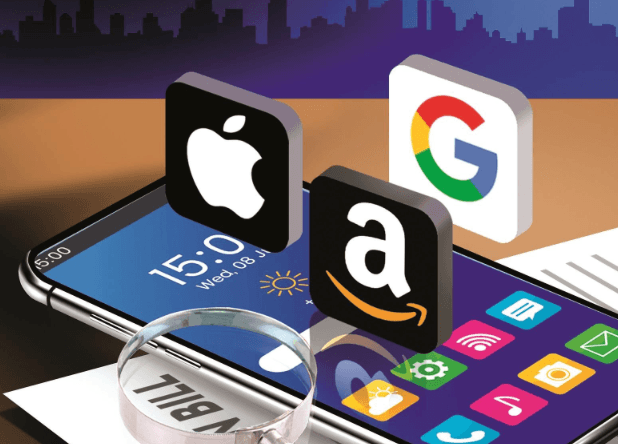
Something extraordinary is happening right now in Silicon Valley, and honestly, when I first saw the numbers, I had to double-check them. We’re not talking millions or even hundreds of millions we’re talking about $650 billion. That’s the amount Google, Amazon, Microsoft, and Meta are planning to spend on artificial intelligence infrastructure in 2026 alone.
To put that in perspective, that’s more than double what these companies spent just last year. Google alone is planning to drop up to $185 billion, which is more than twice their 2025 spending. Amazon? They’re committing $200 billion. These aren’t just big numbers they’re historically unprecedented for any technology investment cycle we’ve ever seen.
But here’s the question I kept asking myself as I dug into this story: Why now? And more importantly, what does this tsunami of spending actually mean for you and me as regular consumers?
The AI Arms Race Nobody Saw Coming
Let me take you back to just two years ago. In early 2024, AI was still mostly a buzzword that tech companies threw around in presentations. Sure, ChatGPT had made waves, but most of us weren’t really using AI in our daily lives. Fast forward to today, and the landscape has changed completely.
The reason these companies are spending so much money comes down to one uncomfortable truth: they’re terrified of being left behind.
Think about it this way. If you’re Google, you’ve dominated search for 25 years. But suddenly, AI chatbots can answer questions directly without needing traditional search results. That’s an existential threat to your entire business model. If you’re Meta, you’re seeing AI transform how people create and consume content on social media. If you don’t control the AI that powers those experiences, someone else will.
Mark Zuckerberg put it bluntly during Meta’s recent earnings call: “We want to make sure we’re not underinvesting.” Translation? They’d rather spend too much than risk spending too little and losing the AI race.
Where All That Money Actually Goes
So what do you actually get for $650 billion? It’s not like these companies are just writing giant checks and hoping for the best. This money is going toward building a completely new kind of infrastructure that most of us will never see but will definitely use.
About 60% of the spending roughly $390 billion is going toward servers. But these aren’t your typical computers. We’re talking about specialized AI chips, mostly from companies like Nvidia and Broadcom, that cost tens of thousands of dollars each. These chips are specifically designed to train AI models and run AI applications.
The remaining 40% around $260 billion is going toward data centers and networking equipment. To understand the scale here, Google’s AI infrastructure boss told employees they need to double their computing capacity every six months just to keep up with demand. That’s insane growth by any measure.
And here’s the kicker: these data centers consume enormous amounts of electricity. We’re talking about the equivalent power consumption of small countries. Companies are literally acquiring energy companies to secure power supplies for these facilities. Google recently paid $4.75 billion to buy a data center company called Intersect, primarily to secure reliable energy sources.
The Real Reason Behind the Spending Spree
Now, here’s where things get interesting and a bit controversial if I’m being honest.
These companies aren’t spending all this money because AI is profitable right now. In fact, most of them can’t clearly explain when they’ll make their money back. Amazon’s cloud computing revenue grew 48% last year, which sounds great, but that growth has to support $200 billion in annual spending. The math doesn’t quite add up yet.
So why are they still spending? Because stopping would be worse than continuing.
Imagine you’re in a poker game where everyone keeps raising the stakes. You’ve already put in a lot of chips. If you fold now, you lose everything you’ve invested and guarantee that your competitors will dominate the market. But if you keep playing, you at least have a chance of winning the whole pot. That’s essentially where these companies are.
Goldman Sachs analysts pointed out something fascinating: for the past two years, Wall Street analysts have consistently underestimated how much these companies would spend on AI. Every quarter, spending forecasts get revised higher. The original predictions for 2026 were around $465 billion. Now we’re looking at $650 billion, and some analysts think even that might be too low.
What This Means for Your Daily Life
Okay, so tech companies are spending ungodly amounts of money on AI. But what does that actually mean for you when you open your phone tomorrow morning?
Your Apps Will Get Smarter (And More Useful)
The most immediate impact is that the apps and services you use every day are going to become significantly more capable. We’re already seeing this happen in real-time.
Google Search is being transformed from a list of links into AI-powered answers. When you search for something now, you’re increasingly getting direct, comprehensive responses generated by AI rather than just a list of websites. That’s only possible because of the massive infrastructure Google is building.
Your photo library isn’t just organized by date anymore it can understand what’s actually in your photos and find specific moments from years ago based on natural language descriptions. “Find that picture from Sarah’s wedding where we’re all laughing” actually works now, and it’s getting better every month.
Customer service is being revolutionized, which honestly can’t come soon enough. Instead of waiting on hold for 45 minutes to talk to someone reading from a script, you’re increasingly interacting with AI that can actually solve your problem immediately. And I mean really solve it, not just transfer you to another department.
Content Creation Just Got Democratized
Here’s something I find genuinely exciting: all this AI infrastructure means that creative tools that were once only available to professionals with expensive equipment are now accessible to anyone with an internet connection.
Want to create professional-quality videos for your small business? AI tools can now help you script, shoot (or generate), edit, and produce content that would have required a production team just a few years ago.
Need to design marketing materials but can’t afford a graphic designer? AI design tools are becoming sophisticated enough to produce professional results based on simple descriptions.
Writing code for an app idea you have? AI coding assistants can now help you build functional software even if you’ve never programmed before.
This democratization of creation is a direct result of the massive infrastructure investments happening right now. These tools require enormous computing power behind the scenes, and that power is being built with this $650 billion investment.
Your Work Is About to Change (For Better and Worse)
Let’s be honest about something uncomfortable: AI is going to displace some jobs. That’s already happening. But it’s also going to create new ones and make existing jobs dramatically more productive.
I’ve talked to financial analysts who used to spend hours gathering data for reports. Now, AI tools can pull that information in minutes, which means they spend more time on actual analysis and strategy rather than data entry. That’s a genuine improvement in their work quality and job satisfaction.
Programmers are finding that AI coding assistants handle routine tasks, freeing them up for the creative problem-solving that actually requires human judgment. Sure, some entry-level coding jobs might disappear, but experienced developers are becoming more productive than ever.
The key is that this transition is happening now, not in some distant future. The $650 billion being spent in 2026 is accelerating these changes, which means you need to be thinking about how AI tools can augment what you do rather than replace you.
Healthcare Is Getting a Major Upgrade
One area that doesn’t get enough attention is healthcare, but the impact could be enormous.
AI systems are getting remarkably good at analyzing medical images, sometimes spotting things human radiologists miss. That doesn’t mean radiologists are going away it means they’ll catch more diseases earlier, when they’re more treatable.
Drug discovery is being accelerated by AI that can predict how different molecular structures will interact with the human body. Processes that once took years can now happen in months. That matters when you’re waiting for treatments for serious diseases.
Even your annual checkup is changing. AI can now analyze patterns in your health data over time and flag potential issues before they become serious problems. That preventive care could save lives and save money.
The Potential Downsides Nobody Likes Talking About
Look, I’m genuinely excited about a lot of these developments, but I’d be lying if I said there weren’t some serious concerns that keep me up at night.
The Energy Problem Is Real
All this computing power requires massive amounts of electricity. Google, Meta, Amazon, and Microsoft are literally becoming some of the world’s largest energy consumers. While they’re investing in renewable energy, the reality is that right now, much of this power is still coming from traditional sources.
Some data centers are consuming as much electricity as entire cities. That has real environmental consequences that we need to be honest about. Yes, AI might help us solve climate problems eventually, but in the near term, it’s adding to them.
Privacy Is Getting Complicated
For AI to work well, it needs data lots of data. Your data. Every search query, every photo you upload, every document you edit is potentially being used to train AI systems.
Now, companies insist this data is anonymized and protected. And I want to believe them. But we’ve seen enough data breaches and privacy scandals over the years to be at least a little skeptical. The more powerful AI becomes, the more valuable our personal data becomes, and that creates incentives that don’t always align with our privacy interests.
The Digital Divide Could Get Worse
Here’s something that really bothers me: access to the best AI tools is increasingly becoming a premium feature. Sure, you can use free versions of ChatGPT or Google’s AI features, but the really powerful capabilities are often locked behind expensive subscription tiers or business accounts.
If you’re a well-funded business or a wealthy individual, you’ll have access to AI tools that make you significantly more productive. If you’re a small business owner or a student without much money, you might be stuck with limited versions that can’t compete.
That could accelerate inequality in ways we’re only beginning to understand. The $650 billion being spent is going to create amazing tools, but we need to make sure those tools are accessible to everyone, not just people who can afford premium subscriptions.
What Investors Are Really Thinking
Here’s the part that Wall Street is genuinely worried about: when does all this spending actually pay off?
Meta raised their spending forecast to between $115 billion and $135 billion for 2026, and their stock immediately dropped. Google announced their $185 billion plan, and despite posting record revenue, their shares fell 7% in a single day. Microsoft’s stock has been under pressure despite strong earnings.
Why? Because investors are starting to ask hard questions. Mark Zuckerberg basically admitted during an earnings call that if Meta’s AI investments don’t pan out, they’ll just “pivot” and slow down infrastructure building. That’s not exactly a confidence-inspiring strategy when you’re spending over $100 billion per year.
Some analysts are comparing this moment to previous technology bubbles the dot-com boom of the late 1990s, or the telecom infrastructure spending of that era. In both cases, massive amounts of capital were invested in building infrastructure before clear business models existed. Some of those investments paid off spectacularly (hello, Amazon), while others became cautionary tales.
The honest truth is that nobody knows for sure whether this $650 billion spending spree will generate enough value to justify the investment. These companies are making a bet a massive, company-defining bet that AI will fundamentally transform how we work, create, communicate, and consume information.
My Take: What You Should Actually Do
After spending way too much time researching this topic and talking to people in the industry, here’s what I think you should actually take away from all this:
Start Experimenting With AI Tools Now
Don’t wait. Whether you’re a student, a professional, a business owner, or just someone curious about technology, start playing with AI tools today. Most have free tiers that are surprisingly capable.
Try using ChatGPT or Claude for brainstorming. Experiment with AI writing assistants for work emails. Play with AI image generators. Use AI-powered features in apps you already use like Google Docs or Microsoft Office.
The reason this matters is that AI literacy is quickly becoming as important as computer literacy was in the 1990s. The people who figure out how to use these tools effectively will have real advantages in the job market and in their careers.
Think About How AI Can Augment Your Work, Not Replace It
Instead of worrying about AI taking your job, focus on how AI can make you better at your job. What repetitive tasks could you automate? What research could AI help you with? What creative work could AI assist you with?
The people who thrive in the AI era won’t be the ones who ignore it or resist it they’ll be the ones who figure out how to work with AI to accomplish things that neither humans nor AI could do alone.
Stay Informed But Stay Skeptical
Yes, AI is advancing rapidly. Yes, it’s going to change a lot about how we live and work. But not everything you hear is true, and not every AI announcement will live up to the hype.
Companies have strong incentives to overstate AI’s capabilities because they’re trying to justify those massive spending numbers to investors. That doesn’t mean AI isn’t powerful it absolutely is but it means you should maintain a healthy skepticism about breathless claims of AI being able to do everything.
Support Policies for Responsible AI Development
This might sound abstract, but it matters. As AI becomes more powerful, we need thoughtful policies around privacy, security, labor impacts, and access.
Pay attention to what policymakers are doing (or not doing) about AI. Support companies that are being transparent about how they use AI and protect user data. Push for AI tools to be accessible rather than just available to those who can afford premium services.
The Bottom Line
Here’s what it all comes down to: The $650 billion that AI companies are spending in 2026 is building the infrastructure for a fundamentally different future. That future will have incredible capabilities that we can barely imagine today, but it will also have challenges and risks we need to take seriously.
For you as a consumer, the immediate impacts are already here and accelerating: smarter apps, more capable tools, services that understand you better, and work that becomes both more productive and potentially more precarious.
The companies making these massive investments are betting that AI will be as transformative as the internet itself was. Maybe they’re right. Maybe they’re wrong. Maybe the reality will be somewhere in between.
But one thing is certain: this isn’t just another tech trend that will fade away. This is happening, it’s happening fast, and it’s going to affect all of us. The question isn’t whether AI will change your life it’s how you’ll adapt to and shape those changes.
So start learning, start experimenting, and stay curious. The AI revolution isn’t coming it’s already here, and $650 billion is being spent right now to make sure you can’t ignore it.
What’s your experience been with AI tools so far? Have you found them genuinely useful, or are they more hype than substance? I’d love to hear your thoughts in the comments below.
Leave a Reply