
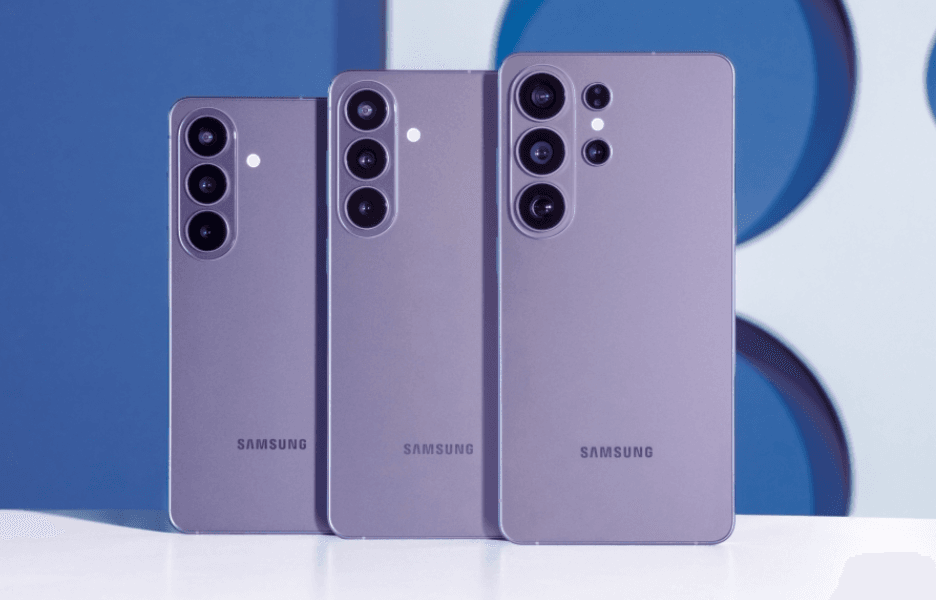
Samsung just unveiled the Galaxy S26 series at Galaxy Unpacked 2026 in San Francisco on February 25, and if you’ve been following Samsung’s trajectory over the past few years, nothing about this launch will surprise you.
AI. AI everywhere. AI in the camera. AI in the assistant. AI organizing your screenshots. AI summarizing your messages. AI so deeply integrated into every function that Samsung’s tagline for this generation is “The Most Intuitive Galaxy AI Phone Yet.”
But here’s the question Samsung needs to answer: Does making a phone “more AI” actually make it better?
The Galaxy S26, S26+, and S26 Ultra are now available for pre-order (shipping March 11) with prices starting at $899, $1,099, and $1,299 respectively. That’s a $100 price increase on the base models the first hike since the Galaxy S22 while the Ultra remarkably holds the line at last year’s price.
What you get for that money: Snapdragon 8 Elite Gen 5 for Galaxy chipset, upgraded cameras, refined design, enhanced thermal management, and an absolutely overwhelming amount of AI features powered by Galaxy AI running on One UI 8.5 based on Android 16.
Let me break down what’s actually new, what actually matters, why Samsung bet everything on AI, and whether these phones justify their premium pricing in a market where competitors are delivering flagship experiences for hundreds less.
What Samsung Actually Announced: The Complete S26 Lineup
Galaxy S26: The New Entry Point at $899
Display: 6.3-inch FHD+ (up from 6.2″) | 1-120Hz adaptive | 2,600 nits peak brightness
Processor: Snapdragon 8 Elite Gen 5 for Galaxy (customized)
Storage: 256GB base (128GB eliminated) / 512GB option
Camera: Triple rear (50MP main, 12MP ultra-wide, 10MP 3x telephoto) | 12MP front
Battery: Improved capacity with faster charging
Colors: Black, Cobalt Violet, Sky Blue, White
Price: $899 (256GB) $100 increase from S25
The key change: Samsung killed the 128GB option. You now start at 256GB, matching what Apple did with the iPhone 17e. This is positioning, not generosity 256GB lets Samsung justify the price bump.
Galaxy S26+: The Middle Child at $1,099
Display: 6.7-inch QHD+ | 1-120Hz adaptive | 2,600 nits peak brightness
Processor: Same Snapdragon 8 Elite Gen 5 for Galaxy
Storage: 256GB / 512GB
Camera: Same triple camera system as S26
Battery: Larger than S26 with same fast charging
Colors: Black, Cobalt Violet, Sky Blue, White
Price: $1,099 (256GB) $100 increase from S25+
The Plus has always been the hardest Samsung phone to recommend. It’s bigger than the base model but lacks the Ultra’s premium features. The value proposition is murky.
Galaxy S26 Ultra: The Flagship Unchanged at $1,299
Display: 6.9-inch QHD+ | 1-120Hz adaptive | World’s first Privacy Display for mobile
Processor: Overclocked Snapdragon 8 Elite Gen 5 for Galaxy
Storage: 256GB / 512GB / 1TB
Camera: Quad system (200MP main, 50MP 5x telephoto with 10x optical-quality zoom, 50MP ultra-wide, 12MP front)
S Pen: Included with improved latency
Build: Slimmest Ultra ever (0.3mm thinner), 214g weight
Thermal: Upgraded cooling for sustained performance
Colors: Black, Cobalt Violet, Sky Blue, White + exclusive online colors
Price: $1,299 (256GB) No increase from S25 Ultra
The Ultra price holding steady while base models increase is strategic positioning. Samsung is saying “our true flagship maintains value; entry-level customers can absorb the increase.”
The Privacy Display: The One Genuinely New Hardware Feature
Let’s talk about the S26 Ultra’s headline hardware innovation: the world’s first built-in Privacy Display for mobile phones.
What it actually does: The display can switch to a privacy mode that dramatically reduces screen visibility from side angles. Look at it head-on, you see everything normally. Someone sitting next to you sees mostly darkness.
Use cases Samsung is pitching:
- Banking and financial apps in public
- Sensitive work emails on trains
- Medical information viewing
- Private messages in shared spaces
How it works: Adaptive screen technology that can toggle between standard wide viewing angle and restricted narrow viewing cone. Controlled via software toggle.
The reality check: E-ink readers have had similar tech for years. Laptops have offered privacy screens as add-ons forever. This is Samsung making it native and toggle-able rather than requiring physical screen protectors.
Is it useful? Absolutely, for specific scenarios. Is it revolutionary? Not really. It’s a nice-to-have that Samsung can market as “world’s first on mobile” to differentiate the Ultra.
The Snapdragon 8 Elite Gen 5: Customized for Galaxy
Samsung continues its exclusive partnership with Qualcomm for custom “For Galaxy” chipsets.
Performance improvements claimed:
- 39% faster NPU (Neural Processing Unit) for AI tasks
- 24% faster GPU for gaming and graphics
- 19% faster CPU for general performance
Real-world impact:
- Smoother AI feature processing
- Better sustained gaming performance with improved thermal management
- Faster app loading and multitasking
The caveat: Benchmark improvements don’t always translate to noticeable daily usage differences. The S25 was already fast. The S26 is faster, but you’d struggle to feel the difference in normal use.
Where it matters: AI feature responsiveness, computational photography, and gaming. If you don’t use AI features heavily or game on your phone, the processor upgrade is mostly theoretical.
The Camera Story: Evolutionary, Not Revolutionary
Samsung’s camera updates are incremental this generation:
S26 and S26+:
- Same triple camera setup as predecessors
- Upgraded image processing via AI ISP (Image Signal Processor)
- Enhanced Nightography for low-light scenes
- AI-powered photo editing tools
S26 Ultra:
- 200MP main sensor (carried over from S25 Ultra)
- 50MP 5x telephoto with improved low-light (wider aperture)
- 10x optical-quality zoom maintained
- AI ISP now extended to front camera for better selfies
- Advanced video stabilization
The AI photography features:
- Day-to-night conversion (turn daytime photos into nighttime scenes)
- Object restoration (fill in missing parts of objects in images)
- Photo merging (combine multiple shots into one cohesive image)
- Enhanced detail capture in low light
Honest assessment: These are refinements, not breakthroughs. The S25 Ultra already had an excellent camera. The S26 Ultra’s camera is better in specific scenarios (low-light telephoto) but not transformatively different.
If you’re upgrading from S23 or earlier, the camera improvement is real. From S25? Marginal at best.
The AI Avalanche: Galaxy AI Gets Even More Aggressive
This is where Samsung went all-in. The S26 series is absolutely saturated with AI features:
Bixby Gets (Actually) Useful
Samsung rebuilt Bixby with natural language understanding. Finally.
What’s new:
- Conversational commands that actually understand context
- Real-time web search integration
- Intent-based settings control
The killer example Samsung demoed: Say “My eyes feel tired.” Bixby immediately suggests activating Eye Comfort Shield, reducing blue light. You don’t need to know the setting name or navigate menus.
This is what voice assistants should have been doing for years. Samsung finally caught up.
But: You can also choose Gemini or Perplexity as your default assistant. Samsung acknowledging that Bixby alone isn’t compelling enough is telling.
Circle to Search 2.0: Multi-Element Recognition
Google’s Circle to Search feature (introduced on S24) now supports multi-element searches.
Example: Circle a celebrity’s outfit. The AI identifies individual pieces — jacket, pants, shoes — and generates shopping links for similar items.
This moves from “search for this thing” to “recreate this look” functionality.
Screenshot Analyzer
Galaxy AI now automatically categorizes screenshots so you can find them later.
How it works: Take a screenshot, AI analyzes content, tags it appropriately (receipt, recipe, meme, article, etc.), makes it searchable.
Why this matters: Most people have hundreds of unsorted screenshots. Finding that one receipt from three months ago is painful. AI categorization actually solves a real problem.
Now Brief and Now Bar
Now Brief: AI-generated daily summaries pulling from notifications, messages, calendar, reminders. Deeper integration with personal data engine to highlight what’s coming in your day.
Now Bar: Adaptive recommendations based on your usage patterns. Suggests apps, shortcuts, and actions contextually.
Call Screening and Spam Protection
AI-powered call screening expanded to more countries. Real-time spam detection before you even answer.
Feature: The phone analyzes incoming calls, checks against spam databases, uses AI to detect scam patterns, and filters accordingly.
Expansion: Previously US-only, now rolling out globally.
The Design: Refined, Slimmer, Lighter — But Familiar
Samsung didn’t reinvent the Galaxy S aesthetics. Instead, refinement:
S26 Ultra specifically:
- 0.3mm thinner than S25 Ultra
- Weighs 214g (down from ~230g)
- Rounded curvature for better ergonomics
- Cohesive color palette across all models (first time Black, Cobalt Violet, Sky Blue, White available on all three)
Materials:
- Expanded use of recycled materials
- Ceramic Shield glass (improved scratch resistance)
- Aluminum frame (not titanium Samsung ditched titanium for cost reasons)
The titanium story: The S25 Ultra featured titanium. The S26 Ultra doesn’t. Samsung spun this as “optimizing materials” but the reality is cost reduction to maintain margin at the same $1,299 price.
Is this noticeable? Barely. Titanium was a marketing bullet more than a functional necessity.
What You Don’t Get: The Missing Features
Let’s be honest about what Samsung didn’t include:
No Magnetic Wireless Charging (Qi2): Despite Qi2 launching years ago and offering convenient magnetic alignment, Samsung still doesn’t include built-in magnets. You get Qi wireless charging, just not the magnetic alignment.
Why? Likely cost and potential interference with S Pen on Ultra models.
No Satellite Messaging Expansion: The S25 featured satellite messaging in partnership with carriers. The S26 continues this but doesn’t meaningfully expand it.
Apple’s satellite features work globally. Samsung’s remain carrier-dependent and geographically limited.
No Revolutionary Form Factor: This is the same slab smartphone Samsung has been selling for years. No foldable experiment, no radical redesign, no new interaction paradigm.
Still 60Hz on Base Model? Nope: Actually, all three models feature 1-120Hz adaptive refresh. Samsung finally brought ProMotion-equivalent to the entire lineup.
The Pricing Reality: $100 More, Same Ultra Price
Here’s the uncomfortable truth Samsung is banking on you accepting:
S26: $899 (+$100) S26+: $1,099 (+$100) S26 Ultra: $1,299 (unchanged)
Samsung’s justification:
- First price increase since S22 (2022)
- Rising component costs
- Doubled base storage (256GB vs 128GB)
- Enhanced AI features requiring more processing power
The counter-argument:
- Competitors like OnePlus, Google Pixel, and Chinese brands offer comparable specs for $200-300 less
- Apple’s iPhone 17e delivers flagship chip at $599
- The $100 increase eliminates Samsung’s price advantage over iPhone
Samsung is betting that Galaxy AI differentiation justifies premium pricing. The market will decide if they’re right.
How It Compares to the Competition
vs. iPhone 17 / 17 Pro
Samsung S26 advantages:
- 120Hz across all models (iPhone 17 base is 60Hz)
- More RAM (12GB vs 8GB)
- Better zoom cameras (5x optical on Ultra)
- More customization and flexibility
iPhone advantages:
- Superior video recording and processing
- Longer software support track record
- Better ecosystem integration (if you’re in Apple’s ecosystem)
- Superior build quality and materials
Verdict: Preference-dependent. If you’re already in one ecosystem, stay there.
vs. Google Pixel 10 Pro
Samsung S26 advantages:
- More powerful processor
- Better display brightness
- S Pen functionality (Ultra)
- Wider accessory ecosystem
Pixel 10 Pro advantages:
- Superior computational photography
- Cleaner Android experience (stock Android)
- Better AI integration (Google’s AI leads Samsung’s)
- $200+ cheaper
Verdict: Pixel wins on photography and AI. Samsung wins on raw specs and features.
vs. OnePlus 15 Pro / Xiaomi 16 Ultra
Samsung advantages:
- Better software update commitment
- Wider retail availability
- More refined software experience
- Brand recognition
OnePlus/Xiaomi advantages:
- $300-400 cheaper
- Often match or exceed specs
- Faster charging
- More aggressive features
Verdict: Chinese brands offer better value on paper. Samsung offers polish, support, and trust.
The Real Question: Should You Upgrade?
Let’s get practical:
Upgrade from S23 or earlier: Yes
Three years is a reasonable upgrade cycle. The S26 offers:
- Significantly better performance
- Much improved cameras
- Modern AI features
- Better battery life
The jump from S23 to S26 is meaningful.
Upgrade from S24: Maybe
One year is short for smartphone upgrades, but if you:
- Want the latest AI features
- Need better camera performance (especially low-light)
- Value the Privacy Display (Ultra only)
- Get good trade-in value
Then consider it. Otherwise, wait.
Upgrade from S25: No
The S25 is less than one year old. The S26 is iterative. Save your money. Nothing here justifies upgrading after just one generation.
The Bottom Line: Samsung Bet on AI — Time Will Tell If It Pays Off
The Galaxy S26 series is exactly what you’d expect from Samsung in 2026: incremental hardware improvements, aggressive AI integration, premium pricing, and marketing focused on “intelligence” over innovation.
What Samsung got right:
- Privacy Display is genuinely useful
- Bixby improvements are overdue but welcome
- Maintaining S26 Ultra price while raising base model prices is smart positioning
- Thermal management improvements matter for sustained performance
- Screenshot organization and Now Brief solve real problems
What Samsung got wrong:
- $100 price increases make these harder to recommend over competitors
- AI features feel more like checkbox items than transformative experiences
- Ditching titanium while raising base model prices sends mixed signals
- Still no Qi2 magnetic charging is frustrating
- Camera improvements are minimal generation-over-generation
The AI bet: Samsung is convinced that AI differentiation justifies premium pricing. They’re betting consumers will pay more for phones that “think for them.”
The counter-argument: Most AI features are software that could work on older hardware. Google offers similar AI features on cheaper Pixel phones. Apple is bringing Apple Intelligence to the $599 iPhone 17e.
Why pay $899-$1,299 for AI that competitors deliver for less?
Samsung’s answer needs to be: superior execution, better integration, more reliable performance. If Galaxy AI truly works better than competitors’ AI, the premium is justified.
If it doesn’t? These are just very expensive phones with iterative upgrades and impressive AI marketing.
The market reality: Pre-orders are live. Shipping begins March 11. Samsung is offering up to $900 trade-in credit and free storage upgrades (256GB → 512GB) during the pre-order period.
With those incentives, the effective price drops significantly. Without them, you’re paying full premium for phones that face serious competition from both ends Apple at the high end, OnePlus/Pixel/Chinese brands at the value end.
The Galaxy S26 series is a solid, well-executed smartphone lineup. Refined hardware, enhanced AI, premium materials (mostly), excellent displays, capable cameras.
But “solid and refined” doesn’t scream “must upgrade now.” It whispers “wait for a good deal or upgrade when your current phone stops working.”
That might be fine for Samsung. Not everyone needs to buy every year. But for a launch that’s supposed to excite and differentiate, the S26 series feels more like “what we expected” than “what we hoped for.”
The AI is impressive. The hardware is excellent. The price is high. The competition is fierce.
Your move, Samsung.
Galaxy S26 series pre-orders are open now via Samsung.com, carriers, and retailers. General availability begins March 11, 2026. Trade-in offers up to $900 and free storage upgrades available during pre-order period. Pricing: S26 $899, S26+ $1,099, S26 Ultra $1,299. All models available in Black, Cobalt Violet, Sky Blue, and White.
Leave a Reply