
Introduction: The Conference That Shook the AI World
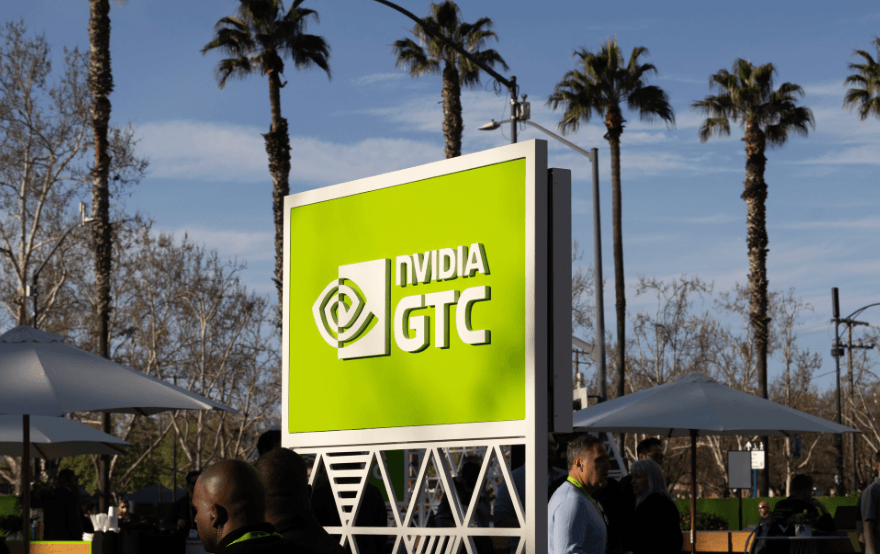
NVIDIA’s GPU Technology Conference (GTC) 2026 has officially gone down as the most packed, most ambitious, and most consequential GTC in the event’s history. Held at the SAP Center in San Jose, California from March 16–19, 2026, GTC 2026 drew an estimated 30,000+ attendees up 20% from last year along with 450+ sponsors, 1,000 sessions, and 2,000 speakers.
CEO Jensen Huang took the stage in his trademark leather jacket to a roaring crowd and delivered a keynote that lasted over two hours, covering everything from next-generation GPU architectures and brand-new AI chips to robotics, autonomous vehicles, space computing, and a surprisingly memorable appearance from Disney’s Olaf.
The overarching theme? Agentic AI has arrived and NVIDIA is positioning itself as the indispensable infrastructure layer for the next era of computing.
“This is the incredible power of extreme codesign.” — Jensen Huang
Whether you’re an AI developer, a tech investor, a startup founder, or simply a tech enthusiast, here is everything NVIDIA announced at GTC 2026, explained in full.
1. The Big Number: $1 Trillion in Orders {#the-big-number}
Huang opened with a headline figure that left little room for ambiguity. NVIDIA now projects at least $1 trillion in cumulative revenue from Blackwell and Vera Rubin systems through 2027 — double the $500 billion target the company had announced just one year ago.
The reason? A fundamental shift in how AI is used. The industry has moved from training large models to running them in production a transition that demands massive, continuous inference compute. As agentic AI systems spawn sub-agents to accomplish tasks, the number of tokens being generated at any moment has exploded.
“I believe computing demand has increased by 1 million times over the last few years.” — Jensen Huang
NVIDIA’s data center revenue hit $193.5 billion in fiscal 2026, up from $116.2 billion in fiscal 2025, and with hyperscalers like Amazon, Google, Meta, and Microsoft spending a projected $650 billion on AI in 2026 alone, NVIDIA is positioned to capture a substantial share.
Goldman Sachs responded immediately after the keynote, maintaining a “Buy” rating and citing the $1 trillion guidance as clear evidence that AI capital expenditure will not peak in 2026.
2. Vera Rubin Platform: Seven Chips, Five Racks, One Supercomputer {#vera-rubin}
The centerpiece of GTC 2026 is the NVIDIA Vera Rubin platform a complete rethinking of what an AI computing system looks like, named after astronomer Vera Rubin whose work revealed dark matter.
The platform includes:
- 7 chips
- 5 rack-scale systems
- 1 supercomputer (the Vera Rubin Pod)
The Vera Rubin NVL72
The flagship rack system, the NVL72, contains 72 Rubin GPUs and delivers:
- 4x training performance compared to Grace Blackwell
- 10x inference performance per watt compared to Grace Blackwell
- Token throughput scaling from 2 million tokens/second (Hopper-era x86) to 700 million tokens/second in a one-gigawatt factory a 350x increase
The first Vera Rubin NVL72 system is already running in Microsoft Azure, making Azure the first hyperscale cloud provider to power up the new system globally.
The Vera Rubin Pod
The full pod configuration consists of 40 racks, 1,152 Rubin GPUs, delivering 60 exaflops of compute. NVIDIA also released the Vera Rubin DSX AI Factory reference design and an NVIDIA Omniverse DSX digital twin blueprint, enabling companies to simulate AI factories in software before building them in the physical world. The DSX Airsimulation tool accelerates time-to-token by decreasing deployment time from months to days.
Huang described Vera Rubin as “the entire system, vertically integrated, complete with software, extended end to end, optimized as one giant system.” Each Rubin GPU is equipped with 288GB of HBM4 memory, and the full platform encompasses compute, memory, storage, networking, and security.
3. Groq 3 LPU: NVIDIA’s New Inference Secret Weapon {#groq-3-lpu}
Perhaps the most technically significant hardware announcement at GTC 2026 is the Groq 3 LPU (Language Processing Unit) the first tangible product from NVIDIA’s $20 billion acquisition of Groq last year, which brought Groq founder Jonathan Ross and president Sunny Madra into the NVIDIA fold.
What Makes Groq 3 Different
Unlike NVIDIA’s GPUs, which rely on large HBM memory banks, the Groq 3 LPU features:
- 500MB of on-chip SRAM per chip small in capacity but blazing in bandwidth
- 150 TB/s of memory bandwidth (vs. ~22 TB/s on Rubin HBM4)
- 40 petabytes per second of bandwidth at the rack level
- Deterministic, compiler-scheduled dataflow: the decode path is compiled statically at model load time, eliminating scheduling overhead entirely
This makes the Groq 3 LPU purpose-built for one thing: ultra-low-latency token decoding. Where GPUs dominate the “prefill” phase (processing the input prompt), the Groq LPU dominates the “decode” phase (generating tokens), which is where latency is felt most acutely by end users.
The Groq 3 LPX Rack
NVIDIA packages 256 Groq 3 LPUs into a Groq 3 LPX rack featuring:
- 128GB of on-chip SRAM total
- 640 TB/s of scale-up bandwidth
- 32 compute trays with 8 LPUs each, connected via a direct chip-to-chip copper spine
Disaggregated Inference: The Architecture Breakthrough
The real innovation isn’t the chip alone it’s how NVIDIA’s Dynamo 1.0 inference orchestration software combines Vera Rubin and Groq 3 into a disaggregated inference pipeline:
- Vera Rubin NVL72 handles the memory-intensive prefill and KV cache work
- Groq 3 LPX handles the latency-sensitive decode operations
- Communication runs over Ethernet with a special protocol that cuts end-to-end latency roughly in half
The result: up to 35x higher tokens-per-watt and 10x more revenue opportunity for trillion-parameter models compared to Blackwell alone. This directly targets Cerebras a key challenger in the low-latency inference space by offering comparable architecture within NVIDIA’s platform.
Huang’s practical guidance for infrastructure teams: allocate roughly 25% of data center capacity to Groq LPX for high-value agentic and code generation workloads, and the rest to Vera Rubin for high-throughput tasks. The Groq 3 LPX rack is scheduled to ship in Q3 2026, manufactured by Samsung.
4. Vera CPU: NVIDIA’s Custom CPU for Agentic AI {#vera-cpu}
For the first time at this scale, NVIDIA is going head-to-head with Intel and AMD in the server CPU market with a dedicated processor purpose-built for AI the NVIDIA Vera CPU.
Traditional server CPUs weren’t designed for the memory access patterns that agentic AI demands: constantly pulling model parameters and KV cache data from memory at enormous bandwidth, under the dynamic and unpredictable conditions of multi-agent systems.
Vera features:
- 88 custom “Olympus” cores, engineered entirely by NVIDIA
- Optimized for agentic AI execution, reinforcement learning, and rapid context switching
- A dedicated Vera CPU rack, separate from the Rubin GPU racks, targeting CPU-bound agentic workloads like web browsing, file manipulation, and tool execution
“Vera is the best CPU for agentic AI workloads.” — Ian Buck, VP of Hyperscale & HPC, NVIDIA
5. BlueField-4 STX Storage Architecture {#bluefield-4-stx}
The BlueField-4 STX is NVIDIA’s new AI-native storage rack, extending GPU memory across the entire data center pod. Key specs:
- 5x token throughput compared to traditional storage
- 4x energy efficiency
- 2x faster data ingestion
- Includes the new NVIDIA CMX Context Memory Storage Platform, which manages KV cache and model weights at the storage layer, dramatically reducing round-trip latency for large-context inference tasks
6. Spectrum-6 SPX Networking Rack {#spectrum-6-spx}
The Spectrum-6 SPX is NVIDIA’s next-generation optical scale-out networking solution, enabling AI factories to scale horizontally with minimal latency penalty. Highlights include:
- Support for co-packaged optics (CPO) and copper interconnects
- Mass production of Spectrum-X CPO switches beginning in 2026
- A vertical scaling CPO rack supporting 576 GPUs for ultra-dense AI factory configurations
7. DLSS 5: The Biggest Leap in Graphics Since Ray Tracing {#dlss-5}
NVIDIA’s biggest consumer announcement at GTC 2026 is DLSS 5 a brand-new AI-powered rendering technique described by Huang as “the biggest leap in real-time graphics since ray tracing.”
Unlike prior DLSS versions that focused on upscaling and frame generation, DLSS 5 introduces a fundamentally new layer: 3D-Guided Neural Rendering. This AI system:
- Receives only color information and motion vectors from the game engine
- Uses a trained neural network to semantically understand surfaces (skin, hair, water, metal, fabric) and processes each differently
- Adds photorealistic lighting, shadows, and material behavior on top of the existing geometry and textures without modifying the underlying art
- Enables real-time, photoreal 4K performance on local RTX hardware
According to Digital Foundry, hands-on testing in titles including Resident Evil Requiem, Hogwarts Legacy, Assassin’s Creed Shadows, Oblivion Remastered, and Starfield produced results described as “astonishing” for environments and materials. The technology was developed over three years.
DLSS 5 will ship for the RTX 50 series (Blackwell) in Fall 2026, integrated via the NVIDIA Streamline framework reducing adaptation costs for developers. Current RTX series GPUs will receive it as a driver update.
Note: The gaming community has offered some pushback on facial rendering, with some users describing AI-altered faces as feeling like a “generic AI filter” that changes developers’ artistic intent. This will be an area to watch as developer adoption grows.
8. NemoClaw & OpenClaw: The Agent Operating System {#nemoclaw-openclaw}
One of the biggest strategic announcements at GTC 2026 isn’t hardware it’s an open-source platform called OpenClaw, which Huang called “the most popular open source project in the history of humanity.”
OpenClaw, originally created by developer Peter Steinberger, provides a framework for building long-running, always-on AI agents (“claws”) that operate continuously on a user’s or enterprise’s behalf. With a single command, developers can pull down OpenClaw, stand up an AI agent, and begin extending it with tools and context.
NVIDIA’s contributions to the ecosystem:
- NVIDIA NemoClaw: An enterprise-grade deployment stack that installs NVIDIA Nemotron models and the OpenShell runtime in a single command. Huang compared NemoClaw’s importance to Linux and Kubernetes.
- NVIDIA OpenShell: A policy enforcement runtime providing network guardrails, privacy routing, and access control making OpenClaw enterprise-safe
- Build-a-Claw event at GTC Park, where attendees could deploy their own always-on AI assistant using DGX Spark or RTX laptops
“Every single company in the world today has to have an OpenClaw strategy.” — Jensen Huang
Huang described OpenClaw as the “operating system of agentic computers” and NemoClaw as “the policy engine of all the SaaS companies in the world.”
9. Nemotron Coalition: Open Frontier Models {#nemotron-coalition}
To rally the AI ecosystem around open models, NVIDIA announced the Nemotron Coalition a consortium of leading global AI labs and companies committed to building open frontier models across six model families:
| Model Family | Domain |
|---|---|
| NVIDIA Nemotron | Language & Reasoning |
| NVIDIA Cosmos | World Models & Vision |
| NVIDIA Isaac GR00T | General-Purpose Robotics |
| NVIDIA Alpamayo | Autonomous Driving |
| NVIDIA BioNeMo | Biology & Chemistry |
| NVIDIA Earth-2 | Weather & Climate |
Coalition partners include Mistral AI, Cursor, Perplexity, and others. NVIDIA also announced open-source availability of its Cosmos world models and Alpamayo AV models on GitHub and Microsoft Foundry, alongside expanded BioNeMo tools for drug discovery and protein structure prediction.
Dynamo 1.0 NVIDIA’s inference “operating system” for AI factories also entered production at GTC, with AWS committing to deploy it at scale. Dynamo reportedly boosts Blackwell GPU inference performance by up to 7x.
10. Feynman Architecture: NVIDIA’s 2028 Roadmap {#feynman}
In a notably detailed roadmap disclosure, Huang revealed the architecture that will follow Vera Rubin: Feynman, targeted for 2028.
The Feynman generation includes:
- A new GPU (details TBA)
- A new LPU: LP40 (next-gen evolution of Groq architecture)
- A new CPU: NVIDIA Rosa, named after Rosalind Franklin, whose X-ray crystallography revealed the double helix structure of DNA. Rosa is designed to move data, tools, and tokens efficiently across the full agentic AI stack.
- BlueField-5 and ConnectX 10 (CX10) networking
- NVIDIA Kyber: A new interconnect standard supporting both copper and co-packaged optics for scale-up
- Spectrum-class optical scale-out for scale-out across AI factories
The Feynman generation advances all pillars of the AI factory: compute, memory, storage, networking, and security.
For consumer gamers: RTX 60 series cards, derived from the Rubin architecture, are expected in 2027.
11. Physical AI & Robotics {#physical-ai-robotics}
GTC 2026 marked a significant expansion of NVIDIA’s physical AI push extending AI from digital agents into systems that interact with the real world.
Key robotics announcements include:
- Expanded Isaac GR00T foundation model: Updated general-purpose robotics model now available for integration with industrial robots
- New robotics partners: ABB, Universal Robots, KUKA, FANUC, Figure, and Agility Robotics are all integrating NVIDIA’s physical AI models and simulation tools
- NVIDIA AGX Thor: The system chip powering next-generation autonomous robots, now deployed in autonomous buses built by Isuzu and China’s Tier IV
- Newton Physics Engine: NVIDIA’s real-time physics simulation engine, demonstrated live during the Olaf demo (more on that below)
- Telecom edge AI: Partnership with T-Mobile to integrate physical AI applications on AI-RAN (AI Radio Access Network) infrastructure, effectively turning base stations into edge AI platforms
- Dassault Systèmes partnership: Virtual twin technology for biology, materials engineering, and manufacturing using NVIDIA Omniverse
12. Autonomous Vehicles: “The ChatGPT Moment Has Arrived” {#autonomous-vehicles}
Huang’s most energetic segment may have been autonomous vehicles. He declared: “The ChatGPT moment for autonomous driving is here.”
New automaker partners building Level 4 autonomous vehicles on NVIDIA’s Drive Hyperion program:
- BYD
- Hyundai (with Kia)
- Nissan
- Geely
Isuzu and China’s Tier IV are building autonomous buses on the platform. NVIDIA’s NVIDIA Drive AV software is the full-stack solution powering these deployments.
The flagship partnership announcement: Uber will launch a fleet of NVIDIA-powered autonomous vehicles across 28 cities on 4 continents by 2028, starting with Los Angeles and San Francisco in 2027. NVIDIA’s Alpamayo models for AV development are now available via GitHub and Microsoft Foundry.
Huang called autonomous vehicles “the first multitrillion-dollar robotics industry.”
13. Cloud & Hyperscaler Partnerships {#cloud-partnerships}
GTC 2026 saw a wave of major cloud partnership announcements:
AWS
Amazon Web Services announced it will deploy more than 1 million NVIDIA GPUs plus Groq 3 LPUs — spanning the full Blackwell, Rubin, RTX PRO, and Groq 3 stack. The partnership also includes deployment of NVIDIA Groq 3 LPUsfor ultralow-latency inference and is set to begin rollout in 2026.
Microsoft Azure
Azure is the first hyperscale cloud to power up the Vera Rubin NVL72 system, with global rollout planned over the coming months. Microsoft has already deployed hundreds of thousands of liquid-cooled Grace Blackwell GPUs in less than a year. Microsoft also announced integration of NVIDIA’s physical AI models and Cosmos world models via Microsoft Foundry.
Oracle
Oracle and NVIDIA announced GPU-accelerated vector index builds for real-world workloads, built on Oracle AI Database 26ai and Oracle Private AI Services Container with support for NVIDIA GPUs and the NVIDIA cuVS open-source library for vector search.
Thinking Machines Lab
A multiyear, gigawatt-scale strategic partnership for Vera Rubin systems to support frontier model training the largest announced infrastructure commitment at GTC 2026.
RTX PRO for Enterprises
NVIDIA launched the RTX PRO Blackwell Server Edition GPU family, targeting enterprise AI workloads. RTX PRO-powered workstations from Dell, HP, and Lenovo were showcased at GTC partner booths.
14. Space Computing: NVIDIA Goes to Orbit {#space-computing}
In one of the more futuristic announcements, Huang revealed that NVIDIA is going to space.
Future systems like NVIDIA Space-1 Vera Rubin are being designed to bring AI data centers into orbit. The goal: extend accelerated computing from Earth to space, enabling AI factories that operate beyond the constraints of terrestrial infrastructure. Details on timeline and deployment partners were not disclosed, but this marks the first formal entry of NVIDIA into orbital computing.
15. Healthcare AI {#healthcare-ai}
NVIDIA’s BioNeMo platform received significant updates at GTC 2026, with new tools targeted at:
- Drug discovery and protein structure prediction
- Genomics and chemistry simulation
- Biology foundation models available via the Nemotron Coalition
NVIDIA also highlighted healthcare-specific compute partnerships and Omniverse-based digital twin deployments for medical device and hospital operations planning.
16. Quantum Computing {#quantum}
GTC 2026 included sessions and announcements around quantum-classical hybrid computing, with NVIDIA’s CUDA-Qplatform continuing to receive updates for developers exploring quantum circuit simulation and hybrid algorithm design on NVIDIA GPU infrastructure.
17. The Olaf Moment: Disney & Physical AI Demo {#olaf-demo}
In a showstopping close to the keynote, Huang was joined on stage by Olaf the beloved snowman character from Disney’s Frozen physically walking around and interacting with Huang in real time.
The demo was powered entirely by:
- NVIDIA Jetson (the onboard compute module inside Olaf)
- Newton Physics Engine for real-time physics simulation
- NVIDIA Omniverse for sim-to-real transfer Olaf learned to walk inside Omniverse before taking his first physical steps
When Huang joked that Jetson was “in your tummy,” Olaf playfully replied and waddled around the stage. The demo was entirely live, not pre-rendered.
The keynote ended with a full musical performance by a group of singing robots, a digital Jensen avatar, and an animated lobster performing a campfire song underlining just how far physical AI simulation has come.
18. Key Takeaways for Developers & Founders {#takeaways}
Here’s what GTC 2026 means in practical terms:
For AI developers:
- OpenClaw + NemoClaw is becoming the default agent stack. Get familiar with it now NVIDIA is making it the standard enterprise deployment path.
- Dynamo 1.0 is in production and delivers real inference gains (up to 7x on Blackwell).
- Disaggregated inference (Rubin + Groq) will be the dominant architecture for trillion-parameter models.
For founders & product teams:
- Agentic AI infrastructure costs are about to drop significantly as Vera Rubin ships and token-per-watt efficiency improves.
- Every SaaS company is being pressured toward becoming an “AaaS” (Agentic as a Service) company Huang’s framing is intentional.
- Autonomous vehicle and robotics deployment timelines are no longer theoretical Uber/NVIDIA’s 28-city rollout by 2028 is a real commercial deployment.
For gamers & creators:
- DLSS 5 arrives Fall 2026 for RTX 50 series the biggest visual upgrade in years, though with caveats around facial rendering.
- Rubin-derived consumer GPUs (RTX 60 series) are expected in 2027.
For investors:
- Goldman Sachs and major banks turned bullish post-GTC. The $1 trillion order figure and the Groq inference story directly address the two biggest investor concerns: growth sustainability and Cerebras competition.
Conclusion: GTC 2026 Marks the Start of the Agentic Era
NVIDIA GTC 2026 wasn’t just a product showcase it was a declaration of architectural intent. Jensen Huang’s two-hour keynote outlined a world where every company runs an AI factory, every developer deploys an agent, every vehicle drives itself, and AI compute extends from your laptop to orbital data centers.
The five-rack Vera Rubin system, the Groq 3 LPU inference breakthrough, the OpenClaw/NemoClaw agent stack, the Nemotron Coalition’s open models, and the $1 trillion demand signal together paint a clear picture: NVIDIA has no intention of slowing down, and the infrastructure for the next decade of AI is being poured right now.
Whether you’re building on top of this stack or simply watching it unfold, GTC 2026 will be remembered as the conference where the agentic era officially began.
Tags: NVIDIA, GTC 2026, Jensen Huang, Vera Rubin, Groq 3 LPU, DLSS 5, NemoClaw, OpenClaw, Agentic AI, AI Hardware, Autonomous Vehicles, Robotics, AI Factory, Nemotron, RTX PRO, GPU 2026
Leave a Reply