
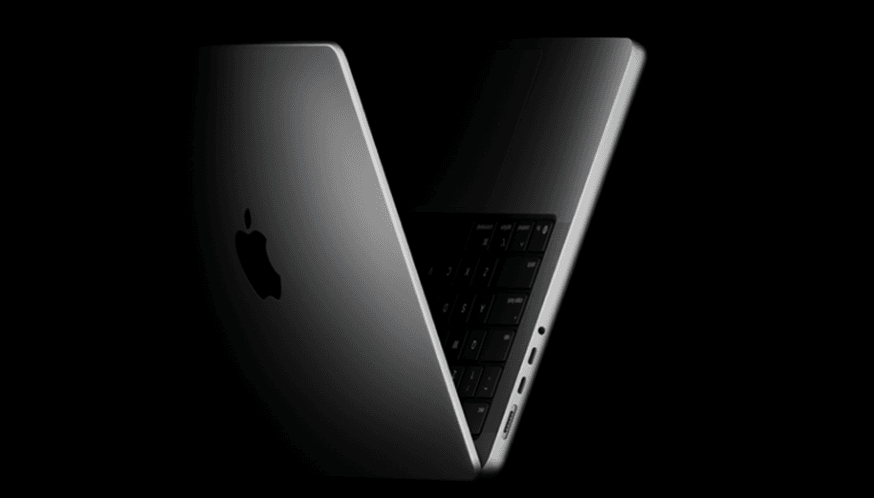
Apple just announced the M5 MacBook lineup, and the message is clear: if you want AI power, you’re going to pay for it.
Unveiled on Tuesday, March 3, 2026, the new MacBook Air with M5 and MacBook Pro with M5 Pro/M5 Max represent Apple’s most aggressive push yet toward making “AI-first” laptops. The company claims up to 4x faster AI performancecompared to M4 models, with the ability to run large language models and generate AI images entirely on-device without cloud processing.
Here’s the catch: MacBook Air prices just increased $100 across the board for the first time since 2022. The 13-inch now starts at $1,099 (was $999), and the 15-inch at $1,299 (was $1,199). The MacBook Pro 16-inch M5 Max jumped $400 to $3,899.
Pre-orders opened yesterday. Shipping begins March 11. And Apple is positioning these laptops as essential tools for the AI era whether you’re running Apple Intelligence features, training custom models, or generating images locally.
But is 4x faster AI performance worth $100-$400 price increases? Let me break down what’s actually new, why Apple raised prices now, how these compare to Windows alternatives, and whether the M5 MacBooks justify their premium pricing.
What Apple Actually Announced: The Complete M5 Lineup
MacBook Air M5: AI Performance Comes to the Mainstream
13-inch MacBook Air M5:
- Display: 13.6-inch Liquid Retina (2560×1664) | 500 nits
- Processor: M5 (10-core CPU, up to 10-core GPU, 16-core Neural Engine)
- Storage: 512GB base (doubled from 256GB) | Up to 4TB
- RAM: 8GB unified memory (configurable to 32GB)
- Battery: 18 hours wireless web
- Ports: 2 Thunderbolt 4, MagSafe 3, headphone jack
- Wireless: Wi-Fi 7 + Bluetooth 6 (via N1 chip)
- Colors: Midnight, Starlight, Silver, Sky Blue
- Price: $1,099 (+$100 increase)
15-inch MacBook Air M5:
- Same specs as 13-inch but larger 15.3-inch display
- Price: $1,299 (+$100 increase)
Key improvements over M4 Air:
- 4x faster AI tasks
- 2x faster SSD read/write speeds
- Doubled base storage (512GB vs 256GB)
- Wi-Fi 7 and Bluetooth 6
- Enhanced ray-tracing for gaming/3D
MacBook Pro M5 Pro & M5 Max: The AI Workstation
14-inch MacBook Pro M5 Pro:
- Display: 14.2-inch Liquid Retina XDR | ProMotion 120Hz | Optional nano-texture
- Processor: M5 Pro (18-core CPU: 6 performance + 12 efficiency)
- Storage: 1TB base (up from 512GB) | Up to 8TB
- RAM: Starts at 24GB | Configurable to 128GB
- Battery: 24 hours video playback
- Ports: 3 Thunderbolt 5, HDMI (8K support), MagSafe 3, SD card, headphone jack
- Price: $2,199
16-inch MacBook Pro M5 Pro:
- Same specs, larger 16.2-inch display
- Price: $2,699
14-inch MacBook Pro M5 Max:
- Processor: M5 Max (18-core CPU, up to 40-core GPU)
- Storage: 2TB base | Up to 8TB
- RAM: Starts at 48GB | Configurable to 192GB
- Price: $3,599
16-inch MacBook Pro M5 Max:
- Same specs, larger display
- Price: $3,899 (+$400 increase from M4 Max predecessor)
Key improvements over M4 Pro/Max:
- 4x faster LLM prompt processing
- 8x faster AI image generation (vs M1 Pro/Max)
- 50% better GPU performance
- 2x faster SSD speeds (up to 14.5GB/s)
- Wi-Fi 7 and Bluetooth 6 via N1 chip
- 24-hour battery life
The Fusion Architecture: What’s Actually New Inside
The M5 Pro and M5 Max introduce a genuinely new chip architecture that Apple calls “Fusion Architecture.”
What it means: Instead of one monolithic chip, Apple split the CPU and GPU into two separate 3nm dies that are combined into a single system-on-chip (SoC).
Why this matters:
- Better thermal management (separate dies can be cooled independently)
- Improved parallel processing (CPU and GPU work more efficiently together)
- Scalability (Apple can mix-and-match die configurations for different performance tiers)
- AI optimization (each GPU core now has a Neural Accelerator integrated)
The Neural Accelerator breakthrough: Previous M-series chips had one dedicated Neural Engine. The M5 adds a Neural Accelerator to every single GPU core. This dramatically speeds up AI workloads that benefit from parallel processing image generation, video AI enhancement, LLM inference.
Real-world impact: Running Stable Diffusion or similar AI image generation models locally is 8x faster on M5 Max vs M1 Max. Processing ChatGPT-style prompts is 4x faster than M4 Pro.
For developers training custom AI models, this brings desktop-class AI compute to a laptop.
The Storage Story: Why Doubled Base Storage Matters
Let’s talk about the storage increases, because this is how Apple justifies price hikes:
MacBook Air:
- M4: 256GB base
- M5: 512GB base (doubled)
- Maximum increased from 2TB to 4TB
MacBook Pro:
- M5 Pro: 1TB base (up from 512GB)
- M5 Max: 2TB base (up from 1TB)
Apple’s argument: “We doubled the storage, so the $100-$400 price increases are offset by value.”
The reality check: Storage is cheap for Apple. Flash memory costs have fallen dramatically. Doubling storage from 256GB to 512GB costs Apple maybe $20-30 in component costs. They’re charging you $100 more for it.
That said, 256GB was cramped for modern usage. 512GB is comfortable for most people. And having 4TB available (MacBook Air) or 8TB (MacBook Pro) is genuinely useful for professionals with large media libraries.
The Price Increases: First Hike Since 2022
Let’s address the elephant in the room: Apple just raised MacBook prices for the first time in 4 years.
MacBook Air:
- 13-inch: $999 → $1,099 (+$100 / +10%)
- 15-inch: $1,199 → $1,299 (+$100 / +8.3%)
MacBook Pro:
- 16-inch M5 Max: $3,499 → $3,899 (+$400 / +11.4%)
- Other Pro models maintained similar pricing
Apple’s justification:
- Doubled base storage
- Enhanced AI capabilities requiring more expensive components
- Wi-Fi 7 and Bluetooth 6 integration
- First increase since 2022 despite component cost inflation
The counter-argument:
- Competitors offer similar specs for $200-400 less
- The M4 was already fast enough for most users
- AI features are mostly software they work on older hardware too
- Storage doubling costs Apple far less than $100
The timing is interesting: Mac sales dropped nearly 7% year-over-year to $8.39 billion in Q4 2025, missing analyst expectations of $9 billion. Apple’s response? Raise prices on existing customers rather than lower prices to expand the market.
The $599 MacBook Neo (announced Wednesday) balances this by targeting budget buyers, but the core MacBook Air and Pro lines just got more expensive.
The AI Performance Claims: What’s Real, What’s Marketing
Apple is leading with AI performance numbers. Let’s separate reality from hype:
What Apple Claims:
MacBook Air M5:
- 4x faster AI tasks vs M4
- 9.5x faster AI vs M1
- 6.9x faster AI video enhancement (Topaz Video)
- 6.5x faster 3D ray-tracing (Blender)
MacBook Pro M5 Pro/Max:
- 4x faster LLM prompt processing vs M4 Pro/Max
- 8x faster AI image generation vs M1 Pro/Max
- Up to 2x faster general tasks vs Intel Core Ultra X7
What this actually means:
For casual users (web browsing, email, streaming): You won’t notice the difference. The M4 was already fast enough. The AI improvements matter for specific workflows, not daily tasks.
For AI developers/researchers: This is genuinely transformative. Training custom models, running local LLMs, generating AI images these workflows see real, measurable speedups.
For creative professionals: Video editors working with AI enhancement, 3D artists using ray-tracing, photographers using AI upscaling meaningful improvements.
For everyone else: The M5 is faster, but you’d struggle to feel it in normal use.
The honest assessment: If you’re not doing AI-intensive work, the M5’s advantages are mostly theoretical. If you aredoing AI work, the improvements are substantial enough to justify consideration.
The Competition: How M5 Macs Stack Up
vs. Windows Laptops with Snapdragon X Elite / Intel Core Ultra
M5 MacBook advantages:
- Better AI performance (Neural Accelerators in every GPU core)
- Superior battery life (18-24 hours vs 10-15 typical for Windows)
- Unified ecosystem (seamless with iPhone, iPad, Apple Watch)
- Better trackpad and keyboard
- Longer software support (5+ years of macOS updates guaranteed)
Windows laptop advantages:
- $200-400 cheaper for similar specs
- More port variety (HDMI, full-size USB-A, ethernet on many models)
- Touch screen options
- Better gaming compatibility
- More software flexibility
Verdict: If you’re in the Apple ecosystem, M5 Macs are unbeatable. If you’re not, Windows laptops offer better value.
vs. Previous M-Series Macs (M1, M2, M3, M4)
Should you upgrade?
From M1/M2: Yes, if you need better performance. The jump is meaningful 4-8x faster on AI tasks, better displays (ProMotion on Pro models), improved connectivity.
From M3: Maybe. The M3 to M5 jump is noticeable but not transformative for most users. If your M3 Mac works fine, save your money.
From M4: No. The M4 launched just 5 months ago (October 2025). The M5 is iterative. Unless you’re doing heavy AI work where the 4x improvement matters, there’s no reason to upgrade.
The general rule: 2-3 years is a reasonable upgrade cycle for Macs. Within that window, you’re paying a lot for marginal gains.
What You Don’t Get: The Missing Features
Let’s be honest about what Apple didn’t include:
No OLED displays: The MacBook Pro still uses mini-LED (Liquid Retina XDR). OLED is rumored for late 2026 or 2027. If you want the absolute best display, you might want to wait.
No touch screens: Despite persistent rumors, Apple still refuses to add touch to MacBooks. If you want touch, get an iPad.
No Face ID: Macs still use Touch ID for biometric authentication. Face ID (like on iPhones) isn’t coming to laptops yet.
No cellular connectivity: Want always-connected internet? You’re tethering to your iPhone or using Wi-Fi. No built-in 5G.
Same 60Hz on Air: The MacBook Air still has a 60Hz display, not the smooth 120Hz ProMotion of Pro models.
Limited ports on Air: Just two Thunderbolt 4 ports. Pro models get three Thunderbolt 5 ports plus HDMI and SD card.
The Bottom Line: Who Should Actually Buy M5 MacBooks
Let’s get practical about who these laptops are for:
Buy the MacBook Air M5 if:
You’re upgrading from a pre-M2 Mac: The jump from Intel or M1 to M5 is substantial. You’ll notice the difference.
You want a lightweight laptop for everyday use: The Air remains the best all-around laptop for students, office workers, and casual users.
You can absorb the $100 price increase: At $1,099, it’s still competitive with premium Windows laptops.
You value the Apple ecosystem: Seamless integration with iPhone, iCloud, and other Apple devices is worth something.
Skip the MacBook Air M5 if:
You have an M3 or M4 Air: The upgrade isn’t worth it. Your current Mac is still excellent.
You’re budget-conscious: The $599 MacBook Neo offers a Mac experience for $500 less.
You need maximum performance: Get the Pro instead.
Buy the MacBook Pro M5 Pro/Max if:
You’re a creative professional: Video editors, photographers, 3D artists, music producers the Pro is built for you.
You’re an AI developer/researcher: The 4x-8x AI performance improvements are genuinely useful.
You need 24-hour battery life: The Pro delivers all-day power even under heavy use.
You’re upgrading from M1/M2 Pro/Max: The performance jump justifies the upgrade.
Skip the MacBook Pro M5 Pro/Max if:
You have an M4 Pro/Max: It’s been 5 months. Wait at least another year.
You don’t do demanding work: If you’re just browsing and emailing, you’re paying for power you don’t need.
The price is prohibitive: $2,199-$3,899 is a lot of money. Make sure you actually need Pro-level performance.
The Strategic Picture: What Apple Is Actually Doing
Step back from individual products and look at Apple’s 2026 Mac strategy:
Budget tier: MacBook Neo at $599 (A18 Pro chip) Expands addressable market, competes with Chromebooks
Mainstream tier: MacBook Air M5 at $1,099 Premium experience for most users, $100 price increase
Pro tier: MacBook Pro M5 Pro/Max at $2,199-$3,899 Extract maximum revenue from professionals who need the power
The segmentation is clear: Apple is squeezing existing customers (Air/Pro price increases) while expanding downmarket (Neo) to capture new buyers.
This dual strategy lets Apple grow revenue in both directions higher prices from loyal customers, new volume from budget buyers.
The Final Verdict: Excellent Laptops, Questionable Value
The M5 MacBooks are technically excellent. The Fusion Architecture is innovative. The AI performance improvements are real for those who need them. The build quality, displays, battery life, and ecosystem integration remain best-in-class.
But the $100-$400 price increases are hard to justify when:
- The M4 was already fast enough for most users
- AI features mostly work on older hardware
- Competitors offer similar specs for hundreds less
- Mac sales are declining, not growing
Apple is betting that “AI performance” becomes a compelling selling point that justifies premium pricing. Maybe it will. AI workloads are growing. Running models locally is genuinely useful for privacy and speed.
But for most people buying a laptop in 2026, the M5’s advantages over M4 are marginal, and the price increases make these harder to recommend than previous generations.
If you need a new Mac and can afford it, the M5 models are excellent choices. If your current Mac works fine, there’s no compelling reason to upgrade. And if you’re budget-conscious, the $599 MacBook Neo might be the smarter buy.
Pre-orders are open. Shipping begins March 11. Choose wisely.
M5 MacBook Air and MacBook Pro models are available for pre-order now at apple.com and Apple retail stores. Shipping begins Wednesday, March 11, 2026. MacBook Air 13″: $1,099 | 15″: $1,299. MacBook Pro 14″ M5 Pro: $2,199 | 16″ M5 Pro: $2,699 | 14″ M5 Max: $3,599 | 16″ M5 Max: $3,899. Colors: MacBook Air in Midnight, Starlight, Silver, Sky Blue | MacBook Pro in Silver, Space Black. Education pricing available with student/teacher verification.
Leave a Reply