
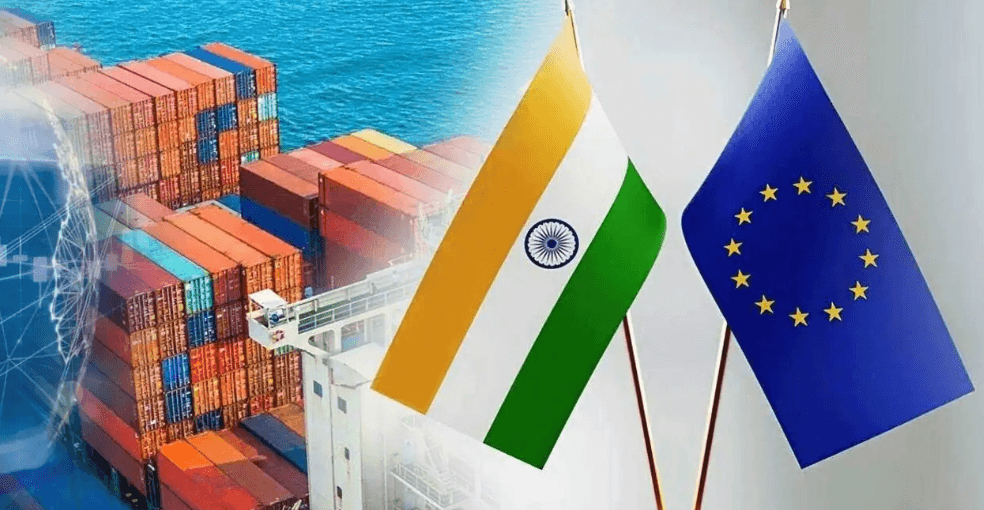
Breaking: January 27, 2026 – After nearly 20 years of negotiations, and political gridlock, India and the European Union just signed what they’re calling “the mother of all deals” a comprehensive free trade agreement covering 2 billion people and creating a $27 trillion economic zone representing 25% of global GDP.
The timing? Incredibly sus. European Commission President Ursula von der Leyen literally flew to New Delhi as Donald Trump’s 50% tariffs on Indian goods took effect, positioning this deal as a direct middle finger to American protectionism.
The scale? Absolutely massive. This is India’s largest trade agreement ever and the EU’s biggest bilateral deal with any country. Over 90% of tariffs between them are getting slashed or eliminated. Your BMW is about to get cheaper. So is your iPhone (Made in India). European wine? Down from 150% tariffs to 20-30%. Indian textiles flooding Europe? Zero duties.
But here’s what nobody’s saying out loud: This deal has clear winners and devastating losers. Indian automakers saw their stock prices crater 1.5-4.2% the moment the deal was announced. European farmers are quietly celebrating. And buried in the fine print is a carbon border tax fight that could define India’s industrial future.
Let me break down everything you actually need to know about the biggest trade deal of 2026, who’s getting rich, who’s getting destroyed, and why this is about way more than just eliminating tariffs.
What Actually Happened Today: The Timeline Nobody’s Watching
January 26, 2026 (Republic Day): Ursula von der Leyen and Antonio Costa (European Council President) attend India’s Republic Day parade as guests of honor. Symbolic optics: Europe standing with India.
January 27, 2026, Morning: Last-minute marathon negotiations. Sources say the EU carbon border tax on Indian steel was the final sticking point.
January 27, 2026, 11:30 AM IST: Modi, von der Leyen, and Costa emerge for a joint press conference. The deal is done.
11:45 AM: Von der Leyen tweets: “We have concluded the mother of all deals. We have created a free trade zone of 2 billion people.”
12:15 PM: Indian Commerce Minister Piyush Goyal announces implementation expected “within this calendar year” (2026).
2:00 PM: Indian stock market reacts. Maruti Suzuki down 1.5%. Tata Motors down 1.3%. Mahindra & Mahindra crashes 4.2%. United Spirits (alcohol) tanks. The market knows who loses.
By Evening: Global headlines calling it historic. Trump hasn’t tweeted yet (give him time).
This is happening. Right now. And it’s going to reshape how 2 billion people trade for the next generation.
The Numbers That Actually Matter: What’s Changing
Let’s cut through the diplomatic language and talk about what this deal actually does:
Tariff Elimination Timeline:
Immediate (Upon Deal Entry, Late 2026):
- 30% of Indian tariffs on EU goods: GONE (zero)
- EU tariffs on Indian textiles, leather, marine products: GONE
- Indian machinery tariffs (currently 44%): ELIMINATED
- Indian chemical tariffs (currently 22%): ELIMINATED
- Indian pharmaceutical tariffs (currently 11%): ELIMINATED
Gradual Phase-Out:
EU Cars:
- Current tariff: 110% (yes, more than DOUBLE the car’s value)
- Year 1: Drops to 30-35%
- Year 5-10: Gradually reduces to 10%
- Annual quota: 250,000 vehicles (160K combustion, 90K electric)
- Cars under €15,000: EXCLUDED (protecting Indian budget segment)
EU Wine & Spirits:
- Wine: 150% → 20-30% (phased over time, Year 1 at 75%)
- Spirits: 150% → 40% (over 7 years)
- Beer: Cut to 50%
Total Tariff Coverage:
- 96.6% of EU goods exports to India: tariffs eliminated or reduced
- 97.5% of Indian goods exports to EU: tariffs eliminated or reduced
Annual Savings:
- EU exporters save: €4 billion ($4.74 billion) in duties annually
- Indian exporters gain: Duty-free access worth $33 billion in labor-intensive sectors
The Services Breakthrough (Bigger Than Anyone Realizes):
This is where the deal gets genuinely revolutionary. India’s services commitments are the most ambitious it has ever made, surpassing even the UK and Australia deals.
What’s Opening Up:
EU Gets Access To:
- 102 Indian service subsectors
- Financial services (banking, insurance, asset management)
- Maritime transport and logistics
- Telecommunications
- Professional services (legal, accounting, consulting)
India Gets Access To:
- 144 EU service subsectors
- IT and software services (already strong, now easier)
- Business process outsourcing
- Digital services
- Professional mobility (easier work visas)
Why This Matters:
India exported $50 billion in services to the EU in 2024-25. With this deal, that number could double by 2030. Indian IT companies, consulting firms, and professional services just got massively easier market access.
Meanwhile, European banks and insurance companies get to enter India’s notoriously protected financial services market with clearer rules and fewer regulatory headaches.
The Trump Factor: Timing Is Everything
Let’s address the elephant wearing a MAGA hat: This deal is a direct response to Trump’s trade war.
The Context:
January 20, 2026: Trump inaugurated for second term. Immediately announces 50% tariffs on Indian goods (ostensibly punishment for buying Russian oil).
January 21-26: Sudden acceleration of India-EU talks. Issues that were stalled for months suddenly resolve overnight.
January 27: Deal signed. Von der Leyen explicitly says it “sends a signal to the world that rules-based cooperation still delivers great outcomes.”
India was one of the countries most heavily hit by Trump’s tariffs 50% on goods is devastating. Half of that was specifically punishment for continued Russian oil purchases.
The EU is also in Trump’s crosshairs. He’s threatening to buy Greenland (which belongs to EU member Denmark), imposing 10-25% tariffs on eight European countries, and generally treating European allies like adversaries.
The Strategic Play:
By signing this deal NOW, India and the EU are:
- Creating alternatives to US markets for each other
- Demonstrating that trade liberalization still works
- Building a counterweight to US-China trade tensions
- Sending a message: economic coercion has consequences
This isn’t just about tariffs. This is about geopolitical realignment in the Trump era.
Who Wins: The Sectors Getting Rich
🎯 Indian Textiles & Apparel
Current status: EU tariffs of 4-26% on Indian textiles New status: ZERO
Impact: €3.6 billion in current exports could double. The Commerce Minister estimates 6-7 million new jobs in textiles alone (India’s second-largest employer after agriculture).
Winners: Garment manufacturers in Tamil Nadu, Gujarat, Maharashtra. Export-oriented textile MSMEs.
💊 Indian Pharmaceuticals
Current status: EU tariffs around 11% New status: Eliminated over 5-7 years
Impact: India already exports €4.7 billion in pharmaceuticals to the EU. Near-zero tariff access massively strengthens Indian generics, APIs, and value-added medicines.
Winners: Indian pharma giants (Sun Pharma, Dr. Reddy’s, Cipla), pharma MSMEs with quality capabilities.
🐟 Indian Marine Products & Seafood
Current status: EU tariffs up to 26% New status: ZERO
Impact: India is a major seafood exporter. Duty-free access to Europe’s premium markets is huge.
Winners: Coastal fishing communities, seafood processing companies, exporters in Kerala, Andhra Pradesh.
💎 Indian Gems & Jewelry
Current status: EU tariffs New status: ZERO
Impact: India’s gems and jewelry exports (already strong) get even more competitive.
Winners: Surat diamond cutters, Mumbai jewelry exporters.
🔧 EU Machinery & Equipment
Current status: Indian tariffs up to 44% New status: Eliminated
Impact: European industrial equipment, manufacturing machinery, and precision tools flood Indian market at lower prices.
Winners: German, Italian, French machinery manufacturers. Indian manufacturers who need imported equipment (lower input costs).
⚗️ EU Chemicals & Pharmaceuticals
Current status: Indian tariffs up to 22% (chemicals), 11% (pharma) New status: Eliminated
Impact: European specialty chemicals, active pharmaceutical ingredients, and finished drugs become more accessible.
Winners: German chemical giants (BASF, Bayer), European pharma companies.
🚗 EU Automakers (Sort Of)
Current status: 110% tariffs (insane) New status: Phased down to 10% over 5-10 years, with 250K annual quota
Impact: European luxury cars (BMW, Mercedes, Audi, Volvo) become significantly cheaper for Indian consumers.
Winners: European premium automakers, wealthy Indian consumers. Losers: Indian automakers (we’ll get to that).
🍷 EU Wine & Spirits
Current status: 150% tariffs (effectively prohibitive) New status: 20-30% (wine), 40% (spirits), 50% (beer)
Impact: European wine, whiskey, gin, and beer suddenly affordable in India’s growing premium alcohol market.
Winners: French wineries, Scottish distilleries, Italian prosecco makers, German beer brands.
Who Loses: The Sectors Getting Destroyed
🚗 Indian Automakers (Complete Panic Mode)
The stock market reaction tells you everything:
- Maruti Suzuki: -1.5%
- Hyundai Motor India: -3.6%
- Tata Motors: -1.3%
- Mahindra & Mahindra: -4.2%
Why the crash? Because suddenly BMW, Mercedes, Audi, Volkswagen, and other European brands get drastically cheaper while Indian brands face new competition.
The Math:
A BMW that currently costs ₹80 lakhs (roughly $95K) due to 110% tariffs could drop to ₹45-50 lakhs ($53-59K) once tariffs fall to 10%.
That’s a 40-45% price drop on premium European cars. Indian automakers competing in the premium segment (Tata, Mahindra) are about to get crushed.
The Defense:
Indian government says the 250K quota and phased reduction give domestic manufacturers time to adapt. Also claims reciprocal EU market access for Indian cars.
The Reality:
Indian cars aren’t competitive in Europe yet. Meanwhile, European cars are about to flood India’s aspirational premium market.
🍺 Indian Alcohol Companies
United Spirits, Allied Blenders, and other Indian alcohol brands saw stock prices drop.
Why? European wine, spirits, and beer are about to become affordable. Indian premium alcohol faces serious competition from French wine, Scottish whiskey, and German beer.
🥩 Indian Agriculture (Protected, But Nervous)
The deal excludes several sensitive agricultural products:
- Beef (Europe wanted access, India said hell no)
- Rice (protected)
- Sugar (protected)
- Dairy (protected)
- Chicken meat (protected)
So Indian farmers are protected… for now. But there’s anxiety that future trade rounds could chip away at these protections.
🏭 Indian Steel & Aluminum (The CBAM Problem)
This is the issue that nearly killed the deal in the final hours: the EU’s Carbon Border Adjustment Mechanism (CBAM).
Starting July 1, 2026, the EU will impose carbon taxes on imports including steel, cement, and aluminum based on their carbon footprint.
Indian steel and aluminum are more carbon-intensive than European equivalents (India uses more coal power). So even with lower tariffs, Indian exports might face carbon taxes that offset the benefits.
The Compromise:
A “technical group” will help Indian firms verify carbon footprints. The EU will provide “technical and financial support” to reduce emissions. India seeks improved access to tariff-free EU steel import quotas.
Translation: They kicked the can down the road. This fight isn’t over.
The Hidden Winners: Services & Professional Mobility
Everyone’s talking about goods (cars, wine, textiles). But the services provisions might be even bigger.
India’s IT Sector Gets A Massive Boost:
- Easier market access for Indian IT companies in Europe
- Clearer rules on data transfers and digital services
- Improved professional mobility (work visas for Indian tech workers)
Indian IT services exports to the EU ($26 billion in 2024) could see 20-30% growth over next 5 years.
European Financial Services Enter India:
European banks, insurance companies, and asset managers get:
- More predictable regulatory environment
- Clearer licensing rules
- Reduced senior management and board nationality requirements
This is huge for European financial giants wanting exposure to India’s fast-growing economy.
Professional Mobility (The Underrated Win):
The deal includes provisions for “temporary entry and stay” for:
- Business visitors
- Intra-corporate transferees
- Contractual service suppliers
- Independent professionals
This makes it easier for Indian professionals to work in Europe and vice versa. For Indian IT consultants, engineers, and business services professionals, this is a game-changer.
The Carbon Border Tax Fight: The Future Battleground
Let’s dig deeper into the CBAM issue because it’s going to define this relationship:
What Is CBAM?
The EU’s Carbon Border Adjustment Mechanism taxes imports based on embedded carbon emissions. Goal: prevent “carbon leakage” (companies moving to countries with lax environmental rules).
Why India Is Worried:
- Indian steel uses coal-intensive production (more carbon per ton)
- Indian cement and aluminum similarly carbon-heavy
- CBAM could impose 20-30% effective carbon taxes on Indian exports
- This would negate most FTA tariff benefits for these sectors
The Compromise (Temporary):
- Technical assistance for Indian firms to calculate carbon footprints
- EU support for emission reduction in Indian industry
- India seeks preferential treatment in EU steel quotas
- Final resolution due June 30, 2026 (before CBAM takes full effect July 1)
The Reality:
This is unresolved. If Europe enforces CBAM strictly, Indian heavy industry loses. If India gets exemptions, European industry cries foul. This will be a constant source of tension.
The Implementation Reality: It’s Not Happening Tomorrow
The Timeline:
January 27, 2026: Deal concluded (today)
Next 3-6 months: Legal vetting and translation into all EU languages
Mid-2026: Ratification process begins:
- European Parliament vote
- EU Council approval (all 27 member states)
- Indian Parliament ratification
Late 2026 / Early 2027: Deal enters into force
Piyush Goyal said he hopes for implementation “within this calendar year,” but realistically, full implementation is Q1 2027 at earliest.
The Risk:
Any of the 27 EU member states could block ratification. Countries with strong domestic industries (like France) might push back. Far-right parties in Europe could oppose on nationalist grounds.
It’s not done until it’s done.
What Gets Cheaper For You: The Consumer Impact
If You’re In India:
Much Cheaper:
- European cars (40-45% price drops on premium brands)
- European machinery and industrial equipment
- European pharmaceuticals and medical devices
- European wine, spirits, and beer
- European food products (olive oil, cheese, chocolate)
- European aircraft parts (if you’re buying planes, I guess)
Slightly Cheaper:
- High-tech consumer electronics (from Indian factories using cheaper EU components)
- Medical treatments (cheaper imported medical equipment)
No Change:
- Most everyday consumer goods
- Agriculture products (protected)
- Chinese imports (separate trade relationship)
If You’re In Europe:
Much Cheaper:
- Indian textiles and apparel
- Indian leather goods and footwear
- Indian gems and jewelry
- Indian marine products and seafood
- Indian pharmaceuticals (generic drugs)
- Indian auto components
Potentially Cheaper:
- Indian-made electronics (if “Make in India” scales)
- Indian steel and aluminum (if CBAM doesn’t destroy it)
No Change:
- Indian cars (not competitive in Europe yet)
- Most agricultural imports (beef, rice, sugar excluded)
The Geopolitical Play: Why This Is Bigger Than Trade
This deal isn’t happening in a vacuum. It’s part of a broader strategic realignment:
Europe’s “De-Risk From China” Strategy:
The EU wants to diversify away from China dependence. India is the obvious alternative: democratic, English-speaking, rule-of-law, massive market.
This FTA positions India as Europe’s “China+1” manufacturing hub.
India’s “Multi-Alignment” Strategy:
India doesn’t want to be forced to choose between US and China. By deepening economic ties with Europe, India creates strategic autonomy.
Even if Trump punishes India with tariffs, India has Europe as an alternative market.
The Russia Factor:
Europe wants India to reduce Russian oil purchases. India wants European investment and technology. This deal is the carrot (the stick being Trump’s tariffs on Russian oil buyers).
The Defense Partnership (Signed Same Day):
Buried in coverage: India and EU also signed a Security and Defence Partnership on January 27.
This covers:
- Maritime security cooperation
- Cyber security collaboration
- Defense technology sharing
- Counter-terrorism coordination
Combined with the trade deal, this is a comprehensive strategic partnership positioning India and Europe as aligned powers in a multipolar world.
The Reality Check: Why Skepticism Is Warranted
Implementation Challenges:
Non-Tariff Barriers: India is notorious for regulatory complexity. Even with zero tariffs, European companies face:
- Complex licensing requirements
- Inconsistent state-level regulations
- Import standards that change frequently
- Bureaucratic delays
EU Environmental Standards: Europe has strict product standards, environmental regulations, and labor requirements. Indian exporters will need to upgrade to meet these.
CBAM Uncertainty: The carbon border tax could negate benefits for major Indian export sectors.
Political Risk:
- EU far-right parties might block ratification
- Indian domestic industries might lobby against implementation
- Trump could pressure both sides to abandon the deal
- Future governments could renegotiate or withdraw
The Track Record:
India has signed FTAs before (ASEAN, Japan, South Korea). Results have been… mixed. Indian exports didn’t boom as expected. Imports surged. Trade deficits widened.
Will this time be different? Maybe. The deal is more comprehensive. But skepticism is warranted.
The Bottom Line: Historic, But Not Guaranteed
The India-EU FTA is genuinely significant:
- Largest trade deal either side has signed
- 2 billion people, $27 trillion market, 25% of global GDP
- 90%+ tariff elimination over time
- Ambitious services liberalization
- Strategic partnership against protectionism
But it’s not implemented yet. But it has clear winners and losers. But the CBAM issue isn’t resolved. But political risk remains high.
My Take:
European and Indian consumers benefit from cheaper goods. Exporters in specific sectors (textiles, pharma, machinery) win big. Losers (auto, alcohol) lose hard.
If implemented fully, this reshapes global trade. If it stalls (like past Indian FTAs), it becomes a footnote.
The next 6-12 months will tell us which version we get.
What do you think? Is this deal genuinely transformative, or just political theater? Are you excited about cheaper European cars, or worried about what Indian industries might lose? And honestly does Trump’s trade war push countries together, or just create chaos? Drop your take in the comments.
P.S. – The absolute wildest part? Von der Leyen literally called it “the mother of all deals” with zero irony. That’s the kind of confidence you have when you’re signing a $27 trillion trade pact specifically to spite Donald Trump. What a timeline.
Leave a Reply