
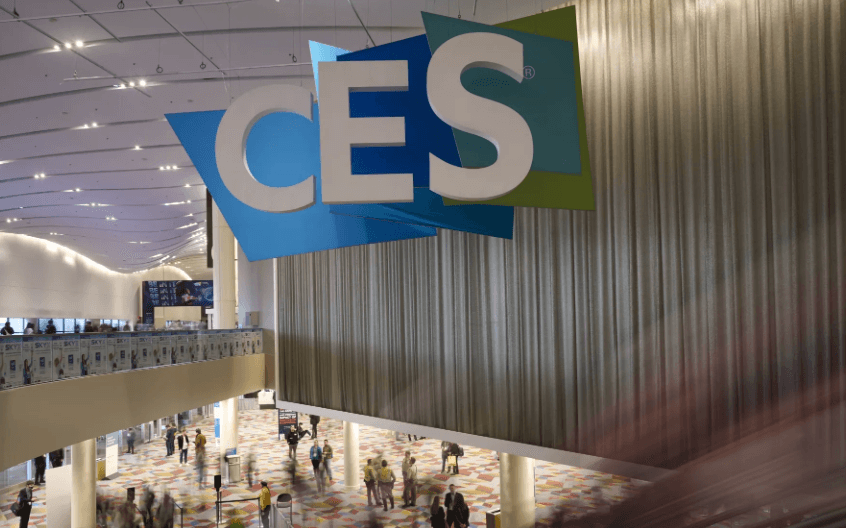
Las Vegas in January is a sensory assault. If you are walking the floor at CES this week, you are being bombarded by flying drone taxis, transparent TVs that nobody can afford, and enough “smart” kitchen appliances to develop a complex.
It’s loud, it’s flashy, and honestly, 90% of it is vaporware that will never see a store shelf.
But while the media is busy filming robotic bartenders, the real news at CES 2026 is happening away from the neon lights. It’s happening in quiet, temperature-controlled suites reserved for executives with eight-figure budgets.
The biggest story of CES isn’t a gadget. It’s a handshake.
Nvidia and Samsung are reportedly conducting joint, closed-door testing of next-generation AI hardware infrastructure. And if the whispers coming out of those meetings are even half true, the bottleneck that has been choking AI progress over the last 18 months is about to be shattered.
Why should you care about backend server hardware? Because everything else at CES—from the smartest car to the most proactive AI agent is dead in the water without it.
Let’s open the doors on the most important meeting in Vegas.
The Invisible Wall: Why AI Hit a Ceiling
To understand why this Nvidia/Samsung collaboration is such a massive deal, we have to talk about the “dirty secret” of the AI industry in late 2024 and throughout 2025.
We hit a wall.
Sure, models got smarter, but the pace slowed down. Why? It wasn’t a lack of ideas; it was a lack of plumbing.
Think of an Nvidia GPU (like the ubiquitous H100 or B200 of the past) as a Ferrari engine. It is incredibly powerful and capable of astonishing speed. Now, imagine trying to feed that Ferrari engine fuel through a narrow coffee stirrer.
That “coffee stirrer” is memory bandwidth.
For the last two years, GPUs have become so fast at crunching numbers that they spend half their time just waiting for data to arrive from the memory chips. This creates massive inefficiency, skyrockets energy costs, and limits how big future AI models can actually get. This phenomenon is known in the industry as the “Memory Wall.”
Breaking this wall is the only thing that matters right now. And that is exactly what is being tested in Vegas.
The Marriage of Necessity
This isn’t just a standard vendor relationship; it’s a geopolitical titan alignment. Both companies have something to prove at CES 2026.
Nvidia’s Stake: Jensen Huang, Nvidia’s CEO, knows his company’s trillion-dollar valuation rests on staying three steps ahead of competitors like AMD and the internal chip efforts of Google and Meta. He needs the fastest memory on earth, and he needs it in massive quantities, yesterday. He cannot afford a supply chain bottleneck.
Samsung’s Comeback: This is personal for Samsung. For years, they were the undisputed kings of memory. But in the early days of the AI boom, they got caught napping by their smaller rival, SK Hynix, who cornered the market on HBM (High Bandwidth Memory) used in AI servers. Samsung has spent the last two years fighting claw and nail to regain the technical lead.
The CES testing is Samsung’s “mic drop” moment. It’s their attempt to prove to Nvidia and the world that they are back on top.
What Are They Actually Testing?
We aren’t talking about a slightly faster chip here. The demos taking place behind closed doors are likely focused on advanced packaging and HBM4 integration.
In plain English? They are gluing the brain and the memory together closer than ever before.
The HBM4 Revolution
The star of the show is likely Samsung’s newly finalized HBM4 (High Bandwidth Memory generation 4).
Previous generations of memory were like separate buildings connected by a highway to the GPU. HBM4 is like building the memory directly on top of the GPU skyscraper.
The reports suggest Samsung’s new architecture, which they are testing with Nvidia’s next-gen compute platform, is achieving data transfer speeds that make 2024 hardware look like dial-up internet. We are talking about moving petabytes of data with almost zero latency, using significantly less power.
The Foundry Factor
There is another layer to this onion. Samsung isn’t just a memory maker; they are also a chip manufacturer (a foundry), competing with TSMC.
Rumors are circulating that Nvidia is testing not just Samsung’s memory, but also their 2nm gate-all-around (GAA) manufacturing process for future GPUs. If Samsung can convince Nvidia to use their foundries and their memory, it would be the biggest B2B coup of the decade, potentially shifting the center of gravity in semiconductor manufacturing away from Taiwan.
The Implications: The Era of “Cheap Intelligence”
Okay, enough alphabet soup. What does this mean for the real world?
If these tests are successful, and this hardware begins shipping in volume by late 2026 or early 2027, the economics of AI change dramatically.
Right now, running a state-of-the-art AI model (like a hypothetical GPT-6) is astronomically expensive because of the energy and hardware inefficiency caused by the Memory Wall.
If Nvidia and Samsung smash that wall, two things happen:
- AI Gets Bigger and Smarter: We can finally train models on datasets that were previously too large to handle, leading to breakthroughs in scientific research, drug discovery, and complex reasoning.
- AI Gets Cheaper (Eventually): When hardware is more efficient, the cost per query drops. This is the crucial step needed to move advanced AI assistants from a premium subscription service to a free utility included in every device.
The Quiet Revolution
It’s easy to get distracted by the dazzling screens on the CES show floor. But the history of tech tells us that the most important innovations are usually boring infrastructure upgrades.
The internet didn’t truly change the world until broadband replaced dial-up. The smartphone didn’t change the world until 4G LTE made mobile data usable.
AI is in that same awkward teenage phase right now. It has immense potential, but it’s constrained by its infrastructure.
The meeting between Nvidia and Samsung this week isn’t sexy. There are no celebrities endorsing it. But what they are testing in that Las Vegas hotel suite is the broadband moment for artificial intelligence. The gears of the future are grinding into place, even if we can’t hear them over the noise of the casino slot machines.
What’s your take? Do you trust that breaking the “memory wall” will lead to better consumer AI, or will it just lead to higher profits for the giants? Jump into the comments and let’s discuss the backend of the future.
Disclaimer: This article is based on industry analysis, insider reports from CES 2026, and projections of current semiconductor trends. Specific partnership details remain confidential between the involved parties.