
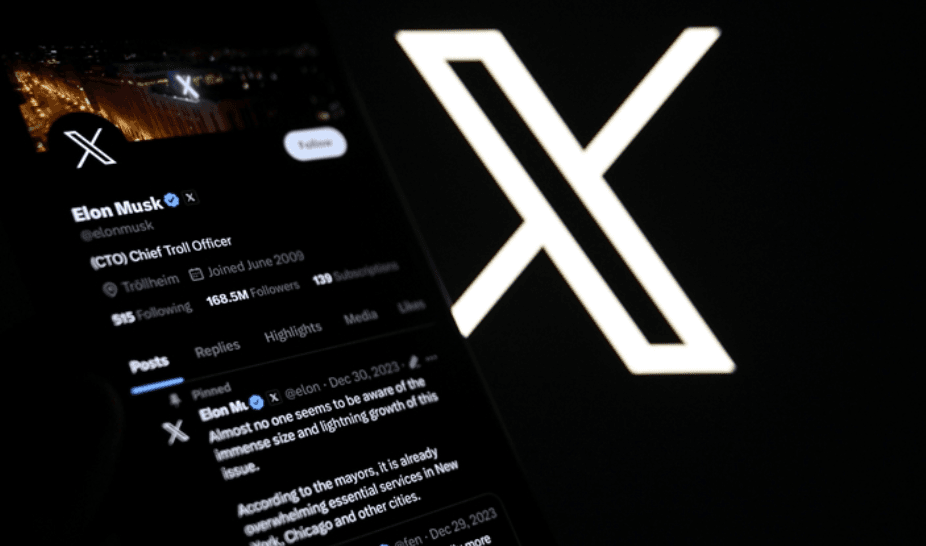
So here we are again. On January 10th, 2026, Elon Musk announced with all the confidence of someone who’s definitely never made this promise before that X would make its entire recommendation algorithm open source within seven days. And this time, he swears it’s different. Monthly updates! Developer notes! Complete transparency!
Except… we’ve heard this song before, haven’t we?
Back in March 2023, shortly after Musk’s chaotic takeover of Twitter (now X), the company published some algorithm code on GitHub. It was supposed to be this grand gesture of transparency, a window into the mysterious black box that decides what you see in your feed. And then? Radio silence. The code sat there, mostly untouched, while X made countless changes to its algorithm that never showed up in the public repository.
But here’s the thing: this time might actually be different. Because X didn’t just promise to release code they actually did it. And I’ve been digging through the GitHub repository at github.com/xai-org/x-algorithm, and what I found is genuinely fascinating. This isn’t just another half-baked transparency stunt. This is a complete tear-down of how one of the world’s most influential social media platforms decides what billions of people see every day.
What’s Actually Different This Time?
Let me be clear about what makes this release different from the 2023 version. This isn’t just the “For You” feed algorithm. According to Musk’s announcement, this is the complete recommendation system, including both organic posts AND advertising. That’s huge. Most social media companies guard their ad algorithm like nuclear launch codes, because that’s literally how they make money.
The repository, managed by xAI (Musk’s AI company), includes four main components that work together to create your feed. And unlike the 2023 release, this code appears to be actively maintained, with recent commits and actual documentation that explains what’s going on.
Here’s what you get access to:
Thunder – The real-time post ingestion system that tracks everything being posted on X Phoenix – The ML-based recommendation engine (this is where Grok comes in) Candidate Pipeline – The framework that assembles your feedHome Mixer – The orchestration layer that brings it all together
This is comprehensive. This is the whole enchilada. And honestly? I’m kind of shocked they actually released it.
The Grok Factor: How AI Actually Picks Your Feed
Alright, let’s talk about the elephant in the room: Grok. You know, xAI’s chatbot that’s been making headlines for all the wrong reasons lately (we’ll get to that). But Grok isn’t just a chatbot it’s also the brain behind X’s recommendation system now.
The code reveals that X has ported transformer architecture from Grok-1 into its recommendation engine. This is genuinely sophisticated stuff. Instead of using hand-crafted rules or simple engagement metrics, the system uses a massive neural network to understand what you’re likely to engage with.
Here’s how it actually works, according to the documentation:
Your feed isn’t just showing you popular posts or stuff from accounts you follow. It’s using a two-part system. First, there’s a “user tower” that encodes everything about you your engagement history, who you follow, what you’ve liked, replied to, shared. Think of it as building a mathematical representation of your interests and behavior patterns.
Then there’s a “candidate tower” that encodes every single post on the platform into a similar mathematical representation. The system compares your user embedding against millions of post embeddings to find matches posts that are mathematically similar to content you’ve engaged with before.
But here’s where it gets really interesting: the ranking isn’t just about similarity. The Grok-based transformer predicts specific probabilities for different types of engagement. Not just “will you like this?” but “will you reply? Will you repost? Will you click through? Will you follow the author? Will you block them?”
Check out what the model actually predicts:
- P(favorite) – probability you’ll like it
- P(reply) – probability you’ll comment
- P(repost) – probability you’ll share
- P(quote) – probability you’ll quote tweet
- P(click) – probability you’ll click for details
- P(video_view) – probability you’ll watch the video
- P(follow_author) – probability you’ll follow them
- P(block_author) – probability you’ll block them
- P(mute_author) – probability you’ll mute them
- P(report) – probability you’ll report the post
Those last three are fascinating. The algorithm is actively trying to predict whether you’ll hate something enough to block the author. And posts with high block/mute/report probabilities get weighted negatively in your feed. The system is literally trying to avoid showing you content that will make you angry enough to take action against it.
The “No Hand-Engineered Features” Revolution
Here’s something buried in the documentation that I think is genuinely revolutionary: “We have eliminated every single hand-engineered feature and most heuristics from the system.”
You know what that means? There’s no secret rule saying “boost posts with images by 15%” or “demote posts with external links.” There’s no hidden political bias dial that some engineer can turn up or down. The Grok transformer does all the work by learning from patterns in user engagement data.
This is both reassuring and terrifying. Reassuring because it means there isn’t some cabal of X engineers manually tweaking the algorithm to promote certain viewpoints. Terrifying because… well, the algorithm learned from all of us. If your feed is full of rage-bait and conspiracy theories, that’s because that’s what people engage with. We trained it to show us that stuff.
The model learns purely from engagement sequences. If people like you (people with similar engagement patterns) tend to like, reply to, or share certain types of content, the algorithm assumes you’ll probably want to see similar content. No judgment, no editorial oversight, just pure pattern matching.
The Architecture: How Your Feed Actually Gets Built
Okay, let’s get nerdy for a minute. Because the architecture here is genuinely impressive, even if you’re skeptical of Musk and X.
When you open your For You feed, here’s what happens behind the scenes:
Step 1: Query Hydration The system pulls your recent engagement history and metadata. What have you liked recently? Who do you follow? What do you typically engage with? This builds your user profile for this specific feed request.
Step 2: Candidate Retrieval This is where it gets interesting. The system pulls candidates from two sources:
- Thunder (In-Network): Recent posts from accounts you actually follow
- Phoenix (Out-of-Network): Posts from the global corpus that the ML model thinks you’ll find interesting
Thunder maintains an in-memory store of recent posts, which is why your feed can load so quickly. It’s not hitting a database every time it’s pulling from RAM. The out-of-network retrieval uses that two-tower model I mentioned earlier to find mathematically similar content.
Step 3: Filtering
Before anything gets scored, the system removes:
- Duplicates
- Posts older than a certain threshold
- Your own posts (you don’t need to see those in your feed)
- Posts from accounts you’ve blocked or muted
- Posts containing keywords you’ve muted
- Posts you’ve already seen
- Content you’re not eligible to view
This filtering happens BEFORE scoring, which is important for performance. Why waste computational resources scoring posts you’re never going to see anyway?
Step 4: Scoring and Ranking This is where the Grok transformer comes in. For each candidate post that made it through filtering, the model predicts all those engagement probabilities I mentioned earlier.
Then comes the weighted scoring. Different engagement types get different weights. The documentation doesn’t reveal the exact weights (that would be too transparent, I guess), but the concept is straightforward: positive engagements (likes, replies, shares) add to the score, while negative signals (blocks, mutes, reports) subtract from it.
Step 5: Diversity Adjustments Here’s a subtle but important detail: the system includes an “Author Diversity Scorer” that attenuates scores for posts from the same author. If you follow someone prolific who posts 50 times a day, this prevents your entire feed from being just that one person, even if you engage with their content frequently.
Step 6: Final Selection and Post-Processing The system sorts everything by final score, selects the top candidates, and then does one more round of filtering to remove any content that violates visibility rules (deleted posts, spam, violence, gore, etc.).
Candidate Isolation: The Technical Detail That Actually Matters
There’s one technical detail in the documentation that I think is brilliant: candidate isolation during ranking.
When the transformer is scoring posts, each post can “see” your user context (your engagement history, preferences, etc.) but posts CANNOT see each other. This means the score for Post A doesn’t depend on whether Post B is in the same batch.
Why does this matter? Consistency and cacheability. If post scores could influence each other, you’d get different rankings depending on which other posts happened to be in the batch. Your feed would be non-deterministic and weird. By isolating candidates, X can potentially cache scores for posts and reuse them across multiple users with similar profiles.
It’s the kind of engineering decision that seems obvious in hindsight but requires real thoughtfulness to implement correctly.
What This DOESN’T Tell Us
Okay, let’s be real for a second. As comprehensive as this code release is, there are still massive blind spots.
The Training Data We can see the model architecture, but we have no idea what data was used to train it. If the training data was biased (and let’s be honest, engagement data from social media is inherently biased), then the model learned those biases. Garbage in, garbage out.
The Actual Weights The system uses weighted scoring to combine different engagement predictions, but the documentation doesn’t reveal the specific weights. How much does a “like” count versus a “repost”? How heavily are blocks and mutes weighted? These weights fundamentally determine what content gets prioritized, and they’re not disclosed.
The Ad Algorithm Details While Musk promised transparency on the ad algorithm, the current repository focuses heavily on organic content ranking. The advertising components are less documented. How does X decide which ads to show you? How do they balance ad revenue with user experience? Still murky.
Implementation in Production This is the big one: we have no way to verify that the code on GitHub is actually what’s running in production. X could be running a completely different version internally. We’re taking their word that this is the real deal.
Grok’s Training and Behavior The Grok transformer is core to the system, but Grok itself is still largely a black box. We know it’s based on Grok-1 architecture, but the specific model weights, training methodology, and decision-making processes are not disclosed.
The Timing: Why Now?
So why is Musk doing this now, in January 2026? The cynical answer is: because he has to.
The European Commission extended a data retention order against X through the end of 2026. That order specifically mentions algorithms and the dissemination of illegal content. Translation: European regulators are breathing down X’s neck, demanding answers about how the platform works.
Then there’s the Grok controversy. The chatbot has been caught generating sexualized images of women and children without consent. US lawmakers are demanding that Apple and Google remove X and Grok from their app stores. Musk is facing global criticism and potential regulatory action.
Suddenly, “radical transparency” around the algorithm looks less like altruism and more like damage control. “See? We have nothing to hide! It’s all right here on GitHub!”
There’s also a French investigation into potential algorithmic manipulation accusations that Musk claims are politically motivated attacks on free speech. By open-sourcing the algorithm, he can point to the code and say, “Show me where the manipulation is.”
It’s a clever PR move, I’ll give him that. Whether it actually satisfies regulators or critics is another question entirely.
The Monthly Update Promise: Will He Actually Do It?
Musk promised that X would update the algorithm repository every four weeks with comprehensive developer notes explaining what changed. And honestly? I’m skeptical.
The 2023 algorithm release was supposed to be transparent and regularly updated. It wasn’t. Most files in that repository are still from the initial upload, with only sparse updates over the following years.
Why would this time be different?
Well, a few reasons. First, xAI (not Twitter/X employees) is managing this repository. There might be more resources and commitment behind maintaining it. Second, the regulatory pressure is real and ongoing. If Musk stops updating the code, regulators can point to that as evidence of bad faith.
But third, and most importantly: maintaining this repository is actually a lot of work. Every time X makes a change to the recommendation system which is probably happening constantly someone needs to update the code, document the changes, and push it to GitHub. That requires process, discipline, and resources.
Given Musk’s track record with promises about X, I’d say there’s maybe a 40% chance the repository is still being actively updated six months from now. Hope I’m wrong, but I’m not holding my breath.
What Developers and Researchers Can Actually Do With This
Assuming the code stays updated, what can people actually do with this level of transparency?
Competitive Analysis Developers of competing platforms (Mastodon, Bluesky, Threads) can study X’s approach and either adopt similar techniques or deliberately do things differently. If you’re building a social network, having access to X’s recommendation system is like getting the answers to the test.
Academic Research Researchers can study how algorithmic recommendations work in practice, audit the system for bias, and understand how engagement-based ranking shapes information flow. This is valuable for understanding social media’s impact on society, politics, and public discourse.
Manipulation and Gaming And here’s the dark side: bad actors can study the algorithm to figure out how to game it. If you know exactly how posts get scored and ranked, you can optimize your content to maximize reach, even if that content is misinformation, spam, or manipulation.
The code reveals that X uses “hash-based embeddings” for both retrieval and ranking. Someone with enough resources could potentially reverse-engineer how to create content that hits all the right features to game the system.
Accountability
Journalists and watchdog groups can compare what X says the algorithm does versus what users actually experience. If the algorithm is supposed to downweight certain types of content but isn’t doing so in practice, that discrepancy becomes visible and actionable.
The Community Reaction: Nobody Believes Him
I’ve been reading through responses to Musk’s announcement, and the overwhelming sentiment is… skepticism. Lots and lots of skepticism.
One response got over 1,100 likes: “Y’all have done this before, nothing will change. It’s even worse now.” People are tired of Musk’s promises that don’t materialize.
Another user wrote: “X needs to understand why users liked TWITTER – it was simple, you could freely build community and trust, and info exchanges quickly… X has fallen way off. It’s barely usable for many.”
There’s a fundamental disconnect between what Musk thinks users want (radical transparency, open algorithms) and what users actually want (a functional platform that doesn’t show them spam, hate speech, and pornography).
Some supporters are excited, seeing this as genuine transparency that other platforms won’t match. “This is what real transparency looks like,” one user wrote. But they’re in the minority.
The general vibe is: “We’ll believe it when we see it. And even then, we’re not sure it’ll matter.”
What This Means for Your Feed Experience
So after all this technical deep-diving, what does this actually mean for you, the average X user?
Honestly? Probably nothing, at least in the short term.
Your feed tomorrow will look the same as your feed today. The algorithm isn’t changing just because the code is now public. The ranking logic, the Grok transformer, the engagement predictions all of that was already working in the background.
What might change over time is accountability. If researchers discover that the algorithm is biased in specific ways, there will be public pressure to fix it. If journalists find that certain types of content are being systematically suppressed or boosted, X will have to answer for it.
There’s also the possibility that X’s competitors adopt similar techniques, leading to better recommendations across all social platforms. Or conversely, that other platforms study X’s approach and deliberately do the opposite, creating more diverse algorithmic ecosystems.
For power users, creators, and marketers, this code release is potentially valuable. Understanding how the algorithm scores content means you can optimize accordingly. Want more reach? Create content that the model predicts will generate replies and shares, not just likes. Likes apparently count for less in the final score.
But for the average person just scrolling through their feed? This changes nothing. The feed will still show you content designed to maximize engagement, which often means content designed to make you angry, scared, or outraged. That’s what we engage with, so that’s what the algorithm learned to show us.
The Bigger Picture: Open Algorithms as Industry Standard?
Here’s the question that’s been nagging at me: should all social media platforms do this?
There’s an argument that algorithmic transparency should be mandatory. These platforms shape public discourse, influence elections, and affect mental health. Shouldn’t we have the right to understand how they work?
Facebook, Instagram, TikTok, YouTube they all use recommendation algorithms that are arguably more influential than X’s. Yet they’re completely opaque. We have no idea how they decide what to show us. At least X (if we trust that this code is real) is pulling back the curtain.
But transparency has costs. It makes gaming the system easier. It exposes proprietary technology that companies spent millions developing. It potentially reduces the competitive advantage that comes from having a superior recommendation algorithm.
There’s also the question of whether transparency actually leads to better outcomes. If X’s algorithm is fully transparent but still shows people rage-bait and conspiracy theories because that’s what drives engagement, has anything really improved?
Maybe the problem isn’t the opacity of algorithms it’s the fundamental business model of engagement-based advertising. When your revenue depends on keeping people scrolling, you build algorithms optimized for attention, not wellbeing.
Making the algorithm open-source doesn’t change that incentive structure. It just makes it visible.
My Take: Cautiously Intrigued, Deeply Skeptical
Look, I want to be excited about this. As someone who’s spent years covering tech, algorithmic transparency is something I’ve advocated for. Having access to X’s recommendation system code is genuinely interesting from a technical perspective.
The architecture is sophisticated. The use of Grok’s transformer technology is innovative. The documentation is surprisingly comprehensive. If this is real if this is actually the code running in production it represents a significant step toward transparency in social media.
But.
I’ve watched Elon Musk make promises about X for years now. I’ve seen him declare that Twitter would be the bastion of free speech, then suspend journalists who criticized him. I’ve seen him promise transparency, then make opaque decisions about verification and content moderation. I’ve seen him claim X would eliminate bots, while the bot problem arguably got worse.
So forgive me for not taking this at face value.
The repository exists. The code is there. But will it be maintained? Will it actually reflect what’s running in production? Will it matter to the average user’s experience? Those are the questions that will take months or years to answer.
What I will say is this: if Musk actually follows through if the repository gets updated monthly with real developer notes explaining changes this could be a meaningful contribution to algorithmic accountability. It would set a precedent that other platforms might eventually have to match.
But if this is just another stunt, another PR move that gets abandoned six months from now when the regulatory heat dies down? Then it’s just one more broken promise in a long line of them.
Time will tell. And I, for one, will be watching that GitHub repository very carefully over the coming months.
The Action Items: What You Can Actually Do
If you’re interested in this stuff, here’s what you can actually do:
1. Browse the Repository Head to github.com/xai-org/x-algorithm and poke around. The README files in each component directory have decent documentation explaining how things work.
2. Watch for Updates
Star the repository on GitHub to get notified when changes are pushed. If Musk actually follows through on monthly updates, you’ll see them happen in real-time.
3. Follow the Research
Academic researchers and journalists will be analyzing this code. Follow their work to understand what they discover about bias, manipulation, or interesting technical details.
4. Adjust Your Strategy If you’re a creator or marketer on X, understanding the algorithm can help you optimize your content. Focus on creating posts that generate conversations (replies) rather than just passive likes.
5. Stay Skeptical Remember that we have no independent verification that this code matches what’s actually running. Take everything with a grain of salt until there’s third-party confirmation.
The Bottom Line
X has made its algorithm public or at least, it’s published code that it claims is the algorithm. The repository is comprehensive, technically sophisticated, and surprisingly well-documented.
Whether this represents genuine transparency or just another Musk PR stunt remains to be seen. The proof will be in the execution: does the repository actually get updated monthly? Does the code reflect production reality? Does it lead to meaningful improvements in how the platform works?
For now, we have code. That’s more than we had yesterday. Whether it matters in the long run is a question that only time can answer.
What I know for sure is this: I’ll be checking that GitHub repository on February 10th to see if the first monthly update actually happens. And then March 10th. And April 10th.
Because in the end, transparency isn’t about making a big announcement. It’s about consistent follow-through over time. Musk has made the announcement. Now we wait to see if the follow-through actually happens.
Leave a Reply