
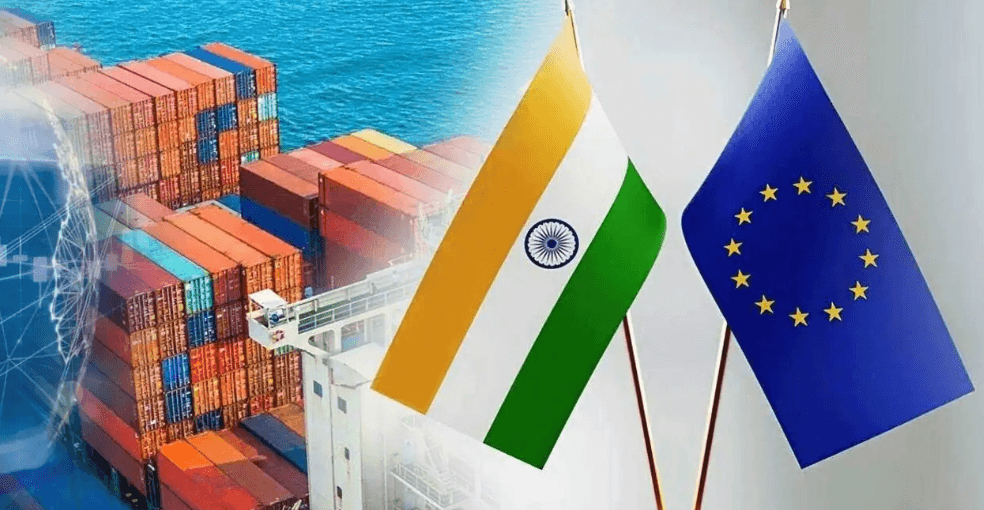
If you’ve been following international trade news lately, you’ve probably heard about the recent US-India trade agreement that’s been making headlines. But what does it actually mean for businesses on the ground? Let’s cut through the diplomatic language and talk about the real-world impact.
The Deal That Almost Didn’t Happen
Picture this: Just six months ago, Indian exporters were facing a nightmare scenario. US tariffs on Indian goods had skyrocketed to 50% yes, you read that right, fifty percent. For businesses already operating on razor-thin margins, this wasn’t just concerning; it was potentially catastrophic.
Then, in early February 2026, everything changed. President Trump and Prime Minister Modi announced a framework that slashed those tariffs down to 18%. The additional 25% penalty that had been imposed because of India’s Russian oil purchases? Gone. Completely removed as of February 7.
But here’s the thing this isn’t just about numbers on a spreadsheet. This deal represents a fundamental shift in how the world’s largest democracy and its biggest economy plan to do business together.
What’s Actually in This Deal?
Let me break down the key components without the political spin:
The US Side:
- Reduced tariffs from 50% to 18% on most Indian goods
- Removed the punitive 25% penalty entirely
- Special relief on aircraft parts and auto components
- Potential zero-tariff treatment on pharmaceuticals and generic drugs (pending review)
The India Side:
- Committed to eliminating or drastically reducing tariffs on US industrial goods
- Agreed to lower barriers on American agricultural products like tree nuts, soybean oil, wines, and spirits
- Pledged to purchase $500 billion worth of US energy, technology, and other products over five years
- Promised to shift oil purchases away from Russia toward the US and Venezuela
Now, before we get too excited, let’s acknowledge the elephant in the room. Some of these commitments particularly that $500 billion purchase target have raised eyebrows among trade analysts. India’s total imports stood at around $720 billion in the last fiscal year, with only $45 billion coming from the US. So a jump to $100 billion annually? That’s ambitious, to put it mildly.
The Businesses That Win Big
Not every sector benefits equally from this deal. Let’s talk about the clear winners first.
Textiles and Apparel
This sector just got a massive lifeline. Indian textile manufacturers had been hemorrhaging business to competitors in Bangladesh and Vietnam, who enjoyed better tariff treatment. With the new 18% rate, Indian apparel companies can finally compete on pricing again.
Think about it from a buyer’s perspective. If you’re a US retailer choosing between a shirt made in India at 50% tariffs versus one from Vietnam at 20%, the math was brutal. Now? India’s back in the game. Companies in home textiles, garments, and made-ups are already seeing renewed interest from American buyers.
Gems and Jewelry
India supplies a significant portion of cut and polished diamonds to the US market. The previous tariff regime was making these luxury items prohibitively expensive. With tariffs cut by more than half, we’re likely to see a resurgence in this sector. If you’re in the gems and jewelry business, your order books are probably looking healthier already.
Seafood Exports
Here’s a sector many people overlook. India is one of the world’s largest shrimp exporters, and the US is a major buyer. Shrimp exporters had been particularly hard hit because their profit margins are already tight. The tariff reduction means better pricing power and more stable volumes. For companies with significant US exposure, this translates directly to improved earnings visibility.
Engineering and Auto Components
This is perhaps the most significant win. Engineering goods make up the largest share of India’s merchandise exports to America. These businesses typically operate on single-digit margins, so even a small tariff change can dramatically impact profitability.
Auto parts suppliers, capital goods manufacturers, and precision engineering firms are already reporting improved competitiveness on new orders. If you’re running an engineering export business, you’re probably fielding more RFQs (requests for quotes) than you have in months.
Pharmaceuticals
India supplies nearly 50% of America’s generic pharmaceutical market. Thankfully, this sector was largely exempted from the harsh tariff regime, but the deal provides additional clarity and stability. More importantly, pending the completion of the Section 232 pharmaceutical investigation, India could receive preferential treatment on generic drugs and active pharmaceutical ingredients.
For pharma companies, this isn’t just about current business it’s about long-term planning and capital allocation.
The Sectors That Need to Watch Out
Now let’s talk about the trickier implications.
Agriculture
This is where things get politically sensitive in India. The deal commits India to opening up to US agricultural products, and that’s making farmers nervous. American farmers benefit from substantial subsidies, meaning their products can often undercut local prices.
India has tried to protect sensitive sectors dairy and core agricultural products remain shielded but there’s concern about products like dried distillers’ grains (used in animal feed) and certain fruits entering under tariff quotas. If you’re in Indian agriculture or food processing, you need to pay close attention to how these provisions get implemented.
Small and Medium Enterprises (MSMEs)
Here’s an uncomfortable truth: while the headline tariff cut from 50% to 18% sounds great, it’s still not as good as what some competitors enjoy. Bangladesh and Vietnam, for instance, have preferential access to the US market with effective duties around 5% lower than India’s new rate.
For MSMEs in textiles, leather goods, and handicrafts competing in price-sensitive markets, that difference still matters. You’re competing with one hand tied behind your back, even if the rope is looser than it was.
Energy-Dependent Industries
India’s commitment to shift from discounted Russian crude oil to more expensive US or Venezuelan oil could have ripple effects across energy-intensive industries. Russian oil came at a significant discount often $10-15 per barrel below market rates. Switching suppliers means higher input costs, which could squeeze margins in sectors like chemicals, steel, and plastics.
The $500 Billion Question
Let’s address the most controversial part of this deal: India’s alleged commitment to buy $500 billion in US goods over five years.
Here’s what we know: US President Trump announced this figure. India’s government has been notably less specific about confirming it. Trade experts have called it “unrealistic” and “a stretch.”
Why the skepticism? The math just doesn’t add up easily. India would need to roughly double its US imports and sustain that for five years straight. That’s a massive structural shift in trade patterns.
More likely, what we’re seeing is aspirational targets around specific sectors:
- Energy: LNG, coal, and other energy products could see substantial increases
- Defense: India has expressed interest in up to $80 billion in Boeing aircraft orders alone
- Technology: GPUs and data center equipment for India’s growing tech infrastructure
- Machinery: Capital goods for manufacturing expansion
Will it hit $500 billion? Probably not. Will it substantially increase? Almost certainly.
For businesses, the takeaway isn’t the specific number it’s the direction of travel. US-India trade is growing, and that creates opportunities.
What This Means for Strategic Planning
If you’re a business leader trying to figure out what this all means for your operations, here are the practical implications:
For Export-Oriented Businesses
Immediate actions:
- Review your US pricing strategy. With lower tariffs, you have room to either improve margins or become more competitive or both.
- Update customs documentation. The new tariff rates went into effect February 7, but implementation takes time. Make sure your customs broker is current.
- Watch the rules of origin requirements closely. Benefits only apply to goods “predominantly” made in India or the US. If you source significant components from China or elsewhere, understand how that affects qualification.
Medium-term planning: Consider capacity expansion if you’ve been holding back due to tariff uncertainty. The deal isn’t perfect, but it provides better visibility for planning than we’ve had in over a year.
For Import-Dependent Businesses
If you rely on US components or materials, you might see gradual price improvements as Indian tariffs come down. However, don’t expect overnight changes. India’s tariff reductions are being phased in, and the fine print matters.
For Tech and Service Companies
The deal includes commitments to address digital trade barriers and strengthen ICT (Information and Communication Technology) cooperation. For IT services companies, this doesn’t directly change tariffs you weren’t facing them anyway but it reduces geopolitical risk in the relationship.
More importantly, data center companies and cloud service providers are looking at serious opportunities. India’s 20-year tax exemption for hyperscalers, combined with improved US-India trade relations, could attract substantial investment from American tech giants.
The Geopolitical Angle You Can’t Ignore
Here’s something that doesn’t always make it into business discussions but absolutely should: this trade deal isn’t happening in a vacuum.
The US and India are increasingly aligned on countering China’s economic influence in the Indo-Pacific. The deal includes language about “supply chain resilience” and “addressing non-market policies of third parties” diplomatic code for China.
For businesses, this means:
Opportunity: If you’re helping companies diversify manufacturing away from China, you’re riding a strategic tailwind that goes beyond simple economics.
Risk: If your business model depends on cheap Chinese inputs, be aware that future trade agreements might create pressure to source elsewhere, even if it costs more.
The Timeline: What Happens Next
Understanding the implementation timeline is crucial:
- February 7, 2026: The 25% punitive tariff was eliminated
- Late February 2026: The 18% reciprocal tariff took effect
- Mid-March 2026: India and the US plan to sign a formal Interim Agreement
- Ongoing through 2026: Negotiations continue for a comprehensive Bilateral Trade Agreement (BTA)
This interim deal is exactly that interim. The bigger, more comprehensive agreement is still being negotiated. Topics like deeper tariff cuts, intellectual property, labor standards, environmental provisions, and government procurement rules are all on the table.
For businesses, this means the current deal provides a stable foundation, but the relationship will continue evolving. Don’t treat this as the final word treat it as chapter one of a longer story.
The Real Risks Nobody’s Talking About
Let me share some concerns that aren’t getting enough attention:
Implementation Uncertainty
We have a framework, not a finalized, legally binding agreement yet. History is full of trade deals that looked great on paper but struggled in execution. Watch for:
- How quickly US Customs and Border Protection updates its systems
- Whether India’s tariff concessions are actually legislated or remain promises
- How disputes get resolved when interpretations differ
The Russian Oil Wild Card
India stopping Russian oil purchases was supposedly a key US demand. But here’s reality: that oil was coming at a steep discount, helping India manage inflation and its current account deficit. Completely cutting off Russian supplies could hurt India’s economy, which might create political pressure to backtrack.
The deal includes monitoring provisions and potential tariff snapbacks if Russian oil purchases resume. That’s not exactly a recipe for certainty.
Political Volatility
Trade deals signed by executive order can be modified by executive order. We’ve already seen this administration reverse course on trade agreements with other countries. If the political winds shift, the deal could change rapidly.
For businesses making long-term capital allocation decisions, build in some flexibility. Don’t bet the farm entirely on current tariff rates staying stable for five years.
How Different Industries Should Respond
If You’re in Textiles/Apparel
You just got breathing room. Use it wisely. This is your window to lock in long-term contracts, invest in quality improvements, and grab market share from competitors who got complacent. But don’t get overconfident your 18% rate still isn’t as competitive as some neighboring countries.
If You’re in Engineering/Manufacturing
The improved margins from tariff relief should be invested, not distributed. This is the time to upgrade equipment, improve quality systems, and build the kind of operational excellence that makes you competitive on more than just price.
If You’re in Agriculture/Food Processing
Brace for increased competition in certain segments. But also look for opportunities. If US buyers are looking to diversify their sourcing, can you position yourself as a premium supplier in specialty categories?
If You’re in Pharma
Your sector is a strategic priority for both countries. Use the stability to expand manufacturing capacity and pursue higher-margin specialty products. The US needs generic drug security; you’re perfectly positioned to provide it.
If You’re in Services/IT
The deal’s provisions on digital trade barriers and ICT cooperation might seem distant from your day-to-day business, but they matter. They signal that the relationship is moving in a direction that supports your industry. Use that confidence to pitch longer-term partnerships with US clients.
The Bottom Line
This trade deal represents a significant de-escalation from the tariff warfare of 2025, and for that alone, it’s welcome news. It provides businesses with something they’ve been desperately craving: predictability.
Is it perfect? No. The 18% tariff is still higher than what many competitors face. The $500 billion purchase commitment may be more aspirational than realistic. Some domestic sectors particularly agriculture face legitimate concerns about increased competition.
But here’s what matters: the trajectory has changed. After months of escalating tensions and punitive tariffs that threatened to derail decades of trade growth, we now have a framework for cooperation. That’s worth something.
For business leaders, the message is clear: plan with cautious optimism. The deal provides enough certainty to make strategic investments, but build in flexibility for a relationship that’s still evolving. Focus on fundamentals quality, reliability, competitive pricing that will serve you well regardless of what tariff rate ultimately applies.
Most importantly, don’t just react to this deal in isolation. It’s part of a broader realignment of global trade patterns, with supply chains diversifying away from China, geopolitical considerations increasingly driving economic policy, and countries like India positioned to benefit from that shift.
The businesses that thrive won’t be the ones that just celebrate lower tariffs they’ll be the ones that understand the deeper currents reshaping global trade and position themselves accordingly.
The game has changed. The question is: how will your business adapt?
Leave a Reply