
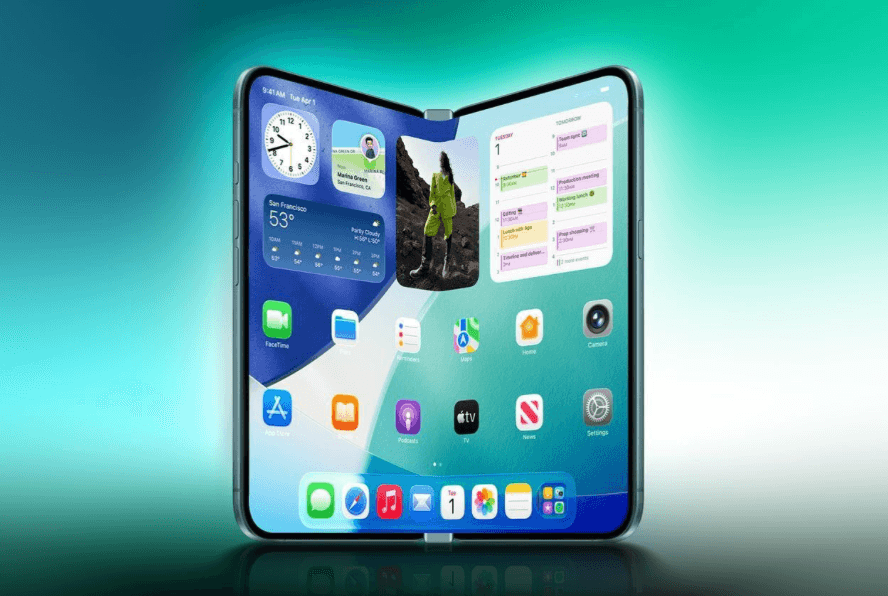
Remember when everyone thought Apple was playing it safe? Well, buckle up because the tech giant is about to shake things up in a way we haven’t seen since the very first iPhone dropped back in 2007. We’re talking about a foldable iPhone, and it’s looking increasingly likely that September 2026 could be the month everything changes.
Now, I’ll be honest with you. When Samsung released their first foldable phone seven years ago, I remember thinking, “Where’s Apple?” But here’s the thing about Apple they don’t rush. They watch, they learn, and then they come in swinging with something that (hopefully) blows everyone else out of the water. And from what the rumor mill is churning out, this foldable iPhone might just be worth the wait.
The Big Question: When Can We Actually Get Our Hands on One?
Let’s cut right to the chase. According to multiple industry analysts and supply chain sources, Apple is preparing to launch its first foldable iPhone in September 2026, alongside the iPhone 18 Pro lineup. That’s right we’re looking at a fall 2026 release, which means it’s close enough to get excited about but far enough away that I might change my phone case three more times before then.
What makes this timing interesting is that Apple isn’t treating the foldable as some experimental side project. They’re positioning it right alongside their flagship Pro models, which tells me they’re betting big on this thing. It’s going to be part of the iPhone 18 family, though some people are already calling it the “iPhone Fold” (catchy, right?).
The journey to this point has been long. Apple has been tinkering with foldable technology for years, and while Samsung and others have been selling foldables since 2019, Apple stayed on the sidelines. But here’s what I’ve learned covering tech for years: when Apple finally enters a market, they usually do it with a bang.
What Will This Thing Actually Look Like?
Okay, so picture this. You’re holding what looks like a slightly shorter iPhone in your hand. The outer screen measures around 5.3 to 5.5 inches smaller than most current iPhones, actually. Then you open it up like a book, and boom you’ve got yourself a tablet-sized display between 7.5 and 7.8 inches. When unfolded, the upcoming iPhone Fold will be bigger than any iPhone to date, and not too far off in size from the original iPad mini.
Think about what this means for your daily life. You could be scrolling through Twitter on the smaller screen during your commute, then unfold it to watch YouTube videos with an immersive, tablet-like experience. Want to edit a document? Boom instant portable workspace. Gaming? You’ve basically got a mini gaming console in your pocket.
The design is what Apple calls a “book-style” fold, opening horizontally rather than vertically like those flip phones from the early 2000s (remember those?). This isn’t some nostalgia play this is about giving you maximum screen real estate when you need it, and pocketability when you don’t.
The Engineering Marvel: Goodbye, Crease
Here’s where things get really interesting, and honestly, this is what separates Apple from the pack. You know that annoying crease you see right down the middle of most foldable phones? The one that makes you constantly aware you’re using a foldable device? Apple is said to have pursued eliminating the crease “regardless of cost,” and the company has developed a “new material property” that makes the crease disappear.
I got a glimpse of what this technology looks like at CES 2026, where Samsung Display (Apple’s supplier) showed off a new panel that supposedly has no visible crease. And from what people who saw it reported, the difference compared to current foldables is night and day. We’re talking about seamless text across the fold, no matter what angle you’re looking at it from.
This obsession with eliminating the crease is so Apple, isn’t it? While other companies were racing to get products to market, Apple’s been in the lab perfecting the details. The crease has been described in reports as “nearly invisible” when unfolded, which would be a genuine game-changer. Because let’s face it nobody wants to feel like they’re reading a book with a permanent spine indent down the middle of their screen.
The engineering behind this involves some seriously cool stuff. We’re talking about liquid metal components, sophisticated hinge mechanisms, and specialized display technology that can bend without breaking or showing wear. Apple has apparently been working with Samsung on this, and the same technology is expected to show up in the Galaxy Z Fold 8 later in 2026.
How Thin Can You Go? (Spoiler: Very Thin)
Get this when you unfold this thing, it could be just 4.5mm thick. To put that in perspective, that’s thinner than most credit cards and would make it the thinnest device Apple has ever created. When it’s folded up, you’re looking at around 9 to 9.5mm, which is actually pretty reasonable for what’s essentially two phones stacked together.
Apple’s entire design philosophy for this device seems centered around making it as thin and light as possible. That’s a tall order when you’re dealing with a folding mechanism, dual displays, and all the other components that make a modern smartphone work. But if Apple pulls this off, you won’t feel like you’re carrying a brick in your pocket.
The Price Tag That’ll Make Your Wallet Weep
Alright, let’s address the elephant in the room. This thing isn’t going to be cheap. We’re looking at a price range between $2,000 and $2,500. Analyst Ming-Chi Kuo proposed an estimated price between $2,000 and $2,500 for the model, with more recent leaks suggesting it could land closer to the higher end of that range.
Yeah, I know. That’s more than a MacBook Air. That’s “I could take a nice vacation instead” money. But here’s the thing this is cutting-edge technology. The first iPhone cost $599 back in 2007 (which was considered insane at the time), and now we routinely see flagship phones hitting $1,200 or more. This is the price you pay to be an early adopter of what could be the next evolution of smartphones.
Is it worth it? That depends on what you value. If you’ve been wanting an iPhone that can double as a tablet, if you’re someone who’s always switching between devices, or if you just love having the latest and greatest tech, this might be worth every penny. For everyone else? Maybe wait for the iPhone Fold 2 when prices inevitably come down.
Touch ID Makes a Comeback (Sort of)
Here’s something that surprised me: the foldable iPhone might not have Face ID at all. Instead, rumors suggest Apple will bring back Touch ID with a fingerprint sensor built into the power button on the side of the device.
Why the change? Space constraints, mainly. Fitting all the complex components needed for Face ID into a device this thin, with a folding mechanism, is apparently a bridge too far even for Apple. Plus, there’s a usability angle here Touch ID works consistently whether the device is folded or unfolded, and you don’t have to worry about sensor alignment issues when the device changes shape.
Honestly? I kind of like this. Touch ID was reliable, fast, and worked even when you were wearing a mask (remember those days?). It’s a practical solution that makes sense for this particular device.
The Brains and the Battery
Under the hood, the foldable iPhone will pack Apple’s A20 Pro chip the same processor expected in the iPhone 18 Pro models. This is important because it means Apple isn’t treating the foldable as some lesser device. It’s getting the same top-tier silicon as their flagship phones.
Battery life is always a concern with new form factors, but Apple seems to have this covered. The device is rumored to sport a battery capacity between 5,400 and 5,800 mAh, which would be the largest battery Apple has ever put in an iPhone. And it’ll need to be you’re powering two displays here, plus all the usual iPhone functions.
The A20 Pro chip is being built on a 2-nanometer process, which means better performance and better power efficiency. Combined with that massive battery, you should be able to make it through a full day without anxiety.
What About iOS?
Apple isn’t just slapping current iOS onto a foldable screen and calling it a day. iOS 27 (which will launch alongside the foldable iPhone) will include specific features designed for the larger display. Think split-screen multitasking, optimized apps that take advantage of the tablet-sized screen, and new interface elements that make sense on a device that can change its form factor.
There’s speculation about Apple Pencil support too, though nothing’s confirmed yet. Imagine being able to sketch or take notes on that 7.6-inch display when it’s unfolded. That would genuinely blur the line between phone and tablet in a way that could be really useful for creative professionals.
The Competition Angle
Let’s talk about the elephant in the room: Samsung. They’ve been in the foldable game since 2019, and they’ve learned a lot. By the time Apple’s foldable launches, Samsung will probably be on their eighth or ninth generation of foldables.
But here’s what Apple does well they watch the competition make mistakes, then come in and execute their vision with polish. Samsung’s foldables have gotten progressively better, but they still have that crease, they’re still relatively thick, and the software experience isn’t always optimized for the form factor.
Apple has the advantage of controlling both hardware and software. They can optimize iOS specifically for the foldable screen, they can ensure apps work beautifully in both folded and unfolded modes, and they can leverage their massive developer ecosystem to create experiences that feel native rather than adapted.
Should You Be Excited?
Look, I get it. Foldables have been around for a few years now, and some people wonder if we really need them. But I think Apple entering this market legitimates it in a way nothing else could. When Apple does something, developers pay attention. App makers will optimize their software for the foldable form factor in ways they might not have bothered for Android foldables with smaller market share.
This could genuinely change how we think about phones. Instead of carrying both a phone and a tablet, you’d have one device that morphs between the two. For people who do creative work on the go, who read a lot, who watch videos, or who just want more screen real estate without carrying a bag everywhere this could be transformative.
The Reality Check
Of course, it’s worth remembering that all of this is based on rumors and leaks. Apple hasn’t officially announced anything. The device could be delayed (it’s happened before), specs could change, or Apple could surprise us with features nobody saw coming.
There are also legitimate questions about durability. Foldable screens, by their very nature, introduce new points of failure. How will the screen hold up after thousands of folds? What about dust and debris getting into the hinge? These are questions Samsung has been working through for years, and while they’ve made progress, foldables still require more care than traditional smartphones.
What This Means for the iPhone Lineup
Here’s something interesting to consider: Apple is reportedly delaying the standard iPhone 18 until 2027, which means if you want a new iPhone in fall 2026, your options will be the iPhone 18 Pro, iPhone 18 Pro Max, or the foldable. That’s a bold strategy it forces the market upward into premium territory and potentially trains users to expect higher price points.
For Apple, this makes sense financially. The margins on high-end devices are better, and by positioning the foldable alongside the Pro models rather than as a separate experiment, they’re signaling serious commitment to this form factor.
The Bottom Line
September 2026 feels both incredibly close and frustratingly far away. If these rumors pan out—and I think there’s enough smoke here to suggest a real fire we’re looking at one of the most significant iPhone releases in company history.
Will it be perfect? Probably not. First-generation products rarely are. Will it be expensive? Absolutely. Will some people think it’s unnecessary? For sure. But will it be fascinating to watch Apple’s take on foldable technology? You bet.
The foldable iPhone represents Apple finally acknowledging that the smartphone form factor isn’t set in stone. It’s been nearly two decades of rectangular touchscreen slabs, and maybe it’s time for something new. Whether foldables are the future or just an interesting detour remains to be seen.
But one thing’s for certain if Apple is betting on it, the rest of the industry will be watching very carefully. And so will I. September 2026 can’t come soon enough.
What do you think? Are you ready to fold, or are you sticking with the traditional slab? Drop your thoughts in the comments below I’d love to hear whether you’re Team Foldable or Team Traditional.
Leave a Reply