
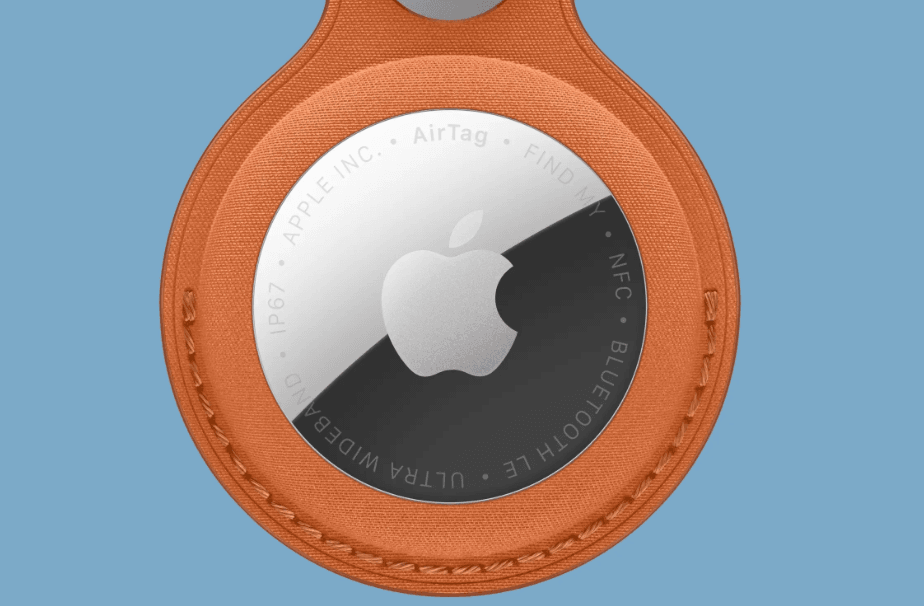
Breaking: January 26, 2026 – Apple just released AirTag 2. No warning. No event. No Tim Cook on stage holding it dramatically against a black background while Phil Schiller explains how it “changes everything.”
Just a quiet press release at 9 AM PST announcing that after 5 years of waiting longer than the gap between iPhone models the world’s best-selling item tracker finally has a successor.
And here’s what nobody’s saying out loud: This isn’t really about finding your keys.
This is Apple’s desperate attempt to fix a stalking crisis that’s been festering since 2021, buried under feel-good stories about reuniting travelers with lost luggage. The louder speaker? The improved anti-tamper design? The mysterious “internal design changes”?
Those aren’t features. Those are legal liability countermeasures.
Because here’s the uncomfortable truth: AirTags have become the stalker’s tool of choice. Domestic abusers use them to track victims. Car thieves use them to mark luxury vehicles for theft. Stalkers hide them in purses, vehicles, and belongings to monitor people’s movements without consent.
And Apple—after 5 years of bad press, lawsuits, and mounting pressure is FINALLY addressing it. Sort of.
Let me show you what Apple is actually selling you for $29, what they’re desperately trying to fix, and why the “50% louder speaker” is simultaneously the most important upgrade AND a complete admission of failure.
What Actually Changed: The Specs That Matter (And Don’t)
Let’s start with the official upgrades, because Apple’s press release is doing a LOT of work to make minor improvements sound revolutionary.
What’s New:
🎯 50% Longer Precision Finding Range Second-generation Ultra Wideband (U2) chip enables Precision Finding to work up to 50% farther away. In real terms? Instead of ~30-40 feet, you’re now looking at ~45-60 feet of ultra-precise directional tracking.
📶 Improved Overall Bluetooth Range Upgraded Bluetooth chip increases general tracking range outside Precision Finding mode. Apple won’t give specifics (because that would be helpful), but expect 10-20% improvement in range for basic proximity detection.
🔊 50% Louder Speaker The speaker that alerts you when your AirTag is nearby is now significantly louder. Apple claims this makes it easier to find lost items. The REAL reason? Making it harder for stalkers to hide silent AirTags.
🔋 Precise Battery Percentage Instead of just “Low Battery” warnings, you now get exact percentage remaining. Finally know when your CR2032 battery is at 47% instead of “low” or “fine.”
📱 Improved Pairing Experience Faster setup process with better accessory-pairing frameworks in iOS 26. More intuitive naming and emoji selection. This is… fine? Nobody was complaining about pairing speed.
🏃 “Improved Moving” Feature Enhanced tracking when the AirTag is in motion. Better performance in crowded environments. Leaked code suggests this helps locate moving items more precisely—useful for tracking luggage on conveyor belts or bags in crowded airports.
🔒 Enhanced Anti-Tamper Design “Internal design changes” (Apple’s words, not mine) that make the speaker harder to remove or disable. Directly addresses stalkers who’ve been removing speakers to create “silent” tracking devices.
What DIDN’T Change:
❌ Physical design (same size, same shape) ❌ Battery type (still CR2032, still user-replaceable) ❌ Water resistance (still IP67) ❌ Price ($29 single, $99 four-pack – UNCHANGED) ❌ Fundamental tracking method (still Find My network)
Translation: This is an internal spec bump, not a revolution. Same shell, better guts.
The $29 Price: Why Apple Can’t Raise It (Even Though They Want To)
Here’s the fascinating business angle: Apple kept the price identical. $29 for one AirTag. $99 for a four-pack.
Why? Because they CAN’T raise it without losing the market.
The Competition:
- Tile Pro: $34.99 (works with Android)
- Samsung SmartTag2: $29.99 (Galaxy ecosystem)
- Chipolo One Point: $28 (works with Apple Find My)
- Pebblebee Clip: $29.99 (rechargeable, works with both)
Apple is already at parity pricing or more expensive than competitors. Raising the price even to $34 would kill sales, especially since AirTag requires you to be deep in the Apple ecosystem to work.
The Profit Margin Reality:
AirTags are LOW margin products for Apple. Industry teardowns of the original AirTag estimated:
- Components: ~$6-8
- Manufacturing: ~$3-5
- Packaging/shipping: ~$2-3
- Total cost: ~$13-16
At $29 retail, that’s roughly 50-55% gross margin decent, but not iPhone-level (60-65%) or AirPods-level (55-60%).
Apple makes MORE money selling you the $35 leather AirTag holder than they do selling you the actual AirTag.
The Real Business Model:
AirTags aren’t profit centers. They’re ecosystem lock-in devices. Every AirTag you buy:
- Requires an iPhone to use
- Keeps you in the Apple ecosystem
- Encourages buying accessories ($29-35 per holder)
- Generates Find My network effects (more users = better tracking)
- Creates switching costs (if you leave iPhone, your AirTags are useless)
So Apple keeps the price low to maximize adoption, then makes money on accessories and ecosystem retention.
The Stalking Crisis Apple Won’t Admit Exists
Okay, let’s talk about the elephant in the room: AirTags have a massive stalking problem.
And I don’t mean “some people are concerned.” I mean actual, documented, widespread abuse:
The Evidence:
2022-2024 News Reports:
- Women finding AirTags hidden in their cars, purses, coat pockets
- Domestic abuse victims tracked by ex-partners using AirTags
- Car thieves using AirTags to mark luxury vehicles, then stealing them days later
- Burglars tagging expensive items in stores, following them home
The Class Action Lawsuit (December 2024): Lawsuit against Apple alleges AirTags “have become one of the most dangerous and frightening technologies employed by stalkers” because they’re cheap, accurate, and easily concealed.
Apple’s Response Timeline:
2021 Launch: Basic anti-stalking features (alerts if unknown AirTag travels with you) 2022 Update: Alerts come faster (8 hours → 4 hours) 2023 Update: Precision Finding for unknown AirTags 2024: Partnered with Google on cross-platform stalking alerts 2026 (AirTag 2): Louder speaker, harder-to-remove design
Notice the pattern? Every update for 5 years has been about stalking prevention.
This isn’t just “we care about privacy.” This is “we’re getting sued and facing regulatory scrutiny and need to prove we’re taking this seriously.”
The 50% Louder Speaker: Admission of Failure
Let’s focus on the most telling upgrade: the speaker is now 50% louder.
Apple frames this as “easier to find lost items when the AirTag plays a sound.”
That’s not why they did it.
The speaker is louder because stalkers have been removing speakers from AirTags to create silent tracking devices.Videos on YouTube, Reddit, and TikTok showing how to disable the speaker have millions of views.
A louder speaker means:
- Harder to remove without completely destroying the AirTag
- More noticeable if it’s hidden in your belongings
- Better chance of alerting stalking victims
But here’s the problem: A louder speaker doesn’t fix the fundamental issue.
Determined stalkers will still:
- Buy modified AirTags from third parties
- Physically disable the speaker anyway
- Hide the AirTag in places where sound is muffled (inside seat cushions, wheel wells, insulated bags)
- Use alternative tracking devices
The louder speaker is a band-aid on a bullet wound. It’s Apple saying “we tried” while the actual problem cheap, accurate, easily concealed tracking devices remains unsolved.
The Anti-Tamper Design: What Apple Isn’t Saying
“Internal design changes” is Apple-speak for “we can’t tell you exactly what we did because that would help people circumvent it.”
But based on leaked code and teardown analysis, here’s what’s likely happening:
Physical Changes:
- Speaker more deeply integrated into the circuit board
- Tamper detection sensors that disable the AirTag if opened improperly
- Adhesive or structural elements making speaker removal destructive
Software Changes:
- AirTag disables itself if tampering is detected
- Alerts sent to owner if AirTag is opened
- Potentially refusal to pair if internal components are missing
This is smart engineering. But it’s also reactive engineering fixing a problem that shouldn’t exist in the first place.
The Fundamental Question Nobody’s Asking:
Should personal tracking devices this cheap, accurate, and concealable exist at all?
That’s not a question Apple wants people asking. Because the answer might be “no,” and that would kill a product line that’s become culturally embedded and deeply profitable (when you factor in ecosystem lock-in value).
The Ultra Wideband Upgrade: Actually Impressive
Okay, let’s give credit where it’s due: the U2 chip upgrade is genuinely good.
Why UWB Matters:
Ultra Wideband enables “Precision Finding” that feature where your iPhone shows you directional arrows and exact distance to your AirTag. It’s AR-like tracking that’s genuinely magical when it works.
The first-gen AirTag used Apple’s U1 chip (same as iPhone 11/12/13). The AirTag 2 uses the second-generation U2 chip (same as iPhone 15/16).
The Performance Jump:
First-gen UWB range: ~30-40 feet max Second-gen UWB range: ~45-60 feet max (50% increase)
That might not sound like much, but in real-world scenarios it’s the difference between:
- Finding your keys in your apartment vs. across the entire floor
- Locating your bag in a crowded airport terminal vs. only when you’re standing next to it
- Tracking luggage on a conveyor belt vs. losing it in the chaos
The Competitive Angle:
Samsung’s SmartTag2 uses UWB. Tile doesn’t (yet). Chipolo’s FindMy-compatible trackers don’t have UWB either.
Apple’s UWB implementation remains the most accurate consumer tracking technology available. The U2 chip widens that lead.
The Battery Percentage: Solving A Problem We Created
Remember when devices just worked until they died, then you replaced the battery?
Now we’ve trained ourselves to obsessively monitor battery percentages. And Apple is feeding that anxiety with AirTag 2’s precise battery reporting.
Why This “Feature” Exists:
The original AirTag only showed “Low Battery” when the CR2032 was critically depleted. Users complained: “How low is low? Do I have days? Hours?”
Fair concern. But also indicative of our collective battery anxiety disorder.
The AirTag 2 now shows exact percentages. You can watch your battery tick down from 100% to 0% over the course of a year (AirTags typically last 12+ months per battery).
The Real Benefit:
You’ll know to buy a replacement CR2032 before your AirTag dies at the worst possible moment. That’s genuinely useful.
The Dystopian Angle:
We’re now monitoring battery levels on tracking devices attached to our physical possessions with the same anxious energy we monitor our phone batteries.
What a time to be alive.
The “Improved Moving” Feature: Finally Useful For Luggage
This is the upgrade that actually solves a real problem users have been complaining about.
The Issue:
Current AirTags struggle to provide accurate Precision Finding when they’re in motion. If your bag is on a moving luggage carousel, the directional tracking freaks out and becomes unreliable.
Similarly, in crowded environments (airports, train stations, concerts), interference and signal congestion make tracking spotty.
The Fix:
“Improved Moving” feature uses enhanced algorithms and the U2 chip’s capabilities to maintain accurate tracking even during motion and in high-interference environments.
Leaked iOS 26 code suggests this involves:
- Motion compensation algorithms
- Better handling of signal interference
- Improved crowd-sourced location updates from other devices in the Find My network
Why This Matters:
The #1 use case for AirTags (beyond keys/wallet) is luggage tracking. People want to know where their bag is in real-time as it moves through airport systems.
This upgrade makes that actually reliable instead of “mostly works, sometimes.”
What iOS 26.2.1 Reveals: The Software Side
AirTag 2 requires iOS 26.2.1 or later, which is launching alongside the hardware.
What’s In The Update:
Expanded Precision Finding for Apple Watch Apple Watch Series 9+ and Ultra 2+ now support Precision Finding. You can track AirTags from your wrist without pulling out your phone.
This is huge for people wearing workout gear without pockets. Finding your gym bag while you’re mid-run? Now possible from your watch.
Improved Find My Network Integration Better integration with the billion+ devices in Apple’s Find My network for faster, more accurate location updates.
Enhanced Privacy Alerts Faster detection of unknown AirTags traveling with you. Improved notifications across iOS, iPadOS, watchOS.
Cross-Platform Stalking Alerts Apple and Google’s joint anti-stalking specification continues rolling out, allowing Android devices to detect nearby AirTags.
The Android Question:
Android users can download Apple’s “Tracker Detect” app to scan for AirTags. But it’s not automatic you have to actively scan.
Meanwhile, Android’s native anti-stalking alerts (for AirTags AND other Bluetooth trackers) are still rolling out inconsistently across manufacturers.
The tracking ecosystem remains fragmented and confusing, leaving gaps that stalkers can exploit.
The Accessory Ecosystem: Where Apple REALLY Makes Money
Remember when I said AirTags are low-margin? Here’s where the profit actually happens:
Apple’s Official Accessories:
- Leather Key Ring: $35
- Leather Loop: $35
- AirTag Loop: $29
- FineWoven Key Ring: $35
You’re paying $35 for a piece of leather to hold your $29 tracker. Let that sink in.
Third-Party Accessory Market:
The AirTag accessory industry is MASSIVE. Amazon, Etsy, and specialty retailers sell:
- Key ring holders: $8-25
- Wallet card holders: $10-20
- Pet collar attachments: $12-30
- Adhesive mounts: $10-15
- Waterproof cases: $15-35
Estimated accessory market size: $500M+ annually, with Apple capturing maybe 20-30% through their own accessories and licensing.
The Compatibility Lock-In:
Apple confirmed: “Maintaining the same form factor as the original, the new AirTag is compatible with all existing AirTag accessories.”
Translation: All those accessories you bought? They still work. Which means all those people who invested in AirTag accessories are locked into the ecosystem.
Can’t switch to Tile or Samsung without replacing all your accessories too. That’s ecosystem lock-in at its finest.
The Real Competition: Why Apple Is (Still) Winning
Despite 5 years of stalking controversies and minimal hardware updates, AirTag remains the dominant tracker.
Market Share (Estimated 2026):
- Apple AirTag: ~60-65%
- Tile: ~20-25%
- Samsung SmartTag: ~8-10%
- Others (Chipolo, Pebblebee, etc.): ~5-7%
Why Apple Dominates:
1. The Find My Network Billion+ Apple devices create an unbeatable crowdsourced tracking network. If someone with an iPhone walks past your lost item, you get a location update.
Tile’s network is smaller. Samsung’s is limited to Galaxy users. Nothing compares to Apple’s scale.
2. Integration AirTags work seamlessly with iPhone, iPad, Mac, Apple Watch. The experience is frictionless in a way third-party trackers can’t match.
3. Privacy (Ironically) Despite the stalking issues, Apple’s privacy stance resonates. They encrypt location data, don’t sell tracking info to advertisers, and (now) have robust anti-stalking features.
4. Price At $29, AirTags are competitively priced. Not the cheapest (Tile has budget options), but not premium either.
5. Brand Trust People trust Apple hardware quality. AirTags feel solid, premium, well-made. Third-party trackers often feel cheap.
The Vision Pro Angle: Spatial Computing Integration (Maybe)
Buried in analyst reports from 2024-2025 was a fascinating tidbit: AirTag 2 might integrate with Vision Pro headsets.
Ming-Chi Kuo speculated that UWB chips in AirTags could relay positional information to Vision Pro, creating AR item tracking experiences.
Imagine:
- Putting on Vision Pro and seeing a glowing AR overlay showing exactly where your keys are in the room
- Walking through your house with AR arrows floating in 3D space pointing to lost items
- Using spatial audio cues to locate AirTags without looking at a screen
The Reality:
No mentions in the official AirTag 2 announcement. No Vision Pro integration confirmed.
This was likely a future roadmap item that hasn’t materialized yet. Maybe Vision Pro 2 (2027?) will include this.
But it shows Apple’s long-term thinking: AirTags aren’t just tracking devices. They’re potential anchor points for spatial computing experiences.
What Didn’t Get Fixed (And Why That Matters)
Let’s talk about missed opportunities and persistent problems:
No Rechargeable Battery People have been asking for USB-C rechargeable AirTags for years. Apple said no. Why?
- Rechargeable batteries die permanently after 2-3 years
- User-replaceable CR2032s last indefinitely
- Forces you to throw away the whole AirTag when battery dies (e-waste nightmare)
Apple keeping CR2032s is actually the MORE sustainable choice, even if it feels less “modern.”
No Credit Card Form Factor Tile makes wallet-sized trackers. Chipolo makes card-shaped trackers. Apple doesn’t.
Why? Probably technical limitations with UWB range in thin form factors. But it’s a gap in the product line.
No Android Compatibility AirTags only work with iPhones. That locks out 70% of global smartphone users.
Apple could make an Android app. They won’t. Because the entire point is ecosystem lock-in.
No Built-In Keyring Hole You HAVE to buy a separate accessory to attach AirTags to anything. This is deliberately anti-consumer design forcing accessory purchases.
Tile trackers have built-in holes. Apple’s don’t. Because selling $35 leather loops is profitable.
Should You Upgrade? The Honest Assessment
Upgrade If:
- ✅ You have first-gen AirTags that are 3+ years old
- ✅ You frequently track items in crowded/noisy environments (airports, concerts)
- ✅ You want Apple Watch Precision Finding (requires Series 9+)
- ✅ Extended range would meaningfully help your use case
- ✅ You care about improved anti-stalking protections
Don’t Upgrade If:
- ❌ Your current AirTags work fine
- ❌ You only use them for stationary items (keys at home)
- ❌ You don’t have iOS 26.2.1+ devices
- ❌ You’re waiting for radical redesign/rechargeable battery
- ❌ The improvements don’t justify $29-99 for replacements
My Take:
If your AirTags are functional, there’s no urgent reason to upgrade. The improvements are incremental, not transformational.
But if you’re buying AirTags for the first time, absolutely get the new ones. The U2 chip alone makes them worth it.
And if you rely heavily on AirTags for luggage tracking or moving items, the “Improved Moving” feature might genuinely improve your experience enough to justify upgrading.
The Bottom Line: Evolution, Not Revolution
AirTag 2 is exactly what Apple needed it to be: a quiet, competent upgrade that addresses key weaknesses without rocking the boat.
What It Does Well:
- Extends tracking range meaningfully
- Improves anti-stalking protections
- Maintains compatibility with existing accessories
- Keeps pricing unchanged
- Enhances the features people actually use
What It Doesn’t Do:
- Solve the fundamental stalking problem
- Offer rechargeable batteries
- Expand beyond Apple ecosystem
- Include radical new features
- Redesign the physical form factor
This is the Apple playbook: incremental improvement, ecosystem reinforcement, address criticisms without overhauling the product.
And honestly? It works. AirTag didn’t need revolutionary changes. It needed to get better at what it already does.
The stalking issue remains unsolved and possibly unsolvable without regulatory intervention. But Apple has done enough to show they’re trying, which might be sufficient to deflect lawsuits and criticism.
For consumers, you’re getting a better tracker at the same price. That’s a win.
For Apple, they’re retaining dominance in item tracking while deepening ecosystem lock-in. That’s also a win.
The only losers? Stalking victims who still need better systemic protections than a louder speaker can provide.
Are you upgrading to AirTag 2, or sticking with your current trackers? Do you think the anti-stalking improvements are enough, or is this problem unfixable? And honestly—have you ever actually lost something important enough to justify buying AirTags? Drop your thoughts in the comments.
P.S. – The fact that Apple’s “biggest upgrade” to AirTag 2 is a louder speaker to deter stalkers really says everything about what this product has become. We wanted magical tracking technology. We got a legal liability management device with some impressive UWB chips inside. At least it’s still only $29.
Leave a Reply