
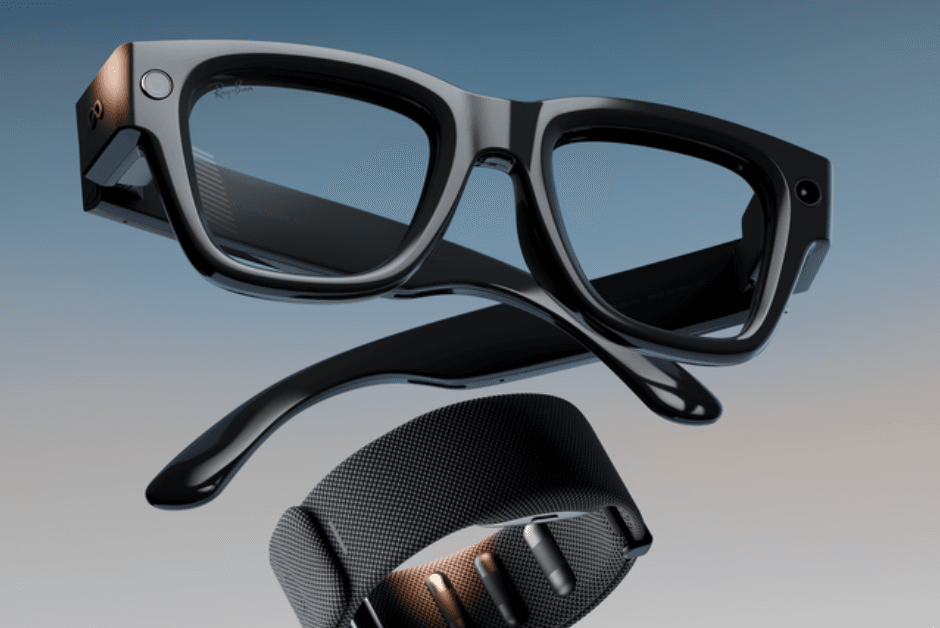
Meta’s Ray-Ban smart glasses grabbed headlines and dominated sales charts. But there’s a quiet revolution happening in the smart glasses market that most people are missing. While everyone’s been obsessing over cameras and displays, a different breed of AI glasses has emerged and they’re doing something Meta’s can’t: disappearing completely into your daily life.
Let me tell you about the glasses that listen all day.
The Problem with “Smart” Glasses Nobody Talks About
Here’s the uncomfortable truth about most smart glasses in 2026: people buy them, try them for a week, and then let them gather dust on a nightstand.
Why? Because wearing a computer on your face is exhausting.
The Ray-Ban Meta glasses are impressive. They’ve got a 12-megapixel camera, open-ear audio, and Meta AI integration. They look good, too Meta and Ray-Ban nailed the aesthetics. But here’s what the marketing doesn’t tell you: after a few hours of use, you’re mentally fatigued from the constant visual notifications, the battery is draining, and you’re acutely aware that you’re wearing “tech” on your face.
Display-heavy glasses present another problem. The Meta Ray-Ban Display, which launched at $799 in September 2025, includes a full-color in-lens screen and Meta Neural Band for gesture control. It’s genuinely impressive technology. But it gets maybe six hours of battery life, weighs more than standard glasses, and requires you to constantly manage what’s displayed in your field of vision.
That’s not a criticism it’s physics. Screens eat batteries. Visual interfaces demand attention. And attention is exactly what we’re all trying to preserve.
Enter the Audio-First Revolution
While Meta was building displays and camera systems, a handful of companies asked a radically different question: What if we skipped the screen entirely?
The result is what the industry calls “audio-first” AI glasses. No display. Often no camera. Just microphones, speakers, and a direct connection to powerful AI models like ChatGPT.
I know what you’re thinking: “Wait, glasses with no screen? Isn’t that just… Bluetooth headphones shaped like glasses?”
That’s exactly what I thought until I understood what makes them different.
What Makes Audio-First AI Glasses Actually Useful
The magic isn’t in what these glasses show you it’s in how they remove friction from information access.
Think about your typical day. How many times do you pull out your phone just to:
- Ask a quick question
- Set a reminder
- Translate something
- Check a calendar entry
- Draft a message
- Get meeting notes
Every single one of those interactions requires you to:
- Pull out your phone
- Unlock it
- Find the right app
- Type or tap your request
- Wait for the response
- Put the phone away
That’s 30 seconds minimum, often a full minute. Multiply that by the dozens of times you do it daily, and you’re spending meaningful chunks of your life managing devices instead of living.
Audio-first AI glasses collapse that entire sequence into:
- Tap the frame
- Ask your question
- Hear the answer
Three seconds. Hands never leave what you’re doing. Eyes never leave your conversation partner or your work.
The Real Competitor to Meta: Dymesty and the Audio-First Movement
Let’s talk specifics. Companies like Dymesty are building glasses that embody this philosophy, and they’re gaining serious traction with professionals, travelers, and people tired of screen addiction.
The Dymesty Approach
Dymesty’s glasses weigh just 35 grams lighter than most regular glasses. They use a titanium frame that’s durable but nearly invisible on your face. The temples are 9mm thin, which is 47% slimmer than conventional smart glasses.
But here’s the kicker: they claim 48 hours of battery life.
Not “up to” 48 hours under perfect lab conditions with no usage. Actual multi-day wear for typical use. When I first saw that spec, I was skeptical. Display-based smart glasses struggle to make it through a single day. How could something deliver two full days?
The answer is simple: no display means no power drain. The heaviest battery consumers in wearable tech are screens and cameras. Remove those, and suddenly you’re running tiny speakers and microphones that sip power.
The ChatGPT Connection
What Dymesty and similar audio-first glasses do instead is create a direct pipeline to large language models. Through a companion app, they connect to ChatGPT or other AI assistants, giving you conversational access to one of the most capable AI systems available.
This isn’t the limited, context-free voice assistant experience of Siri or Google Assistant circa 2020. This is full conversational AI. You can:
Ask complex questions: “Explain the difference between Keynesian and Austrian economics in terms a high schooler would understand.”
Get real-time translation: The AI translates speech in real-time, with text appearing on your phone app if you need to see it written.
Record and transcribe meetings: A single tap starts recording. The AI automatically transcribes and can summarize multi-hour meetings in seconds reportedly 60 times faster than alternatives.
Handle multi-turn conversations: Unlike traditional voice assistants, you can have back-and-forth discussions. The AI remembers context, so you can ask follow-up questions without repeating yourself.
How This Compares to Meta’s Strategy
Meta has bet big on the camera-and-display model. Their Ray-Ban Meta glasses are designed for content capture and social sharing. The newer Ray-Ban Display models add a full-color screen for navigation, messaging, and visual AI responses.
It’s a fundamentally different vision of what smart glasses should be.
Meta’s approach:
- Camera-first design for capturing photos and videos
- Display for visual information and navigation
- Integration with Facebook, Instagram, and Meta’s social ecosystem
- Meta AI that can “see” what you’re looking at through the camera
- Livestreaming capabilities
Audio-first approach (Dymesty, Vue, etc.):
- No camera, preserving privacy and battery life
- No display, minimizing distraction and weight
- Pure AI assistant functionality via voice
- Multi-day battery life
- Focus on productivity and information access over content creation
Neither is “better” they’re optimized for completely different use cases.
If you’re a content creator, influencer, or someone who frequently wants to capture hands-free video, Meta’s glasses are objectively superior. The ability to record 3K video, livestream to Instagram, and use AI to describe what the camera sees is powerful.
But if you’re a knowledge worker, frequent traveler, or someone trying to reduce screen time while staying productive, audio-first glasses make more sense. They’re lighter, last longer, and don’t tempt you to engage with visual interfaces every few minutes.
The Real-World Use Cases Where Audio-First Wins
Let me paint some scenarios where the audio-first model shines:
Business Meetings
You’re in a two-hour client meeting. With a quick double-tap on your glasses, recording starts. The entire conversation is transcribed automatically. After the meeting, you ask the AI: “Summarize the key action items and who’s responsible for each.”
Within seconds, you get a clean summary. No notes taken. No distraction from the conversation. No pulling out a phone or laptop.
Compare that to Meta’s glasses, which can record video but aren’t really designed for this workflow. The video files are large, the battery wouldn’t last a full day of back-to-back meetings, and extracting action items from video is clunky.
International Travel
You’re in a Tokyo restaurant. The menu is entirely in Japanese. You ask your glasses, “What does this menu say?” The AI provides a translation, with the text appearing on your phone so you can read the full menu at your own pace.
You order, then ask the glasses for walking directions to your next destination. You hear turn-by-turn instructions without ever looking at your phone.
Meta’s Ray-Ban Display can actually do something similar you can ask Meta AI to translate text the camera sees, and it shows navigation on the display. But here’s the catch: that display-based experience is what kills the battery. A full day of tourism with frequent navigation and AI queries? You’ll be hunting for a charging cable by dinner.
Hands-Free Productivity
You’re cooking dinner while listening to a podcast. A text comes in. Your hands are covered in flour. With audio-first glasses, you hear the notification, tap to hear the message, and can respond via voice dictation all without washing your hands or touching anything.
You’re driving and need to set a reminder for tomorrow morning. Tap, speak, done. No phone, no distraction, no compromise to safety.
Meta’s glasses can handle these scenarios too, but the display becomes irrelevant you’re not looking at it while cooking or driving anyway. You’re paying for hardware you’re not using.
The Privacy Equation
Here’s where things get interesting from a societal perspective.
Meta’s camera-equipped glasses have sparked serious privacy debates. In January 2026, reports emerged of people using them to record others without consent pickup artists filming women for TikTok content, hidden recordings in sensitive situations. The recording LED is small and not always visible, especially in bright light.
European regulators have been particularly aggressive. The Irish Data Protection Commission has questioned whether the LED notification is sufficient under GDPR. Some advanced AI features that work in the US have been restricted or delayed in Europe due to privacy concerns.
Audio-first glasses without cameras sidestep many of these issues. Yes, they have microphones but so does every smartphone, and we’ve collectively decided that’s an acceptable tradeoff. The absence of a camera means they can’t be used for surreptitious video recording.
For workplaces, schools, or other environments where camera-equipped glasses create discomfort, audio-first models present a more acceptable alternative.
The Battery Life That Changes Everything
Let’s talk about what might be the most underrated feature of audio-first glasses: the ability to actually wear them all day, every day, without battery anxiety.
Meta’s Ray-Ban Meta (Gen 2) glasses offer about 8 hours of battery with their improved battery capacity. That sounds reasonable until you realize:
- That’s 8 hours with light use
- Heavy camera use drains it faster
- You need to charge every single night
- Miss one night, and you’re wearing dead tech the next day
The Ray-Ban Display glasses get about 6 hours of mixed use. Add in the charging case, and you get 30 hours total—but that means you’re managing a charging routine and carrying a case.
Audio-first glasses like Dymesty claiming 48-hour battery life fundamentally change the calculus. You can:
- Forget to charge for a day without consequence
- Travel without bringing a charger
- Actually treat them like glasses, not like another device to manage
That psychological shift matters more than specs sheets suggest. When something becomes unreliable (because you forgot to charge it), you stop depending on it. When you can’t depend on it, you stop using it. When you stop using it, it becomes another abandoned gadget.
Audio-first glasses break that cycle.
What the Market Split Tells Us About the Future
The smart glasses market in 2026 has cleanly bifurcated:
Display-first camp: Meta (Ray-Ban Display), Xreal, RayNeo, Rokid
- Focus: Visual information, AR overlays, virtual screens
- Strengths: Rich visual information, navigation, immersive experiences
- Weaknesses: Battery life, weight, visual distraction, higher cost
Audio-first camp: Dymesty, Vue, others emerging
- Focus: Conversational AI, information access, productivity
- Strengths: All-day battery, lightweight, minimal distraction, privacy-friendly
- Weaknesses: No visual information, relies entirely on audio, limited for media consumption
Neither is winning they’re serving fundamentally different needs.
What’s interesting is how the big tech companies are hedging their bets. Google announced in December 2025 that they’re developing both audio-only models and in-lens display models for their upcoming 2026 AI glasses. Apple is reportedly testing multiple approaches as well, with their 2027 glasses expected to launch as audio-first, display-free models that rely heavily on upgraded Siri and iPhone integration.
Even Samsung has confirmed their 2026 smart glasses will feature an “eye level” camera and Gemini AI integration, with models that connect to smartphones rather than trying to be standalone devices.
The industry has figured out that “one size fits all” doesn’t work for smart glasses.
The Cost Equation
Let’s address pricing, because it matters.
Meta Ray-Ban Meta (Gen 2) glasses start around $299-$379 depending on lens options and styles. That’s aggressively priced Meta is almost certainly subsidizing these to gain market share and collect data for their AI training.
The Ray-Ban Display with Meta Neural Band costs $799, reflecting the additional display technology and gesture control capabilities.
Audio-first alternatives like Dymesty typically price around $400-$600. You’re paying more than basic Ray-Ban Meta but less than Display models.
What you’re really comparing is:
- $379 for glasses with camera + speakers + Meta AI (requires daily charging, US-focused features)
- $500 for glasses with speakers + ChatGPT integration (2-day battery, privacy-focused, no camera)
- $799 for glasses with camera + speakers + display + gesture band (6-hour battery, cutting-edge features)
The value proposition depends entirely on your use case.
Who Should Choose Audio-First Over Meta
Based on actual usage patterns, audio-first glasses make the most sense for:
Busy professionals: People in back-to-back meetings who need transcription, note-taking, and quick information access without pulling out devices constantly.
International business travelers: Real-time translation, hands-free navigation, and multi-day battery life without charging infrastructure.
Parents: Hands-free communication while your hands are literally full with kids, grocery bags, or household tasks.
Students and academics: Quick access to information, ability to record lectures (where permitted), and summarization capabilities for research.
People actively trying to reduce screen time: Those who want information access without the pull of visual interfaces.
Privacy-conscious users: Those uncomfortable with camera-equipped glasses or working in environments where cameras aren’t allowed.
Meta’s glasses are better for:
Content creators: Anyone regularly creating social media content, vlogs, or documentation where hands-free video capture is valuable.
Fitness enthusiasts: People who want to capture their runs, hikes, or outdoor activities without carrying a camera.
Social sharers: Those deeply embedded in Facebook/Instagram who want seamless integration with Meta’s ecosystem.
Early adopters who want cutting-edge AR: People willing to trade battery life and weight for visual AI experiences.
The Technical Reality Check
Let’s be honest about limitations, because hype cycles have burned people before.
Audio-First Limitations:
Still requires a phone: You’re not replacing your smartphone. The glasses connect via Bluetooth and rely on your phone’s internet connection for AI access.
Audio-only has constraints: Complex visual information (like charts, maps, diagrams) doesn’t translate well to audio. You’re hearing descriptions instead of seeing the actual visual.
Privacy considerations remain: Always-on microphones raise questions about what’s being recorded and where that data goes. Read privacy policies carefully.
Social acceptance varies: While less intrusive than camera glasses, talking to yourself while tapping your frames still looks odd in some contexts.
AI access may require subscriptions: The hardware is a one-time purchase, but premium AI features (like advanced ChatGPT access) might require ongoing subscriptions.
Meta’s Limitations:
Battery life is real constraint: You can’t actually use these “all day” with heavy features. Plan your usage or carry the charging case.
Privacy concerns are serious: Camera-equipped glasses make people uncomfortable. Be prepared for questions and potential restrictions in certain spaces.
Meta ecosystem lock-in: Many of the best features require deep integration with Meta’s services and accounts.
Feature parity varies by region: Advanced AI capabilities available in the US may be delayed or unavailable in Europe due to regulatory constraints.
Weight and comfort: Display-equipped models are noticeably heavier than regular glasses, which matters over hours of wear.
What 2026 Is Teaching Us About Wearable AI
The smart glasses landscape in 2026 is revealing something important about how AI will integrate into our lives: there won’t be a single “right” approach.
The dream of a universal AI device that handles everything camera, display, all-day AI, multi-day battery, feather-light weight, affordable pricing remains technically impossible with current technology. Physics won’t allow it. Batteries store only so much energy. Displays consume power. Weight cannot be eliminated.
So we’re seeing specialization instead.
Meta is betting that what people really want is seamless content capture and rich visual AI experiences, and they’re willing to manage charging and weight tradeoffs to get it. For millions of users, particularly content creators and social media natives, that bet is paying off. They’ve sold millions of units.
Audio-first companies are betting that what another segment wants is to escape screens while staying productive, and they’ll sacrifice visual information to get all-day wearability and minimal friction. Early adoption suggests this resonates strongly with knowledge workers and frequent travelers.
Both can be right. Both can succeed. The smart glasses market is big enough for multiple successful approaches.
The Competition Heating Up
Meta isn’t standing still, and neither are the audio-first players.
Google’s return to smart glasses (after the Google Glass failure a decade ago) signals serious competition ahead. They’re partnering with Warby Parker and Samsung, which means fashion credibility and manufacturing scale.
Apple’s eventual entry likely 2027 based on reports will reshape the entire market. They’ve historically waited, watched competitors, and then launched refined products that define categories. Expect their glasses to be audio-first initially, with tight iPhone integration and a focus on privacy and design.
Chinese companies like Rokid and Xreal are innovating rapidly on display technology, offering virtual screens that US companies can’t match yet. If they crack international distribution, they’ll be formidable competitors.
And startups keep emerging with novel approaches. Some focus on bone conduction audio. Others experiment with different AI integrations. The category is young enough that innovation is still happening at a rapid pace.
My Take: Why Audio-First Deserves Your Attention
I’ll be direct: most people reading this don’t need Meta Ray-Ban glasses.
If you’re a content creator, influencer, or outdoor enthusiast who frequently captures video, they’re fantastic. Buy them.
But for the typical knowledge worker, parent, or person just trying to stay productive while reducing phone addiction? Audio-first glasses are the more practical choice in 2026.
They’re not as sexy. They don’t have the Meta brand power. They won’t help you livestream to Instagram. But they’ll actually become part of your daily routine instead of a novelty you use occasionally.
The 48-hour battery life alone makes them fundamentally more reliable. The absence of a camera makes them socially acceptable in more contexts. The lighter weight means you’ll actually wear them all day. And the direct AI integration particularly with powerful models like ChatGPT provides capabilities that Meta AI can’t match yet.
The Bottom Line for Buyers in 2026
If you’re considering smart glasses right now, here’s my recommendation framework:
Choose Meta Ray-Ban if:
- Content creation is central to your work or hobby
- You’re deeply embedded in Instagram/Facebook
- You want cutting-edge features even if battery life suffers
- You’re comfortable with cameras and comfortable making others comfortable with them
Choose audio-first (Dymesty, Vue, similar) if:
- You want to reduce phone usage while staying productive
- Multi-day battery life is essential
- Privacy (yours and others’) is a priority
- You travel internationally frequently
- You need meeting transcription and summary capabilities
- Weight and all-day comfort matter more than features
Wait if:
- You’re hoping for one device that does everything
- You want AR experiences like gaming or complex visual work
- You’re budget-conscious and want prices to drop further
- You’re waiting for Apple’s take on the category
The smart glasses revolution is happening, but it’s not happening the way most people expected. It’s not about shrinking displays onto your face. It’s not about becoming a walking camera.
For many people, it’s about making AI genuinely useful by removing the friction between thought and answer. And right now, audio-first glasses are doing that better than anyone else.
The devices that listen all day aren’t trying to replace Meta. They’re serving the users Meta’s approach doesn’t fit. And that market is bigger than anyone expected.
Leave a Reply