
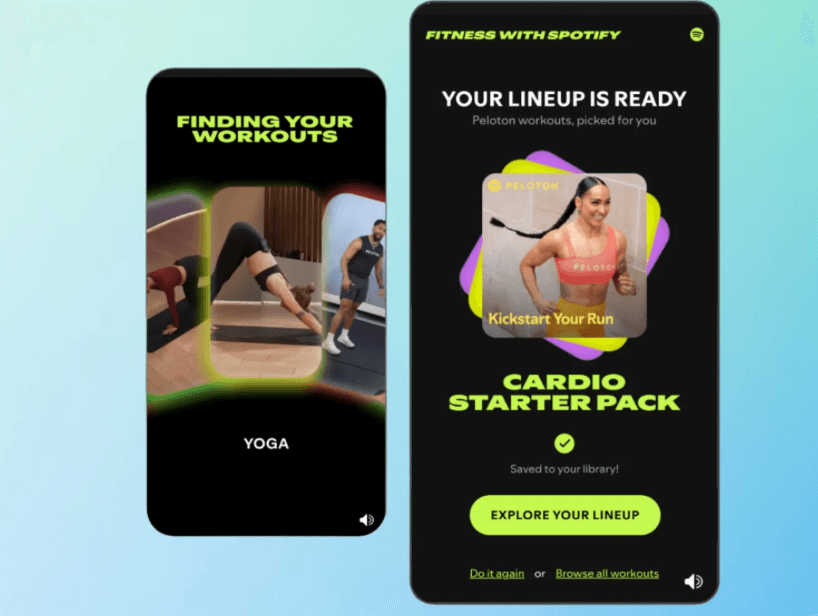
Your favorite music streaming app just did something unexpected. As of April 27, 2026, Spotify isn’t just where you queue up your morning playlist or binge the latest true crime podcast. It’s now officially your workout partner, meditation guide, and yoga instructor all rolled into one.
If your first reaction was “Wait, what?” you’re not alone. But stick with me here, because this move is actually kind of brilliant.
From Playlist Provider to Personal Trainer
Let me paint you a picture of how most of us work out in 2026. You open Spotify to find the perfect high-energy playlist. Switch to YouTube for a workout video. Maybe toggle to a separate meditation app for cooldown. Three apps, three logins, three different interfaces. It’s the digital equivalent of carrying a Walkman, a VHS player, and a meditation gong to the gym.
Spotify just said “enough of that nonsense.”
The streaming giant announced its official entry into the fitness category this week, introducing a dedicated Fitness hub packed with guided workouts, wellness content, and here’s the headline over 1,400 on-demand Peloton classes for Premium subscribers. Yes, you read that correctly. Peloton. Those cycling classes that became a pandemic obsession are now living inside Spotify.
But this isn’t just Peloton’s show. Both free and Premium users can access content from established wellness creators like Yoga with Kassandra, Chloe Ting (yes, the YouTube fitness queen), Pilates Body by Raven, and several others. The content spans everything from sweaty HIIT circuits to gentle meditation sessions, all accessible right where you’re already listening to music.
Why This Isn’t As Random As It Sounds
Here’s the thing that makes this launch feel less like a desperate pivot and more like a natural evolution: you were probably already using Spotify at the gym.
According to Spotify’s own data, nearly 70% of their Premium subscribers work out monthly. That’s roughly 205 million people breaking a sweat with earbuds in. Even more telling? There are over 150 million fitness playlists actively being used on the platform right now.
Let that sink in. One hundred and fifty million playlists dedicated to helping people exercise.
Spotify has been the unofficial soundtrack to the world’s workouts for nearly two decades. They were already there, pumping motivational beats into your ears while you struggled through that last set of burpees. The question isn’t “why are they doing this?”—it’s “what took them so long?”
Roman Wasenmüller, Spotify’s VP and Global Head of Podcasts, framed it perfectly in the announcement: “For nearly two decades, Spotify has been the soundtrack to the world’s workouts. But listening was only the beginning. Today, we are expanding Spotify to become a true daily wellness companion.”
Translation: We’ve been providing the background music. Now we’re directing the whole show.
What You Actually Get
Alright, let’s talk specifics. What does this new fitness experience look like in practice?
For Free Users:
- Dozens of curated workout playlists (you already had these, but now they’re organized better)
- Access to guided workout videos from independent fitness creators
- Content spanning yoga, strength training, cardio, Pilates, and meditation
- The ability to download sessions for offline use
For Spotify Premium Subscribers: The real headline is the Peloton partnership. Premium users in supported markets (currently the US, UK, Australia, Canada, Germany, Austria, Mexico, Sweden, and Spain) get access to:
- Over 1,400 ad-free Peloton classes
- Content from fan-favorite instructors like Rebecca Kennedy, Ally Love, and Rad Lopez
- Workouts across strength, cardio, yoga, meditation, stretching, Pilates, barre, and outdoor runs
- All without needing any specialized equipment (bike workouts aren’t included this is mat-based and bodyweight stuff)
The catalog is continually growing, meaning that 1,400 number is just the starting point.
How to Find It
Accessing the new Fitness hub is refreshingly simple. Open Spotify, hit the search function, and type “fitness.” Boom—there it is. You can also find it under the “Browse all” menu.
Once you’re in, you’ll see curated categories like:
- Peloton Instructors (Premium only) – Browse by your favorite teacher
- Daily Movement Mix – Pre-made workout itineraries
- Explore Creator Workouts – Content from non-Peloton fitness influencers
- Filters by workout type: weighted strength, yoga, meditation, cardio, etc.
The experience is designed to work seamlessly across devices. Start a video workout on your smart TV, switch to audio mode on your phone for a run outside, then cool down with guided meditation on your smart speaker. One account, one ecosystem, zero friction.
Workouts are primarily in English, with select options in Spanish and German. And yes, you can download classes for offline access perfect for that hotel gym with sketchy WiFi.
The Strategic Play Nobody’s Talking About
Let’s step back and look at what Spotify is really doing here. This isn’t just about adding another feature to keep users engaged (though that’s certainly part of it). This is about fundamentally repositioning what Spotify is in your life.
For years, Spotify has been systematically expanding beyond music:
- 2015-2018: Massive investment in podcasting
- 2023: Audiobooks integration
- 2024: Video content expansion
- 2026: Fitness and wellness
Each move follows the same logic: capture more of your daily routine. Music is amazing, but people only actively listen to music for a few hours a day. Podcasts fill your commute. Audiobooks own your downtime. And now, fitness content claims your workout hour.
The endgame? Making Spotify so integral to your daily routine that canceling your subscription feels like cutting off a limb. Why would you quit when Spotify is your alarm clock music, your commute podcast, your work focus playlist, your lunch break audiobook, your workout instructor, and your bedtime meditation guide?
It’s the “super app” strategy, and it’s working. The more time you spend in Spotify, the more valuable your subscription becomes and the stickier you become as a customer.
Why Peloton Said Yes
For Peloton, this partnership is a lifeline disguised as an expansion strategy.
Let’s be honest: Peloton has had a rough few years. The pandemic darling that saw its stock skyrocket as everyone panic-bought $2,000 bikes has struggled to maintain that momentum. The company pivoted from expensive hardware to subscription content, but convincing people to pay yet another monthly fee for workout classes? Tough sell in a crowded market.
Enter Spotify, with its 600+ million users and 293 million Premium subscribers.
Dion Camp Sanders, Peloton’s Chief Commercial Officer, framed it as capturing “new revenue streams through Peloton’s unmatched experience, content and instruction.” What they’re not saying out loud: this gets Peloton content in front of hundreds of millions of people who would never buy a Peloton bike or subscribe to Peloton’s standalone app.
For Peloton, it’s about scale. For Spotify, it’s about depth. Both companies win.
The Content Creators Cashing In
Beyond Peloton, let’s talk about the independent fitness creators who just got handed the keys to a massive new distribution channel.
YouTube has been the primary platform for fitness content for over a decade. Creators like Chloe Ting have built empires there, with Ting boasting over 25 million subscribers for her workout programs. But YouTube’s recommendation algorithm is fickle, and the platform’s fitness category is brutally competitive.
Spotify offers something different: curation and discoverability within a wellness context. When someone searches “fitness” on Spotify, they’re not wading through a sea of clickbait thumbnails and algorithm-gaming titles. They’re seeing a curated selection of quality content from verified wellness creators.
For creators, this is a new revenue stream and a more engaged audience. For users, it’s less noise and more signal.
Creators featured in the initial launch include:
- Yoga with Kassandra – Specialized yoga flows and meditation
- Chloe Ting – Home workouts and fitness challenges
- Pilates Body by Raven (featuring Raven Ross from Netflix’s “Love Is Blind”)
- Caitlin K’eli Yoga – Yoga instruction
- Sweaty Studio – High-intensity workouts
- Abi Mills Wellness – Holistic wellness content
- Sophiereidfit – Strength and conditioning
These aren’t random picks. Each creator brings a distinct style and audience, giving Spotify breadth across the wellness spectrum.
What This Means for the Competition
Apple Fitness+ must be feeling some type of way right now.
When Apple launched Fitness+ in 2020, it seemed like a logical extension of the Apple Watch ecosystem. Guided workouts synced with your biometrics, all wrapped in Apple’s signature polish. It was good. Really good.
But here’s the problem: Apple Fitness+ requires an Apple Watch. That’s a $250+ barrier to entry before you even start working out. And while Apple has done well in its own ecosystem, Fitness+ hasn’t exactly set the world on fire. Ask ten random people on the street if they use Apple Fitness+, and you’ll get nine blank stares.
Spotify’s approach is different. No special equipment required. No specific hardware needed. Already have a Spotify Premium subscription? Great you just got a fitness app too. That’s a much easier sell than “buy this $400 watch, then pay $9.99/month for workouts.”
YouTube is the other elephant in the room. Free workout videos have lived there for over a decade. Why would people migrate to Spotify?
The answer: convenience and curation. YouTube’s algorithm wants to keep you watching, which means it’ll serve you the most clickable content, not necessarily the best. Spotify’s curated Fitness hub is at least in theory focused on quality and relevance. Plus, the integration with music playlists means smoother transitions between workout and cooldown.
Will it be enough to pull users from YouTube? Maybe not entirely. But Spotify doesn’t need everyone to switch. They just need enough people to start their workouts inside Spotify instead of YouTube to make this a win.
The Problems Nobody Wants to Talk About Yet
Look, I’m not here to blow sunshine. There are legitimate concerns about this move, and we should address them.
App Bloat Some users are already complaining that Spotify has become too cluttered. What started as a simple music app now includes podcasts, audiobooks, video content, and now fitness classes. For people who just want to listen to music without wading through content they don’t care about, this can feel overwhelming.
Spotify has acknowledged this tension they recently added the option to turn off videos across the app for users who find them distracting. Whether they’ll extend similar controls for fitness content remains to be seen.
Price Creep Every time Spotify adds a new content category, there’s anxiety about price increases. They added podcasts (free to Spotify). They added audiobooks (initially separate, now included in Premium). Now fitness content. How long before Premium costs $15, then $20, then $25?
To be fair, Spotify hasn’t announced a price hike with this launch. But the cynic in me sees this as adding value to justify future increases.
Quality Control Here’s a question worth asking: who’s vetting this fitness content? YouTube has been criticized for years about unqualified “fitness influencers” giving questionable (sometimes dangerous) advice. Is Spotify doing due diligence on form, safety, and credentials? Or are they just aggregating popular creators?
The Peloton content comes with the credibility of a major fitness brand. But what about the independent creators? Spotify hasn’t detailed its vetting process, and that could matter when someone pulls a muscle following advice from an unqualified instructor.
Data Privacy Spotify now knows not just what music you like, but also when you work out, what types of exercise you do, and how long you spend on wellness content. Combine that with your listening habits, podcast preferences, and audiobook choices, and they’re building an incredibly detailed profile of your daily life.
Is that concerning? Maybe. Will it stop most people from using the feature? Probably not. But it’s worth thinking about.
The Bigger Picture: The Battle for Your Time
This move isn’t really about fitness. It’s about attention.
The modern tech economy runs on a simple equation: the more time you spend in an app, the more valuable that app becomes. This is why Facebook became Meta and tried to own the metaverse. It’s why TikTok is terrifying every other social platform. And it’s why Spotify keeps expanding into new categories.
Music streaming has become a low-margin commodity business. Spotify pays out roughly 70% of its revenue to rights holders, leaving razor-thin margins to actually run the business. The only way to improve those economics is to either raise prices (risky in a competitive market) or increase engagement so dramatically that the subscription becomes indispensable.
Fitness content does both. It increases time spent in the app, making the subscription stickier. And it provides justification for future price increases (“you’re not just paying for music you’re getting a complete wellness platform!”).
From that perspective, this isn’t Spotify becoming a fitness app. It’s Spotify becoming a daily utility app that happens to include fitness.
What Happens Next
If this launch is successful (and early signs suggest significant user interest), expect Spotify to double down hard on wellness content.
We could see:
- Live classes competing directly with Peloton’s live offering
- Personalized workout recommendations powered by Spotify’s AI and your listening habits
- Integration with fitness trackers to provide workout metrics
- Nutrition content expanding into meal planning and recipes
- Sleep and recovery programming to own the other end of your daily wellness routine
- Partnerships with gyms and fitness studios to bring more premium content into the platform
The roadmap practically writes itself. Spotify has the technology, the user base, and the distribution. The only question is how aggressive they want to be.
Should You Actually Use This?
Okay, real talk: is Spotify’s Fitness hub actually good, or is this just corporate bloat disguised as innovation?
You should try it if:
- You’re already a Spotify Premium subscriber (it’s free with your subscription)
- You like Peloton-style classes but don’t want to pay for a separate app
- You prefer working out at home without equipment
- You’re already using Spotify during workouts and want guided instruction
- You like the idea of one app for music, podcasts, and workouts
You can probably skip it if:
- You’re loyal to your current fitness app and it’s working for you
- You prefer gym workouts with equipment
- You’re a YouTube loyalist who doesn’t mind searching for workout videos
- You’re on Spotify’s free tier and the creator content doesn’t appeal to you
- You hate the idea of Spotify becoming more bloated
Personally? I think it’s worth a shot. The Peloton classes alone represent significant value for Premium subscribers. If you were even remotely considering a Peloton subscription (which costs $44/month standalone), getting access to over 1,400 classes as part of your existing Spotify Premium subscription ($11.99/month in the US) is objectively a good deal.
The Verdict
Spotify becoming a fitness app isn’t random it’s strategic, data-driven, and honestly kind of inevitable.
They already owned the soundtrack to your workouts. Now they’re owning the workout itself. It’s a natural extension that makes sense for the business, adds genuine value for users (especially Premium subscribers), and positions Spotify as more than just a music streaming service.
Is it perfect? No. There are legitimate concerns about app bloat, price increases, and whether we really need our music app to also be our gym. But the core idea making wellness content accessible in the same place you’re already spending hours of your day has merit.
The bigger story here isn’t about fitness at all. It’s about Spotify’s evolution from a single-purpose music app into a multi-faceted daily companion. Music got them in the door. Podcasts expanded their reach. Audiobooks added depth. And now fitness content stakes a claim to another chunk of your day.
Twenty years ago, you had separate devices for music, books, communication, and navigation. Now your phone does all of it. Spotify is making the same play within the app ecosystem: why juggle multiple subscriptions and interfaces when one platform can handle it all?
Will it work? The fact that 70% of Premium subscribers already work out monthly suggests Spotify is meeting users where they already are, not trying to change behavior. That’s usually a good sign.
Give it six months. If this takes off, every major streaming platform will be scrambling to add fitness content. If it flops, it’ll become a cautionary tale about feature bloat and losing focus.
My money’s on the former. Spotify has been pretty good at reading the room so far. And the room, apparently, is full of people trying to get in shape while listening to their carefully curated workout playlists.
Now if you’ll excuse me, I have a Peloton class to try. On Spotify. Because that’s apparently where we are in 2026.
Leave a Reply