
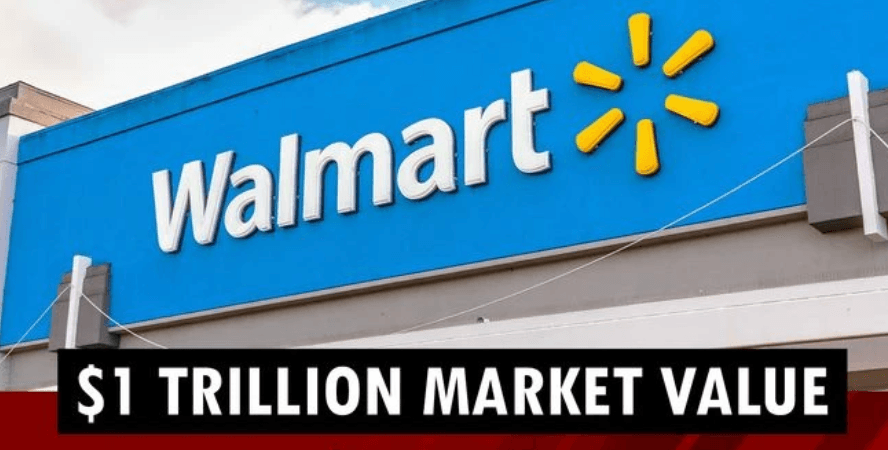
February 5, 2026 – Walmart Inc. (NYSE: WMT) achieved a $1 trillion market capitalization for the first time on Tuesday, February 3, 2026, becoming the first traditional retailer to reach this milestone. This document provides a comprehensive factual overview of the achievement based on official financial data and market reports.
Market Capitalization Achievement
Date: Tuesday, February 3, 2026
Closing Stock Price: $127.71 per share
Closing Market Capitalization: $1.02 trillion (per CNBC)
Daily Stock Increase: 2.9% to 2.97% (reported by Bloomberg and CNBC respectively)
Value Added in Single Day: Approximately $29.1 billion (per Bloomberg)
All-Time High: The $127.71 closing price represents an all-time high for Walmart stock
Historical Context
Previous Position: Walmart is the first traditional brick-and-mortar retailer to achieve a $1 trillion market capitalization
Other Retailers: Amazon is the only other retailer to have surpassed $1 trillion market cap; Amazon’s current market capitalization is approximately $2.6 trillion (per Al Jazeera)
$1 Trillion Club Membership: Walmart became the ninth or tenth U.S. company (reports vary) to achieve a $1 trillion market capitalization
Other Members of $1 Trillion Club:
- Nvidia
- Apple
- Alphabet (Google)
- Microsoft
- Amazon
- Berkshire Hathaway
- Additional technology companies
Stock Performance
Year-to-Date Performance (2026)
2026 Gains: Up 14% to 15% (reports vary between 14% and 15%)
S&P 500 Comparison: S&P 500 index up approximately 1% to 1.1% in same period
Outperformance: Walmart stock outpaced S&P 500 by approximately 13-14 percentage points year-to-date
Twelve-Month Performance
One-Year Gain: Up more than 28% over the past year
S&P 500 Comparison: S&P 500 up approximately 15% over same period
Two-Year Performance: Shares have more than doubled over the past two years (per Financial Times)
Recent Financial Performance
Fiscal 2026 Third Quarter (Reported November 2025)
Revenue Growth: 5.8% increase
E-commerce Sales Growth: 27% increase
Advertising Business Growth: 53% increase
Context: The advertising business and third-party marketplace generate higher profit margins than traditional brick-and-mortar retail operations
Full Fiscal Year 2026 Guidance
Expected Sales Growth: 4.8% to 5.1%
Expected Annual Revenue: Over $700 billion (per analyst expectations cited by Financial Times)
Fiscal Fourth Quarter Earnings: Expected to be reported later in February 2026 (specific date: February 19, 2026 per some reports)
Business Transformation Initiatives
E-Commerce Expansion
Store Count: Nearly 11,000 stores worldwide in 19 countries
Digital Strategy: Development of e-commerce business positioned to compete with Amazon
Marketplace Model: Third-party marketplace expansion following Amazon’s business model
Higher Margins: E-commerce and marketplace operations generate higher profit margins than traditional retail
Advertising Business
Growth Rate: 53% growth in fiscal Q3 2026
Business Model: Advertising platform leveraging Walmart’s customer base and data
Strategic Priority: Identified as key area for profit margin expansion
Artificial Intelligence Integration
Operational Applications: AI deployed across operations including:
- Scheduling
- Supply chain management
- Inventory optimization
- Customer service
Partnership with Google/Alphabet: AI-enhanced shopping on Google’s Gemini platform announced in 2025/early 2026
Partnership with OpenAI: Integration allowing customers to browse and purchase Walmart products directly through ChatGPT
Automation Investments: Continued investment in automation technologies across fulfillment and store operations
Technology Recognition
Nasdaq 100 Addition: Walmart was added to the tech-heavy Nasdaq 100 Index in January 2026
Significance: Addition to Nasdaq 100 reflects investor recognition of Walmart’s technology ambitions and transformation
Leadership Transition
New CEO Appointment
New CEO: John Furner
Start Date: Sunday, February 1, 2026
Previous Position: CEO of Walmart U.S.
Prior Role: CEO of Sam’s Club (Walmart’s wholesale chain)
Background: Started at Walmart in entry-level position stocking shelves; climbed through company ranks
Previous CEO
Outgoing CEO: Doug McMillon
Retirement Date: Saturday, January 31, 2026
Tenure: Served as CEO from 2014 to 2026
Key Initiatives Under Furner’s U.S. Leadership
Curbside Pickup: Expansion of curbside pickup services
Private-Label Brands: Improvements to private-label product offerings
Customer Acquisition: Attracted higher-income shoppers during period of elevated inflation
Technology Focus: Early proponent of drone technology and AI implementation
Silicon Valley Engagement: Regular visits to Silicon Valley companies to understand emerging technologies
Supply Chain and Sourcing
India Sourcing Strategy
2018 India Sourcing: 2% of global exports from India
2023 India Sourcing: 25% of global exports from India (per Reuters import data review from 2023)
Target for 2027: $10 billion in goods sourced from India
China Sourcing Shift:
- 2018: 80% of goods from China
- 2023: 60% of goods from China
Primary Import Categories (per ImportYeti data):
- Home fabrics
- Apparel
- Toys
Trade Agreement Impact
India-US Trade Deal: Announced February 2, 2026 (day before Walmart hit $1 trillion)
Tariff Reduction: US tariffs on Indian goods reduced from 50% (briefly imposed) to 18%
Strategic Timing: Walmart’s India sourcing strategy positioned to benefit from reduced tariffs
Federation of Indian Export Organisations Statement: Tariff cuts will significantly boost Indian exports including textiles and apparel
Customer Base Evolution
Traditional Customer Base: Long-time favorite of bargain-hunting consumers
Income Spectrum: Maintained appeal across income levels through low pricing strategy
New Customer Segment: Online offerings attracting wealthier shoppers seeking convenience
Value Proposition: Combination of low prices and convenience driving customer acquisition
Market Position
Retail Industry Position
U.S. Ranking: Largest U.S. retailer and grocer
Global Store Footprint: Approximately 11,000 stores across 19 countries
S&P 500 Consumer Staples: Biggest company in S&P 500 Consumer Staples Index by market value
Sector Comparison: Larger than Costco Wholesale Corp., Procter & Gamble Co., and Coca-Cola Co.
Competitive Positioning
Primary Competitor: Amazon (valued at approximately $2.6 trillion)
Competitive Strategy: Leveraging massive physical store network combined with digital capabilities
Scale Advantage: Using massive scale and supplier network to maintain low prices and gain market share
Financial Metrics Context
Valuation Metrics
Market Cap: $1.02 trillion
Stock Price: $127.71
Daily Trading: Reached $1 trillion threshold during Tuesday trading session
Comparative Company Metrics
Tesla: Not specified in reports but used as comparison point for non-tech trillion-dollar companies
Berkshire Hathaway: Listed as other non-tech company exceeding $1 trillion valuation
Technology Companies: Most $1 trillion+ companies are technology-focused businesses
Geographic and Operational Scope
Headquarters: Bentonville, Arkansas
U.S. Operations: Walmart U.S. (led by Furner prior to CEO appointment)
International Operations: Presence in 19 countries globally
Sam’s Club: Wholesale club subsidiary included in overall operations
Store Count: Nearly 11,000 stores worldwide
Strategic Priorities Going Forward
Technology Investments
AI Expansion: Continued investment in artificial intelligence across all operations
Automation: Ongoing automation projects in fulfillment centers and stores
Digital Platforms: Enhancement of e-commerce capabilities and digital customer experience
Platform Centralization: Centralizing platforms to accelerate shared capabilities (per January 2026 company statement)
Business Model Evolution
From Retail to Tech-Enabled Retail: Transformation from pure brick-and-mortar to technology-enabled hybrid model
Higher-Margin Businesses: Focus on third-party marketplace and advertising for profit growth
Healthcare Services: Expansion into healthcare services (mentioned as strategic priority)
Hybrid Model: Combining physical store footprint with digital capabilities
Market Response and Analyst Perspectives
Stock Market Reaction
Tuesday Rally: 2.9% gain bringing stock to all-time high
Investor Sentiment: Continued positive sentiment based on digital transformation progress
Valuation Sustainability: Questions about whether $1 trillion valuation can be sustained
Analyst Commentary
Price Investment Strategy: Analysts expect Walmart to continue investing in low prices to gain market share in 2026
Conservative Outlook: Outlook likely to be conservative according to analyst assessments
Growth Trajectory: Expectations for continued but measured growth
Timing and Contextual Factors
Week of Achievement
New CEO Start: John Furner began as CEO on Sunday, February 1, 2026 (two days before $1 trillion achievement)
India Trade Deal: India-US trade deal announced February 2, 2026 (one day before $1 trillion achievement)
Market Conditions: Achievement occurred during period of continued stock market strength
Economic Environment
Inflation Context: Higher-income shoppers drawn to Walmart during period of elevated grocery inflation
Consumer Spending: Strong consumer spending on essentials and convenience
Value Shopping Trend: Continued consumer focus on value and affordability
Walmart’s Stated Strategic Vision
Company Statement (January 2026): “As AI rapidly reshapes retail, we are centralizing our platforms to accelerate shared capabilities, freeing up our operating segments to be more focused on and closer to our customers and members.”
Focus Areas:
- AI technology integration
- Healthcare services expansion
- E-commerce growth
- Hybrid physical-digital model optimization
Comparison to Technology Companies
Business Model Attributes: Walmart exhibits characteristics typically associated with technology companies:
- High-growth e-commerce business
- Advertising platform
- AI integration across operations
- Marketplace model
- Technology investment priorities
Nasdaq 100 Inclusion: Recognition as technology-oriented company despite retail origins
Valuation Multiple: Trading at multiples more similar to technology companies than traditional retailers
Conclusion
Walmart reached a $1 trillion market capitalization on February 3, 2026, closing at $127.71 per share with a market value of $1.02 trillion. This achievement makes Walmart the first traditional brick-and-mortar retailer to reach this milestone and places it in an exclusive group of primarily technology companies valued at $1 trillion or more.
The company’s stock has gained 28% over the past year and 14-15% in 2026 year-to-date, significantly outperforming the S&P 500 Index. Recent financial performance includes 5.8% revenue growth, 27% e-commerce growth, and 53% advertising business growth in fiscal Q3 2026.
The achievement occurred during the first week of John Furner’s tenure as CEO and coincided with the announcement of the India-US trade deal, which benefits Walmart’s strategic shift toward India-based sourcing. Walmart’s transformation from traditional retailer to technology-enabled retail platform, including significant AI investments and partnerships with Google and OpenAI, has driven investor confidence and stock appreciation.
This document provides factual information based on financial reports, market data, and official company statements as of February 3-4, 2026. All figures are as reported by Bloomberg, CNBC, Financial Times, Reuters, and other financial news sources.
Leave a Reply