
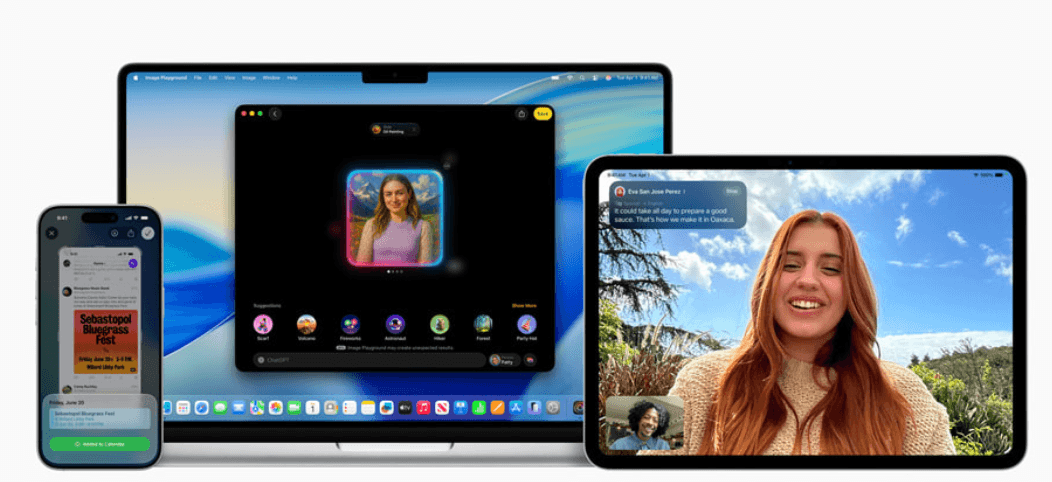
Breaking: January 22, 2026 – Apple isn’t just launching ONE AI device in 2026. They’re launching an entire AI hardware ecosystem. And after digging through the latest reports, leaked timelines, and supply chain whispers, I’ve uncovered something wild: Apple’s betting the entire company’s future on three interconnected AI devices that will either revolutionize how we interact with technology or become the most expensive flop since the Humane AI Pin.
Here’s what’s actually happening: a $350 smart home hub launching in March-April 2026, an AI wearable pin coming in 2027, and AI-powered smart glasses previewing late 2026. All powered by a completely rebuilt Siri that Apple has delayed TWICE because they knew the old version would kill these products before they even launched.
This isn’t incremental improvement. This is Apple’s “iPhone moment” for the AI era. Or at least, that’s what they’re hoping for.
Let me break down exactly what’s coming, why it took so long, and whether any of this actually matters.
The Main Event: HomePad – Apple’s $350 Answer to Echo Show
Let’s start with the device that’s actually confirmed and arriving in spring 2026: the HomePad (or HomeHub, depending on which leak you believe).
What It Actually Is: A 7-inch square touchscreen display that’s basically “what if an iPad and HomePod had a baby.” But calling it that undersells what Apple’s actually trying to build here.
Two Versions Coming:
Version 1: The Wall-Mounted Model
- Clean, flush mount design for kitchens, hallways, bedrooms
- No speaker base (uses internal speakers)
- Permanent installation
- Likely the cheaper option (around $350)
Version 2: The Tabletop Model with HomePod Base
- Speaker base that looks like a HomePod mini
- Portable, movable between rooms
- Better audio quality for music
- Probably $399-$449
But wait there’s a THIRD version that just leaked yesterday, and this is where things get truly weird.
Version 3: The Robotic Swivel Base (Wait, What?)
According to The Information (breaking news from 10 hours ago), Apple is working on a home product featuring a small display, speakers and a robotic swiveling base, designed with heavy AI emphasis.
Picture this: a HomePad mounted on a thin robotic arm that can tilt up and down, rotate 360 degrees, and automatically reposition itself to face whoever is speaking. Like Pixar’s Luxo Jr. lamp, but it’s an AI-powered display that follows you around the room.
Why? Because the device will be able to reposition itself to face whoever is speaking, using sensors to determine when someone enters the room.
This is simultaneously the coolest and most dystopian thing I’ve heard all year. An AI display that literally watches and tracks you? Sign me up. Also, I’m terrified.
The Specs: What’s Actually Inside This Thing
Display:
- 7-inch square touchscreen (roughly two iPhones side-by-side)
- Custom aspect ratio optimized for displaying information at a glance
- Not meant for long-form content this is a command center, not an iPad
Processing Power:
- A18 chip (same as iPhone 16)
- Full Apple Intelligence support
- Capable of on-device AI processing
Camera System:
- 1080p ultra-wide camera with Center Stage
- Face ID support for automatic user recognition
- Can identify who’s in the room and personalize content accordingly
Audio:
- Multi-speaker array (likely 4+ speakers)
- Designed for music playback, not just voice interaction
- Spatial audio support
Operating System:
- homeOS (brand new OS, not tvOS or watchOS)
- Built specifically for stationary smart home control
- Optimized for quick glances and voice interaction
Connectivity:
- Wi-Fi 6E
- Thread networking (Apple’s N1 wireless chip)
- Matter smart home standard support
- Seamless integration with HomeKit
Manufacturing:
- Assembled in Vietnam (part of Apple’s supply chain diversification)
- Manufactured by BYD (yes, the Chinese EV maker)
- Production ramping up now for March-April launch
The Real Story: Why This Took SO Damn Long
Here’s the part nobody’s talking about: Apple originally targeted March 2025 for the hub launch. That’s a FULL YEAR AGO.
What happened? One word: Siri.
Apple realized that launching a voice-first smart home device with the current version of Siri would be catastrophic. The old Siri couldn’t handle complex conversations, didn’t understand context, and failed at basic tasks that Google Assistant and Alexa handled easily.
So they delayed. And then delayed again.
The Siri 2.0 Rebuild:
With iOS 18, Apple announced that Siri with Apple Intelligence was coming. It ties into ChatGPT, understands you better, and has deep ties to your on-device data. That project was met with multiple costly delays and resulted in the complete rebuild of the tech stack.
Translation: Apple threw out the old Siri codebase and started over from scratch.
The new Siri launching with the HomePad is powered by large language models (LLMs), similar to ChatGPT or Claude. It can handle complex multi-step requests, understand context across conversations, and actually interact with your apps and data intelligently.
Example: Instead of saying “Turn on the living room lights,” you can say “Help me prepare for tomorrow’s dinner party” and Siri will:
- Adjust lighting schedules for ambiance
- Set temperature presets for when guests arrive
- Remind you to start the dishwasher beforehand
- Add items to your grocery list
- Set calendar reminders
This isn’t voice commands. This is conversational AI that actually works.
The Privacy Paradox: How Apple Squares This Circle
Here’s the elephant in the room: how does Apple build a device with cameras, microphones, and AI processing that watches you 24/7 without destroying their entire privacy brand?
Apple’s Solution: Private Cloud Compute
All the advanced AI processing happens on Apple’s own servers (not OpenAI’s, not Google’s), with end-to-end encryption and zero data retention. Your queries are processed, answered, and then immediately deleted.
Apple will run this new Siri model on their Private Cloud Compute servers, ensuring user privacy remains intact while enabling the advanced processing power these features require.
On-device processing handles simple tasks. Cloud processing handles complex reasoning. But even the cloud processing is sandboxed, encrypted, and auditable.
This is Apple’s competitive advantage. Google and Amazon monetize your voice data. Apple charges you $350 upfront and then leaves your data alone.
For privacy-conscious users (which is increasingly everyone), that’s a compelling pitch.
The AI Wearable Pin: Apple’s Answer to Humane’s Disaster
Now let’s talk about the device that dropped YESTERDAY and has everyone confused: the AI wearable pin.
What We Know (From The Information’s Breaking Report):
Physical Design:
- Roughly the size of an AirTag (but slightly thicker)
- Flat disc shape with aluminum and glass construction
- Magnetic attachment (clips to clothing, bags, etc.)
Hardware:
- TWO cameras (standard + wide-angle)
- THREE microphones for spatial audio capture
- Small speaker for audio output
- One physical button for interaction
- Magnetic inductive wireless charging (Apple Watch style)
Launch Timeline:
- Early 2027 (so about a year from now)
- Still in “very early development” stages
- Could be cancelled if testing doesn’t go well
The Big Question: What Does It Actually DO?
That’s the thing nobody really knows yet. The device is so early in development that Apple itself probably hasn’t finalized the feature set.
Likely Use Cases:
- Visual intelligence (look at something, ask what it is)
- Contextual AI assistance based on your surroundings
- Fitness and health tracking
- Hands-free device control
- Ambient audio capture for notes and reminders
But here’s the catch: the failed Humane Ai Pin was a rough start for this type of wearable tech, and the eye-watering $700 price didn’t help matters.
Humane raised hundreds of millions, hired former Apple employees, and shipped a product that was universally panned as slow, unreliable, and useless. They sold fewer than 10,000 units and are now essentially defunct.
Can Apple succeed where Humane failed? Maybe. But only if they solve the fundamental problem: why would anyone want this instead of just using their iPhone?
The AI Smart Glasses: The Dark Horse Nobody’s Watching
And then there’s the third device one that most people missed in all the news: AI-powered smart glasses.
What’s Different From Vision Pro:
These AREN’T AR glasses. There’s no display. No immersive experience. No $3,500 price tag.
These are AI glasses focused on ambient intelligence:
- Built-in speakers for audio
- Cameras for visual intelligence
- AI assistant for contextual information
- Function as an iPhone accessory (not standalone)
Think of them as AirPods with eyes.
The Strategy:
Apple has paused work on AR/VR headsets to focus on these AI smart glasses, signaling recognition that practical AI assistance may be more valuable than immersive AR experiences in the near term.
Translation: Apple realized that nobody wants to wear a bulky AR headset all day. But people might wear lightweight glasses that provide AI-powered assistance without blocking their view of the real world.
Likely Features:
- “What am I looking at?” visual search
- Turn-by-turn navigation via audio
- Contextual information about surroundings
- Hands-free Siri access
- Notification audio without pulling out your phone
Timeline:
- Preview/announcement late 2026
- Actual product launch 2027 or later
- May never ship if testing reveals fundamental flaws
Meta is already selling Ray-Ban smart glasses. Google and Samsung are planning their own. OpenAI is working on AI devices. Apple is late to this party, but they’re betting they can still win with superior execution.
The Ecosystem Play: How It All Connects
Here’s what makes this strategy brilliant (or insane, depending on your perspective): all three devices are designed to work TOGETHER, powered by the same AI infrastructure.
The Vision:
Morning Routine:
- Your HomePad wakes you with personalized briefing
- It adjusts home temperature, lights, and coffee maker
- You put on AI smart glasses for visual assistance
- You clip on the AI pin for fitness tracking during your run
- Your iPhone coordinates everything in the background
Throughout The Day:
- HomePad serves as home command center
- AI glasses provide ambient assistance when out
- AI pin handles fitness and hands-free interactions
- iPhone remains the central hub connecting it all
At Night:
- HomePad displays family calendar and tomorrow’s schedule
- Smart glasses sync the day’s visual data
- AI pin uploads health metrics
- Everything charges wirelessly, ready for tomorrow
It’s the Apple ecosystem taken to its logical extreme: devices that anticipate your needs, adapt to your routines, and work seamlessly together without requiring constant manual input.
The Catch: This only works if you’re deep in the Apple ecosystem. If you use Android, Windows, or any non-Apple services, most of this falls apart.
That’s not a bug. That’s the strategy. Apple wants you so invested in their ecosystem that switching becomes unthinkable.
The Competition: Who’s Apple Actually Fighting?
Amazon Echo Show:
- Cheaper ($100-$200 range)
- Alexa is more capable for smart home control (currently)
- Massive installed base
- But stagnant innovation, privacy concerns
Google Nest Hub:
- $100 for 7-inch display
- Google Assistant integration
- Hasn’t been updated since 2021 (2nd gen model)
- Google’s attention is elsewhere (AI chatbots)
Meta’s Smart Glasses:
- Already shipping (Ray-Ban collaboration)
- $299 price point
- AI features powered by Meta AI
- No display, just cameras and audio
Humane AI Pin:
- Dead on arrival ($700, terrible reviews)
- Sold less than 10,000 units
- Now effectively defunct
- A cautionary tale for Apple
OpenAI’s Unknown Devices:
- Rumored to be in development
- Jony Ive reportedly involved
- Zero concrete details
- Likely years away
Apple’s advantage: they control the entire stack (hardware, software, services) and have an existing ecosystem of 2+ billion active devices. Their disadvantage: they’re late, charging premium prices, and need perfection to justify the cost.
The Pricing Strategy: Premium or Outrageous?
Let’s talk dollars because this is where Apple’s strategy gets controversial.
HomePad:
- Base model (wall-mount): ~$350
- Tabletop with speaker: ~$399-$449
- Robotic swivel version: TBD (likely $500+)
AI Wearable Pin:
- Estimated $300-$500 (pure speculation)
- Probably included with device purchase bundles
AI Smart Glasses:
- Estimated $300-$400 (based on Meta pricing)
- Could be bundled with iPhone Pro models
Compare to Competition:
- Amazon Echo Show 8: $150
- Google Nest Hub Max: $229
- Meta Ray-Ban Smart Glasses: $299
Apple just pushed back its long-awaited smart home display hub to Spring 2026 and set an aggressive $350 price point that puts it 59% above Amazon’s competition.
Is Apple’s premium pricing justified? That depends entirely on execution. If the AI is transformative, the privacy is bulletproof, and the integration is seamless, then $350 might feel reasonable.
If Siri 2.0 stumbles, the device feels like an expensive Echo Show clone, and the ecosystem lock-in feels oppressive, then $350 will seem absurd.
The Make-or-Break Factor: Siri 2.0
Everything and I mean EVERYTHING hinges on whether Apple’s rebuilt Siri actually works.
What Needs to Work:
Natural Conversation: Not “Hey Siri, turn on kitchen lights,” but “Make the kitchen brighter, I’m cooking.”
Context Awareness: Siri needs to remember what you just said, understand follow-up questions, and maintain conversation flow.
Deep App Integration: Control any app, complete complex tasks, understand your personal data and preferences.
Multimodal Intelligence: Process voice, vision (camera), text, and context simultaneously.
Reliability: Work EVERY TIME. No “Sorry, I didn’t understand that” or random failures.
If Siri 2.0 delivers on these promises, the HomePad becomes genuinely revolutionary. If it doesn’t, this is just an expensive iPad-HomePod hybrid that nobody needs.
The Risk: Apple is launching these devices BEFORE Siri 2.0 is fully proven. The updated Siri is coming in iOS 26.4 (March-April timeframe), which aligns with the HomePad launch. But that’s cutting it extremely close.
One delay, one major bug, one viral “Siri fails” video, and Apple’s entire AI hardware strategy collapses.
Why 2026? The Strategic Timing
Apple’s 50th anniversary is April 1st, 2026. That’s not a coincidence.
The Symbolic Play:
- 1976: Apple founded
- 2007: iPhone launched (30 years later)
- 2026: AI hardware revolution (50 years later)
Apple loves anniversary symbolism. Launching a entirely new product category during their 50th year creates a narrative: “We’re not just celebrating the past, we’re inventing the future.”
The Competitive Pressure:
- Google has Gemini powering everything
- Amazon is integrating Claude into Alexa
- Meta is shipping AI glasses NOW
- OpenAI is rumored to be building hardware
Apple can’t afford to be left behind in the AI hardware race. Waiting until 2027 would be disastrous.
The Technical Readiness:
- A18 chip is proven and efficient
- Matter smart home standard is mature
- Thread networking is deployed
- Private Cloud Compute infrastructure is built
- Siri 2.0 is (hopefully) ready
All the pieces are finally in place. 2026 is go-time.
The Skeptic’s Take: What Could Go Wrong?
I want to believe in this vision. I really do. But let’s be brutally honest about the risks:
Siri Might Still Suck Apple has rebuilt Siri from scratch. But what if it’s STILL not good enough? What if it’s 80% there but that last 20% kills the experience?
The Ecosystem Lock-In Might Backfire Requiring an iPhone, forcing HomeKit compatibility, charging premium prices that might alienate people instead of attracting them.
The Use Cases Might Be Unconvincing Do people actually WANT a smart home display? Google and Amazon have been selling them for years with limited success. Why would Apple’s version suddenly change consumer behavior?
The Wearable Pin Might Be DOA Humane failed spectacularly. The use case for a separate AI wearable when you already carry an iPhone is unclear. Apple might cancel this before launch.
The Privacy Promise Might Ring Hollow Cameras and microphones in every room? AI processing all your data? Even with encryption, some people will never trust this.
The Price Might Kill Adoption $350 for a smart display when Echo Show is $100? That’s a tough sell to mainstream consumers.
My Honest Prediction: Cautiously Optimistic
Here’s what I actually think will happen:
HomePad (Spring 2026):
- Launches on time (March-April)
- Reviews are positive but note Siri 2.0 quirks
- Sells decently to Apple enthusiasts
- Slow mainstream adoption due to price
- Becomes beloved by people who buy it
- Doesn’t revolutionize the market but establishes a foothold
Market share after 1 year: 5-8% of smart display market
AI Wearable Pin (2027):
- Gets delayed to late 2027 or early 2028
- Limited release / beta program initially
- Eventually cancelled or pivoted to different form factor
- The use case never quite materializes
- Becomes an interesting footnote in Apple history
Likelihood of shipping as described: 30%
AI Smart Glasses (Late 2026 preview, 2027+ launch):
- Preview generates excitement
- Actual product is years away
- Eventually ships but with limited functionality
- Becomes niche product for specific use cases
- Takes 3-4 iterations to really work well
Likelihood of becoming mainstream: 20% (but could surprise us)
The Bottom Line: A Bet on the AI-First Future
Apple is making a massive, company-defining bet: that the future of computing is ambient, conversational AI woven into physical devices throughout your environment.
Not screens you stare at. Not keyboards you type on. But intelligent devices that watch, listen, understand, and respond naturally to your needs.
If they’re right, the HomePad is just the beginning. We’ll see AI everywhere in our homes, on our bodies, on our faces all working together seamlessly through Siri 2.0.
If they’re wrong, this is Apple’s most expensive failure since the Newton. Hundreds of millions invested in products nobody wants, at prices nobody will pay, solving problems nobody has.
My Take: The HomePad will probably succeed as a niche premium product for Apple fans. The wearable pin will probably fail or get cancelled. The smart glasses are a long-term bet that might pay off by 2028-2030.
But the real story isn’t any single device. It’s whether Apple can pull off the same ecosystem magic that made the iPhone indispensable except this time with AI as the glue instead of apps.
That’s the trillion-dollar question. And we’ll start getting answers in March 2026.
I’m calling it now: March-April 2026 will be Apple’s most important product launch since the first iPhone. Are you buying a HomePad on day one, or waiting to see if Siri 2.0 actually delivers? And be honest would you wear an AI pin, or does that feel dystopian? Drop your take in the comments.
P.S. – That robotic swiveling base? I simultaneously want one desperately and am terrified of it. A display that follows you around your kitchen sounds convenient until 3am when you get up for water and it silently rotates to watch you in the dark. Nope. Hard pass. Maybe
Leave a Reply