
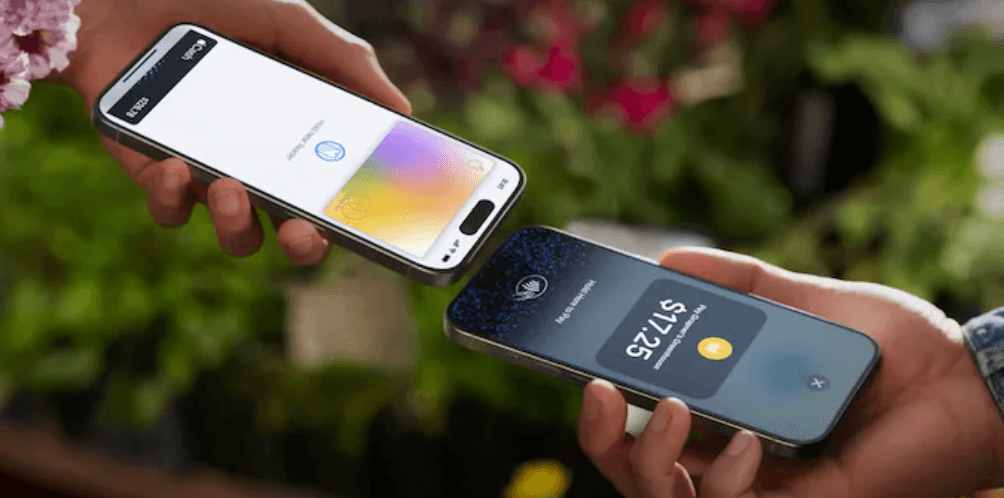
Breaking News: January 21, 2026 – After years of waiting, false starts, and regulatory roadblocks, Apple Pay is officially confirmed to be launching in India by the end of 2026. I know what you’re thinking: “Haven’t we heard this before?” Yes. But this time, it’s actually happening.
Sources close to Apple’s India operations have confirmed the company is in active discussions with banks, regulators, and card networks. The regulatory approvals are in progress. The infrastructure is being built. This isn’t speculation anymore it’s a timeline.
But here’s what nobody’s telling you: Apple Pay in India is going to work VERY differently than you think. And depending on how you use your iPhone, it might be completely useless to you.
Let me explain why this launch is simultaneously the biggest thing to happen to iPhone users in India AND potentially the most overhyped non-event of 2026.
What’s Actually Launching (And What Isn’t)
Here’s the reality check: Apple Pay is coming to India, but it’s launching as a card-only, NFC tap-to-pay system.
Translation? You can save your credit and debit cards to Apple Wallet, then tap your iPhone or Apple Watch on compatible POS terminals at stores to make contactless payments. That’s it.
What you WILL be able to do:
- 📱 Tap your iPhone at physical stores with NFC terminals
- ⌚ Pay with your Apple Watch (finally!)
- 💳 Store multiple credit/debit cards in Apple Wallet
- 🔒 Use Face ID or Touch ID for authentication
- 🛡️ Keep your actual card number private (tokenization)
What you WON’T be able to do:
- ❌ Make UPI payments through Apple Pay
- ❌ Send money to friends via UPI
- ❌ Scan QR codes for payments
- ❌ Link your bank account directly
- ❌ Use it for most online shopping
See the problem?
The UPI-Shaped Elephant in the Room
Let’s talk about the massive reality that Apple is walking into: India doesn’t need Apple Pay. India has UPI.
And UPI isn’t just popular it’s absolutely dominant. We’re talking about:
- 🚀 640 million transactions PER DAY
- 💰 ₹24.85 lakh crore (nearly $3 trillion) monthly
- 👥 491 million active users
- 📊 49% of global real-time payment transactions
- 🌍 Larger than Visa globally
UPI has overtaken Visa to become the world’s largest real-time payment system. Read that again. An Indian payment system is now bigger than VISA worldwide.
PhonePe alone processes 48.3% of all UPI transactions. Google Pay, Paytm, and others divide the rest. Together, they’ve created an ecosystem so frictionless, so ubiquitous, that paying for chai at a street vendor via QR code feels more natural than pulling out cash.
So where exactly does Apple Pay fit into this picture?
The Market Apple Is Entering: Already Crowded, Deeply Entrenched
India’s digital payments market is projected to hit $10 trillion by 2026 (coincidentally, the same year Apple Pay launches). But here’s the breakdown:
Current Payment Methods in India:
- UPI: 80%+ of all digital transactions
- Digital wallets: 10-15%
- Cards (credit + debit): 5-10%
- Cash: Still 59% of total transactions
Apple Pay will compete primarily in that 5-10% card payment segment. And even there, it faces competition from:
- Contactless card taps (Visa PayWave, Mastercard Contactless)
- Samsung Pay (which theoretically works but has minimal adoption)
- Google Pay (which ALSO supports card payments, not just UPI)
The Indian consumer has already decided what they want: instant bank-to-bank transfers via UPI, with zero transaction fees, that work on any phone regardless of brand.
Apple Pay offers… the ability to tap your iPhone instead of your card at a POS terminal. A feature most people didn’t even know they wanted.
Why Apple ISN’T Supporting UPI (At Least Not Yet)
This is the question everyone’s asking: if UPI is so dominant, why isn’t Apple integrating with it?
The official answer, according to sources, is that Apple is “unlikely to pursue third-party application provider approval for UPI in the near term.”
Let me translate that corporate-speak: Apple isn’t willing to jump through the regulatory hoops required to become a UPI app provider right now.
The Real Reasons:
1. Regulatory Complexity Becoming a TPAP (Third Party Application Provider) for UPI requires extensive RBI approvals, ongoing compliance, and integration with NPCI’s systems. It’s a completely different regulatory pathway than card-based payments.
2. Control and Ecosystem Lock-In UPI is an open standard. Anyone can build a UPI app. That goes against Apple’s entire business model of tightly controlled ecosystems. Apple wants you using Apple Pay because you have an iPhone, not because it’s the best UPI app.
3. Zero Transaction Fees UPI is currently free for end users (and mostly free for merchants too, thanks to RBI subsidies). How does Apple monetize that? With cards, Apple negotiates fees with card issuers. With UPI? There’s no clear revenue model.
4. Data Localization Requirements RBI mandates that all payment data be stored locally in India. Apple’s global infrastructure wasn’t built for that. Cards operate on international rails (Visa/Mastercard) under FEMA rules, making compliance easier.
So Apple is taking the path of least resistance: launch with cards first, figure out UPI later (maybe).
Who Actually Benefits From Apple Pay in India?
Let’s be brutally honest about who this actually helps:
The Premium iPhone User Segment India now has 5 million iPhone users (highest quarterly shipments ever in Q3 2025). Apple secured 4th place in the overall market for the first time. More importantly, Apple owns 58% of the premium smartphone segment (phones above ₹30,000).
These users tend to:
- Have multiple credit cards
- Shop at malls and modern retail outlets with NFC terminals
- Value the Apple ecosystem experience
- Actually care about features like “tap to pay”
International Travelers If you’re an iPhone user who travels internationally, Apple Pay already works in 89 markets worldwide. Adding India means one more country where you don’t need to carry physical cards.
Credit Card Power Users People who actively use credit cards for rewards, cashback, and benefits might appreciate having all their cards in one digital wallet with biometric security.
The Apple Watch Crowd This is actually huge for Apple Watch owners. Currently, there’s no way to make payments from your Apple Watch in India without your phone. Apple Pay changes that. Go for a run, grab a coffee, pay with your watch. That’s legitimately useful.
Who Doesn’t Benefit? Pretty Much Everyone Else.
The Average UPI User If you’re someone who pays for everything via PhonePe or Google Pay (and let’s be real, that’s most of India), Apple Pay adds zero value to your life. You’re not switching from instant bank transfers to card-based tap payments.
Small Business Owners and Street Vendors Most small merchants in India have QR codes for UPI. Many don’t have NFC-enabled POS terminals. Apple Pay won’t work at the local kirana store, the pani puri wala, or your neighborhood salon.
Budget-Conscious Consumers Credit cards in India come with fees, interest rates, and typically require higher income thresholds. UPI is linked directly to your bank account. For millions of Indians, UPI is the only digital payment method they use or need.
Android Users (Obviously) Apple Pay only works on Apple devices. In a country where Android has 90%+ market share, that’s a pretty significant limitation.
The Technical Reality: NFC Infrastructure Actually Exists
Here’s something interesting: India is actually better prepared for NFC payments than you might think.
Most modern POS terminals in India already support NFC payments. The infrastructure has been ready for years. Visa and Mastercard have been pushing contactless cards aggressively. The problem was never the technology it was consumer adoption.
But consumers chose UPI instead. Even people with contactless cards prefer scanning a QR code over tapping their card. Why?
- UPI works from any distance (QR codes can be scanned from a few feet away)
- No risk of accidental double-taps
- Works even if the terminal is broken or outdated
- Feels more transparent (you see the merchant name before confirming)
- No concerns about skimming or card theft
So India has NFC terminals that mostly sit unused, waiting for a payment method that consumers have already rejected in favor of something better.
Apple Pay is betting it can change that behavior. I’m skeptical.
The Pricing Question Nobody Can Answer
One of the biggest unknowns: what will Apple Pay cost?
Currently, UPI is free. Google Pay is free. PhonePe is free. Paytm is free.
Apple Pay will require credit or debit cards, which come with their own fee structures. But will Apple charge additional fees on top? Will there be interchange fees that merchants pass on to consumers?
The report mentions that Apple needs to “negotiate fees with major card issuers for use of the payment gateway.” That’s code for: Apple wants a cut of every transaction.
In global markets, Apple reportedly takes about 0.15% of every Apple Pay transaction from card issuers. In India, where even small fees can be deal-breakers, that model might not fly.
If Apple Pay ends up being more expensive than just using your physical card, why would anyone use it?
The Regulatory Journey: Why It Took So Long
Let’s talk about why Apple Pay has been available in 89 countries but NOT India until now.
Data Localization (2018) RBI mandated that all payment-related data must be stored locally in India. Apple’s global architecture wasn’t designed for that. It took years to build compliant infrastructure.
Closed NFC Stack Apple’s proprietary control over iPhone NFC conflicted with India’s push for open access. Other platforms wanted access to the same NFC chip for their payment apps. Apple refused.
Zero-MDR Regime Making UPI “free” left no room for commercial card-based competition. Why would banks push Apple Pay when UPI is mandated to be free?
Biometric Authentication Rules India’s evolving biometric payment policies created uncertainty. Face ID and Touch ID needed to be evaluated against RBI’s authentication framework requirements.
Licensing and Compliance Payment systems in India require specific RBI licenses. Third-party wallet providers face different rules than card networks. Navigating this regulatory maze took time.
It’s only now, in 2026, that all these pieces have finally aligned. Apple has built India-compliant infrastructure, negotiated with regulators, and found a pathway (cards) that doesn’t require the most complex approvals.
What Happens After Launch: Three Possible Scenarios
Scenario 1: The Slow Burn (Most Likely) Apple Pay launches with moderate adoption among premium iPhone users. It becomes a nice-to-have feature but doesn’t fundamentally change payment behavior. Most Indians continue using UPI for 95% of transactions, occasionally using Apple Pay when they’re at a fancy mall or international merchant.
Market share after 2 years: 2-3% of digital payments.
Scenario 2: The UPI Integration (Possible by 2027-2028) After seeing limited adoption with cards-only, Apple negotiates TPAP approval and integrates UPI into Apple Pay. Suddenly it becomes competitive. iPhone users can use UPI through Apple Wallet with Face ID authentication and Apple’s UI/UX polish. Adoption increases significantly.
Market share after UPI integration: 8-12% of digital payments.
Scenario 3: The Premium Pivot (Long Shot) Apple leans into the premium positioning. Partners with luxury brands, high-end retailers, and premium services to create exclusive Apple Pay offers. Frames it as a status symbol rather than a utility. Captures the ultra-premium segment completely.
Market share: 1-2%, but highly profitable.
My money’s on Scenario 1 with a possible evolution to Scenario 2 if initial adoption disappoints.
The Features That Might Actually Matter
Let’s focus on what Apple Pay DOES offer that competitors don’t:
Tap to Pay on iPhone Merchants can accept contactless payments directly on their iPhones without needing a separate POS terminal. This could be huge for small businesses that don’t want to invest in hardware.
Think: boutique stores, home services, delivery drivers, taxi services. Anyone with an iPhone can become a merchant instantly.
Privacy and Security Apple Pay uses tokenization merchants never see your actual card number. Each transaction generates a one-time code. Your purchase history isn’t shared with Apple or advertisers.
In an era of increasing data breaches, that’s genuinely valuable.
Apple Watch Independence Once Apple Pay is active, your Apple Watch becomes a payment device even without your phone nearby. For fitness enthusiasts and minimalists, this is transformative.
Cross-Device Consistency If you use Apple Pay globally and travel to India frequently, having the same payment experience across countries is convenient. All your cards in one place, working everywhere.
Face ID/Touch ID Authentication Faster and more secure than entering a PIN. Your biometrics authorize the payment instantly.
These are real advantages. The question is whether they’re valuable enough to overcome UPI’s dominance.
The Competitive Response: What Will Google and Others Do?
Google Pay already supports card payments in India, but nobody uses that feature. Everyone uses it for UPI.
Once Apple Pay launches, expect Google to:
- Promote its card payment features more aggressively
- Add Apple Pay-like features to Google Wallet
- Potentially improve NFC payment UX to compete
Samsung Pay has been technically available in India but has near-zero adoption. They might see this as an opportunity to relaunch.
PhonePe and Paytm will largely ignore it. They’ve already won the UPI war. Card-based tap payments are a rounding error to them.
Banks might be the most interesting player. They’ve been waiting for YEARS to find a way to compete with UPI’s zero-fee model. Apple Pay gives them a card-first alternative. Expect aggressive cashback offers and incentives to use Apple Pay in the first 6 months.
The International Payments Wild Card
Here’s something buried in the reports that’s actually significant: in 2025, Cashfree Payments and Razorpay integrated Apple Pay as a payment method to support international payments for Indian merchants.
This is the quiet entry strategy.
Indian businesses selling globally can now accept Apple Pay from international customers. That’s genuinely useful. A SaaS company in Bangalore selling to US customers? Apple Pay integration means their American users can check out seamlessly.
This cross-border play might be where Apple Pay finds its real foothold in India. Not competing with UPI domestically, but enabling Indian businesses to accept global payments.
Smart. Very smart.
What This Means for the Future of iPhone in India
Apple’s India strategy has always been about the long game. They’re manufacturing iPhones locally (Made in India), opening retail stores, and building out services.
Apple Pay is another piece of that puzzle. It’s not about capturing the entire payment market—it’s about making the iPhone ecosystem stickier for existing users and more attractive to potential switchers.
The Ecosystem Lock-In Effect:
- You buy an iPhone → You start using iMessage → You buy an Apple Watch → You use Apple Pay → You subscribe to Apple Music → You get deeper into the ecosystem → Switching becomes harder
Apple Pay in India is less about payments and more about ecosystem retention.
Every time an iPhone user taps their phone to pay, that’s a moment Android can’t replicate. That’s differentiation. That’s brand loyalty being reinforced.
My Honest Take: Overhyped but Interesting
Look, I want to be excited about this. I really do. I’ve been waiting for Apple Pay in India since I got my first iPhone.
But the reality is: this is a solution looking for a problem.
India has already solved digital payments. UPI works brilliantly. It’s free, it’s fast, it’s ubiquitous. Adding the ability to tap my iPhone instead of scanning a QR code doesn’t fundamentally improve my life.
That said, there are niche use cases where Apple Pay will genuinely shine:
- Apple Watch payments without your phone
- International travel consistency
- Premium retail experiences
- Cross-border merchant payments
- Privacy-conscious users avoiding data harvesting
For the 5 million iPhone users in India (especially the premium segment), this is a welcome addition. For the other 1.4 billion people? It’s largely irrelevant.
The real test will be: does Apple eventually integrate UPI?
If yes, Apple Pay becomes genuinely compelling UPI’s functionality with Apple’s UX and security. That’s a winning combination.
If no, Apple Pay remains a nice-to-have feature for a small segment of premium users, generating minimal transaction volume and fading into the background of India’s payments landscape.
The Bottom Line: Cautiously Curious
Apple Pay is coming to India by end of 2026. That’s confirmed. It’ll work with credit and debit cards via NFC tap-to-pay. It won’t support UPI at launch.
For iPhone users with credit cards who shop at modern retail outlets, this is great news. You’ll finally get a feature you’ve been watching work in other countries for years.
For everyone else? You’ll barely notice it happened.
The interesting story isn’t the launch it’s what happens 12-24 months later. Does adoption meet expectations? Do merchants embrace it? Does Apple eventually cave and integrate UPI?
Those answers will determine whether Apple Pay becomes a meaningful player in India’s payments revolution or just another forgotten feature that technically exists but nobody uses.
I’ll be watching closely. And yes, I’ll absolutely try it when it launches. Because even if it’s not revolutionary, the tech nerd in me can’t resist double-tapping my iPhone to pay for coffee.
Old habits die hard.
What do you think? Will you use Apple Pay when it launches, or are you sticking with UPI? Are you excited about Apple Watch payments, or is this whole thing much ado about nothing? Drop your thoughts in the comments—I want to hear from actual iPhone users in India about whether this matters to you.
P.S. – If you’re an Android user reading this and feeling smug about how UPI already works perfectly on your device, I see you. You’re not wrong. But let me have this small victory, okay?
Leave a Reply